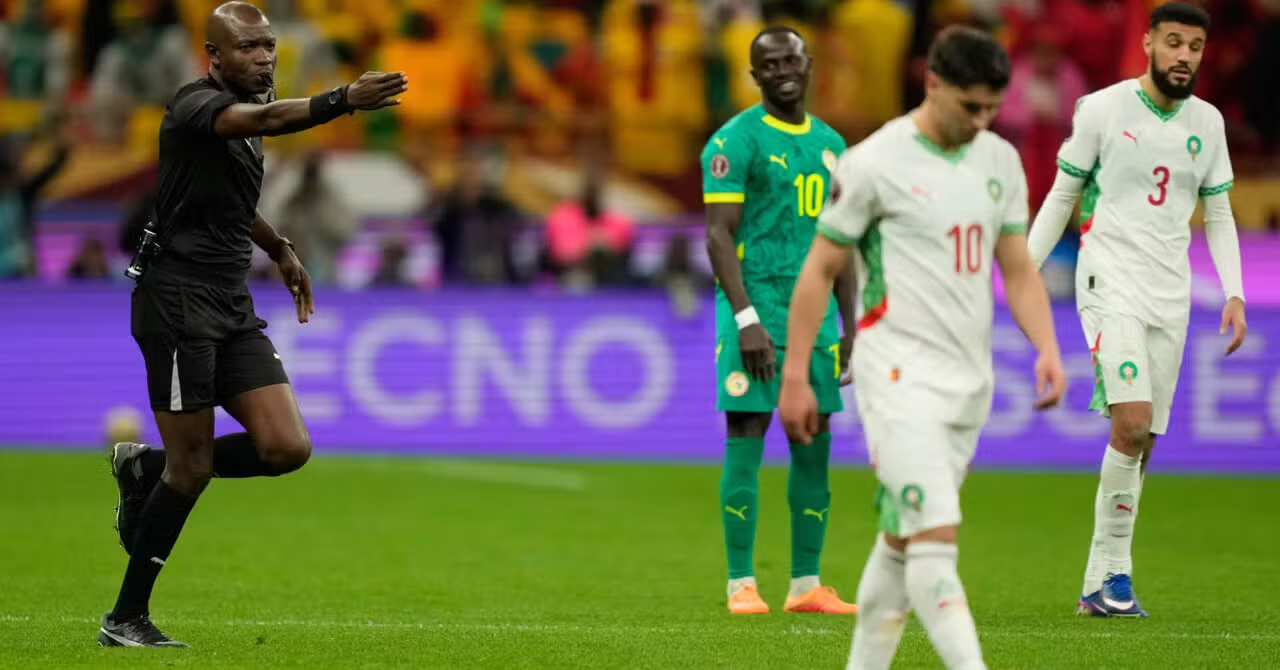
Court of Arbitration for Sport restores Senegal’s 2025 Africa Cup title
CAN 2025: pour les Congolais, la décision du TAS réhabilite l’arbitre Jean-Jacques Ndala
rfi.fr· 44h
La CAN 2025 revient au Sénégal, navires russes ciblés en Libye, incendie au Caire : l'hebdo Afrique
france24.com· 44h
Africa Cup title given back to Senegal after sports court rules against Morocco
npr.org· 4d
Le Sénégal champion d’Afrique, affaire Nahel Merzouk, un successeur au préfet Moutouh… L’actu de ce mardi 24 novembre
liberation.fr· 4d
CAN 2025 : pourquoi le TAS a donné raison à l'arbitre et au Sénégal
Verdict du TAS : existe-t-il un recours pour le Maroc ?
Senegal reinstated as 2025 Africa Cup of Nations winners
channelnewsasia.com· 4d
CAN 2025 : le Tribunal arbitral du sport déclare le Sénégal champion d’Afrique de football, au détriment du Maroc
lemonde.fr· 4d
Senegal reinstated as 2025 Africa Cup of Nations winners
Africa Cup title given back to Senegal after CAS rules against Morocco
apnews.com· 4d
Finale de la CAN 2025 : le TAS rend son titre au Sénégal au détriment du Maroc
CAN en direct : le TAS redonne le titre au Sénégal, le Maroc déchu
Moroccan federation reports incident to CAS during Senegal AFCON appeal, source says
Moroccan federation reports incident to CAS during Senegal AFCON appeal, source says
reuters.com· 4d
On 24 November 2026, the Court of Arbitration for Sport unanimously restored Senegal’s 2025 Africa Cup of Nations title, overturning the decision that had awarded it to Morocco. The court ruled that the referee committed no error of law by resuming play after Senegal’s players left the pitch, since both teams returned and agreed to continue.
The court rejected Morocco’s request to delay the ruling after its federation alleged that Senegal federation president Abdoulaye Fall had spoken by phone with an arbitrator. The commission handling challenges found insufficient grounds at that stage to postpone notification, and the restored title stands as the latest decision.
The Court of Arbitration for Sport unanimously restored Senegal’s 2025 Africa Cup of Nations title on 24 November 2026, overturning the decision that had awarded it to Morocco.
The court ruled that the referee committed no error of law by resuming play after Senegal’s players left the pitch, finding that both teams returned and agreed to continue.
The court rejected Morocco’s request to delay the ruling after Morocco’s federation alleged that Senegal federation president Abdoulaye Fall had spoken by phone with an arbitrator.
The court’s commission handling challenges found insufficient grounds at that stage to postpone notification of the decision.
Senegal’s national team celebrated the ruling, saying, “again and always champions of Africa”.
Morocco captain Achraf Hakimi said he would learn the decision and sleep before the next day’s match.
The Court of Arbitration for Sport said the tournament’s forfeit rules would have applied if the referee had blown the final whistle, but he had not.
Mariama Sidibé said Senegal won on the pitch and the court confirmed what people already knew, that Senegal were the real champions of Africa.
Mariama Sidibé said the countries should focus on what unites them and that Morocco might have its revenge on the field at the next Africa Cup.
Mariama Sidibé described Morocco and Senegal as brothers, citing their longstanding ties through religion, trade and culture.
Sidi Sylla said the ruling was not just a win for Senegal but for football in general.
Court of Arbitration for Sport secretary general Matthieu Reeb said the referee did not commit any error of law.
The Royal Moroccan Football Federation said it intended to use all available legal remedies to appeal the ruling.
France 24 forecast that the dispute would continue a little longer.
The Court of Arbitration for Sport said it had communicated the full ruling and its legal reasoning to the parties that day, and would publish it unless the parties requested confidentiality.
The Court of Arbitration for Sport said the decision was unanimous.
The Court of Arbitration for Sport said Senegal argued that the referee’s decision to resume play could not be reviewed under the field-of-play doctrine.
The Court of Arbitration for Sport said Morocco argued that the referee committed an error of law and acted arbitrarily.
The Court of Arbitration for Sport said the referee had sole discretion to resume or permanently stop the match and had judged that both teams were back and willing to play.
The Court of Arbitration for Sport said the decision was made amid “extreme tension” but was not arbitrary, and the referee’s judgment did not appear affected by factors outside the game.
Matthieu Reeb said this was the first time the court had ruled on the outcome of a continental final and that the arbitrators were unanimous.
Morocco said it would take all necessary legal steps against the ruling recognizing Senegal as the winner.
Matthieu Reeb said Morocco’s protest arrived minutes before the verdict and the court’s challenge panel found insufficient grounds at that stage to postpone notification.
Patrick Kabou, a lawyer for Senegal’s football federation, called the alleged communication between Abdoulaye Fall and Ulrich Haas “unreal.”
Morocco’s football federation alleged “confirmed communication” between Ulrich Haas and Abdoulaye Fall 48 hours before the ruling and criticized the court for not addressing possible integrity concerns.
Abdoulaye Fall said, “The Court of Arbitration for Sport has delivered justice to sport.”
Morocco’s football federation planned to appeal the ruling by challenging one of the judges, likely before Switzerland’s supreme court.
Blaise Nabina said a referee would not be appointed to a final unless he was capable of leading the match to its end.
Janvier Nduwa said Ndala had paid the price for a crisis beyond his responsibility and was unjustly exposed; he said refereeing could improve and technical decisions could be reviewed, and that the referee should not become a scapegoat for institutional failings.
The Congolese football federation said it had always trusted Jean-Jacques Ndala and his professionalism, and titled its communiqué, “The TAS washed the honor of Congolese referee Jean-Jacques Ndala”.

