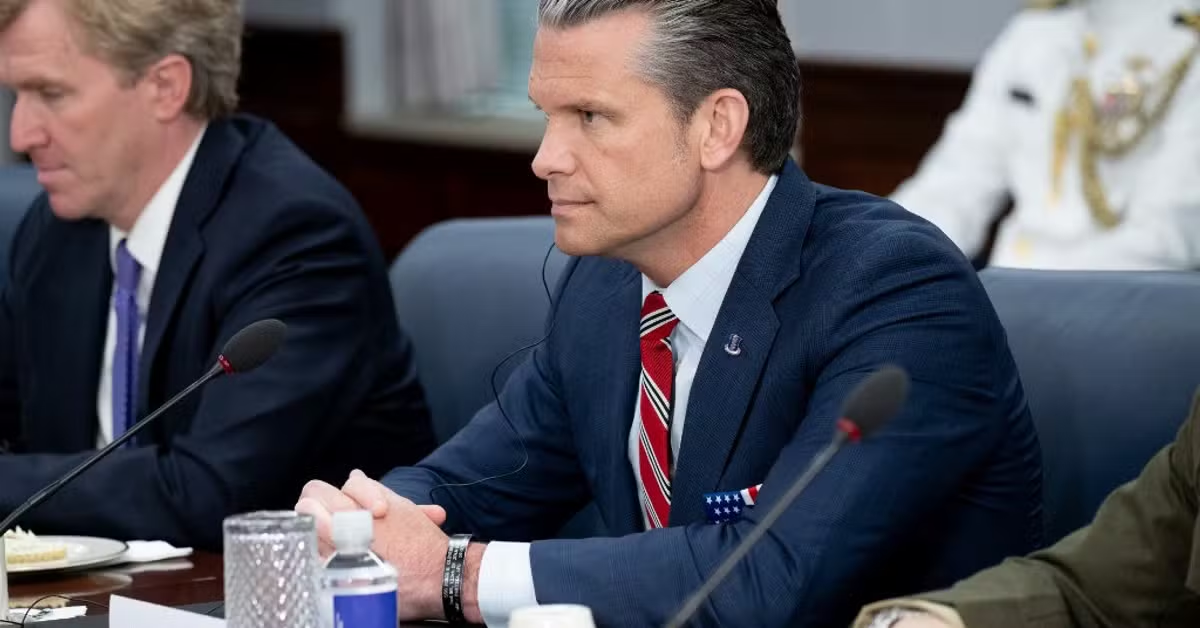
Pentagon gives no timetable on delayed Patriot missile deliveries to Ukraine
Pentagon Offers No Answers on Delayed Patriot Deliveries as Ukraine Awaits 48 Already-Funded Missiles
kyivpost.com· 3d
No good news from US on accelerating air defense missile deliveries, Zelensky says
kyivindependent.com· 3d
🚨Zelensky JUST TORCHED HIM!!
youtube.com· 3d
Zelensky Says Pentagon Has Yet to Approve 48 Already-Funded Patriot Missiles as Russian Attacks Intensify
What’s Holding Up Ukraine’s Air Defense?
foreignpolicy.com· 4d
Hegseth ‘delays shipments of Patriot missiles to Ukraine’ as Putin steps up attacks
the-independent.com· 4d
Pentagon delays Patriot missile shipments to Ukraine
ft.com· 4d
Zelensky says US delays on Patriot missiles are 'difficult to understand' as Russia fires 165 missiles in a week
Ukraine is running short of the one weapon that can stop Russia's ballistic missiles, and the United States is not releasing the ones it has. President Volodymyr Zelensky said on November 22 that Russia had launched around 2,700 attack drones, nearly 1,460 glide bombs, and 165 missiles in the previous week, many of them ballistic and supplied by North Korea, hitting nearly every region and leaving many Ukrainians without electricity, water, or heating as temperatures dropped. Patriot interceptors are the only system able to counter ballistic threats, and Zelensky said Ukraine received an average of just 12 per month from the United States through 2026. He again urged Washington to authorize transfers of missiles Ukraine's allies have already paid for through NATO's Prioritized Ukraine Requirements List program.
Reports followed that Defense Secretary Pete Hegseth has held up delivery of roughly 60 pledged interceptors, including advanced PAC-3 models and about 20 older PAC-2s, several sitting in European stockpiles. Batches scheduled for September, October, November, and December have not been cleared. The freeze has fueled alarm in Kyiv that the administration is withholding hardware as leverage for territorial concessions before the new Congress takes office in January.
Zelensky confirmed on November 24 in Berehove that an agreement for 48 missiles sits unsigned on Hegseth's desk, and said even those would not meet Ukraine's needs. He stood alongside Hungarian Prime Minister Péter Magyar, the first such joint appearance since 2015, and said the next day that the United States has not said it will accelerate deliveries. NATO Secretary General Mark Rutte said PAC-3 interceptors under the program continue to reach Ukraine, while acknowledging stockpiles are limited.
The Pentagon said on November 25 it is working to expand industrial cooperation with European partners and Ukraine to increase Patriot production, but it neither confirmed nor denied the delays and gave no timetable for releasing the interceptors. Ukraine's request to manufacture them domestically still awaits a Pentagon decision, with Lockheed Martin saying demand has tripled.
President Volodymyr Zelensky said Russia launched around 2,700 attack drones, nearly 1,460 glide bombs, and 165 missiles against Ukraine in the week before November 22, 2026, hitting nearly every region.
Russia intensified strikes on Ukraine's critical infrastructure, particularly energy facilities, leaving many Ukrainians without electricity, water, or heating as temperatures dropped.
Zelensky said a significant portion of the Russian missiles fired that week were ballistic, particularly those supplied by North Korea.
Ukraine faces a severe shortage of US-made Patriot interceptor missiles, the only system able to counter ballistic threats, hampering its defense against successive attack waves.
Zelensky again urged Washington to authorize the transfer of Patriot missiles that Ukraine's allies have already paid for through NATO's Prioritized Ukraine Requirements List program, as third-country transfers of US-produced missiles require US authorization.
Zelensky said Ukraine received an average of 12 Patriot interceptor missiles per month from the United States throughout 2026.
Zelensky said he first revealed in mid-October 2026 that the United States was stalling supplies of Patriot missiles.
In a Telegram post, Zelensky said the delays in delivering anti-ballistic systems to Ukraine are 'particularly difficult to understand'.
In the same post, Zelensky said it is 'very important' for the US to approve the transfers and that 'we need to strengthen our defenses'.
Zelensky said Russia is 'constantly' helping North Korea modernize and improve its weapons by using them against Ukraine.
The Pentagon has delayed shipments of Patriot missiles to Ukraine, according to a report.
US Defense Secretary Pete Hegseth has held up delivery of roughly 60 Patriot interceptors already pledged to Ukraine, including advanced PAC-3 interceptors and around 20 older PAC-2 models, according to a report.
Ukraine's allies have already paid for the interceptors, several of which are sitting in European stockpiles.
Ukraine was scheduled to receive eight PAC-3 interceptors in September, 10 in October, 10 in November, and another 12 in December, and none of the batches has been cleared.
The Patriot freeze has fueled alarm in Kyiv that the Trump administration is withholding critical hardware as diplomatic leverage to pressure Ukraine into territorial concessions ahead of the new Congress taking office in January.
Zelensky said Russian forces fire between 30 and 40 ballistic missiles in each large-scale assault, meaning the entire 60-missile backlog would barely cover two major barrages.
Zelensky said on November 24, 2026 in Berehove that an agreement to deliver 48 Patriot air defense missiles remains unsigned on Hegseth's desk, despite the weapons having been funded through NATO's Prioritized Ukraine Requirements List initiative.
Zelensky said he could definitively confirm an agreement covering 48 missiles in response to reports of roughly 60 held-up interceptors, adding that Ukraine would welcome any additional deliveries.
Zelensky indicated that even delivery of the outstanding 48 interceptors would be insufficient to meet Ukraine's air defense needs.
Zelensky revealed on October 26, 2026 that Ukraine had already been waiting nearly a month for Hegseth to authorize deliveries of missiles for Patriot and NASAMS air defense systems.
Zelensky said, 'Unfortunately, Hegseth has not signed it yet, so it depends solely on him.'
In an interview, Zelensky said, 'It's very unpleasant that amid all the bargaining over how to end the war, Ukraine is facing not only cuts in supplies of Patriot interceptors but also delays in deliveries.'
Zelensky urged Western partners to provide sufficient air defense ammunition to help Ukraine withstand Russian attacks throughout December 2026, ahead of potential discussions with the incoming US Congress in January or February 2027.
Zelensky warned that delayed deliveries and restrictions on military capabilities risk creating the impression that Washington and Moscow are pursuing similar objectives in pressuring Ukraine into concessions.
Zelensky appeared alongside Hungary's Prime Minister Péter Magyar, the first time a Hungarian prime minister has stood with Ukraine's president since 2015.
At the press conference, Zelensky said it is deeply troubling that amid discussions about ending the war, Starshield and Starlink work one moment and face restrictions the next, while missiles for Patriot systems are becoming scarcer and additional steps prevent deliveries.
Zelensky said this cannot be happening at the same time as the American side is not signing off on deliveries of anti-ballistic interceptors.
Zelensky said the United States is putting itself in a very unpleasant political situation and looks to be aligning with what Putin wants by forcing Ukraine into an unfavorable compromise.
Zelensky said on November 25, 2026 that the United States has not said it will accelerate deliveries of air defense missiles, with Ukraine still facing delays as Russian drone and missile attacks continue.
In a video address, Zelensky said, 'Unfortunately, we don't have any good news from the United States yet on accelerating deliveries. Deliveries are still delayed.'
The Pentagon said on November 25, 2026 that Washington was working to expand industrial cooperation with European partners and Ukraine to increase Patriot production.
The Pentagon neither confirmed nor denied reports of the delivery delays, provided no timetable for releasing the outstanding interceptors, and announced no new manufacturing licenses for Ukraine.
NATO Secretary General Mark Rutte said on November 24, 2026 that PAC-3 interceptors pledged under the Prioritized Ukraine Requirements List continued to reach Ukraine, while acknowledging that available stockpiles were limited.
Ukraine's request to manufacture Patriot interceptors domestically still awaits a Pentagon decision, with Lockheed Martin saying demand for the missiles has tripled.
Rutte said Washington was not obstructing European transfers of Patriot systems and that the United States and its European partners were examining ways to increase interceptor supplies.
The Pentagon said it is pursuing several initiatives to accelerate transatlantic industrial cooperation with European partners and Ukraine on Patriot air and missile defense systems.
Hegseth, questioned about the delivery delays on October 20, 2026, emphasized the Pentagon's priority of maintaining sufficient interceptor stocks for US forces.

