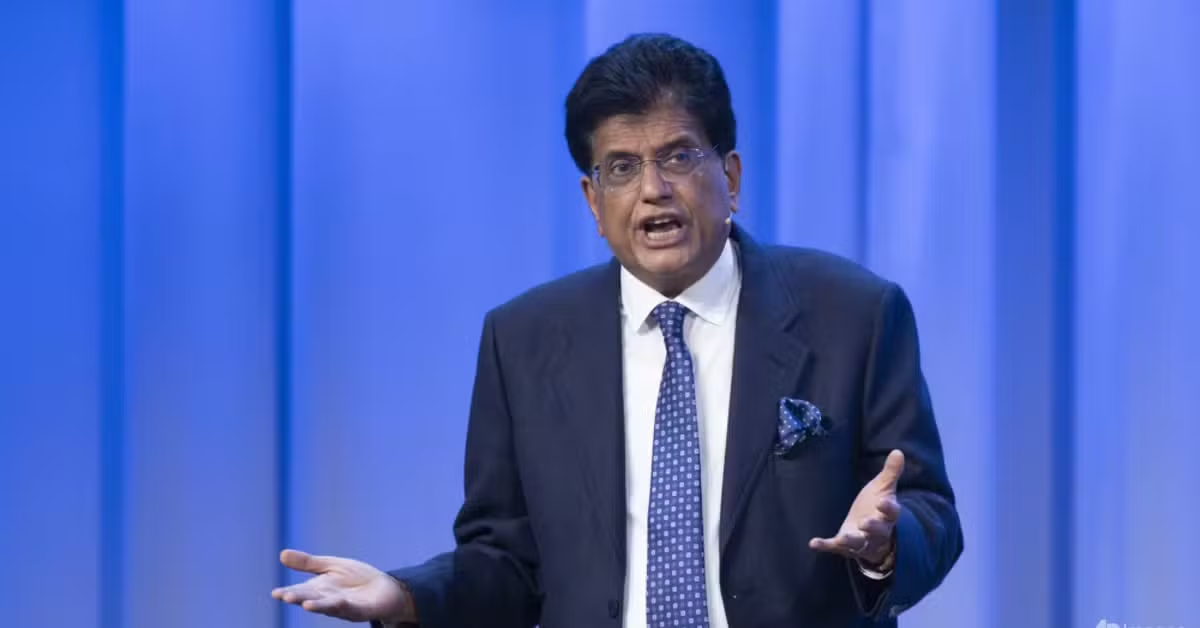
India's trade minister says US trade deal nears completion after 17% tariff cap
India-US trade agreement nearing completion, says commerce minister
channelnewsasia.com· 2h
India-US trade deal is nearing completion, minister says
reuters.com· 4h
India Faces a Tough Choice Over Lower Tariffs, Rushed US Trade Deal
bloomberg.com· 21h
How Trump's proposed tariffs for India compare with rival nations
How Trump’s latest tariff moves hand India an edge over rival Asian exporters
cnbc.com· 30h
US Tariff Proposal Raises Stakes for India to Clinch Trade Deal
India says it doesn't have structural excess capacity in any sector after US tariff determination
US to cap India tariff at 17% if trade deal is reached, USTR says
The United States will cap the tariff on Indian imports at 17% if New Delhi and Washington strike a trade deal, US Trade Representative Jamieson Greer announced on 25 November, warning that without a deal the rate would rise to 25%.
The cap came as the Trump administration proposed new headline tariff rates of 20% to 40% for 14 major trading partners, saying duties would be held at lower levels agreed under concluded or negotiated trade deals. India's government said it had taken note of the notice issued in the Section 301 investigation and that it was under examination.
Under the plan, Indian goods would face a lower rate than regional competitors: Bangladesh, Cambodia and Thailand were set at 18%, and China and Vietnam at 20%, each subject to their own trade deals, giving Indian exporters an edge over those rivals.
On 26 November the United States accused India of unreasonable trade practices, including inadequate labour protections, financial repression, market access barriers and a failure to address global excess capacity.
US Trade Representative Jamieson Greer announced that the US will cap the tariff on Indian imports at 17% if a trade deal is struck between New Delhi and Washington.
Greer said that if no trade deal is reached, the tariff on Indian goods would rise to 25%.
Indian officials said talks between New Delhi and Washington are continuing.
The Trump administration proposed new headline tariff rates of 20% to 40% for 14 major trading partners, saying duties would be capped at lower levels agreed under concluded or negotiated trade deals.
India's government said it had taken note of the US Trade Representative's Notice of Determination in the Section 301 Investigation and that the notice is under examination.
India's government said it does not have structural excess capacity in any sector.
India's government said it remains committed to an early conclusion of a trade deal between the two countries.
Under the US Trade Representative's statement, the planned 17% tariff on Indian goods is lower than the rates set for regional peers including Vietnam, Malaysia and Bangladesh.
Following Section 301 investigations, the Office of the United States Trade Representative proposed tariffs of 18% for Bangladesh, Cambodia and Thailand, and 20% for China and Vietnam, subject to their respective trade deals, giving Indian exporters an edge over those competitors.
Atman Trivedi of DGA Albright Stonebridge Group said the US expects the lower tariff rate to encourage New Delhi to sign a trade deal before the G20, and that India has got a better bargain with Washington than its main competitors, which may be enough for the government to declare victory and secure domestic backing for the deal.
Ronak D. Desai of the Hoover Institution said the tariff announcement increases the urgency of reaching an agreement, and that while a 17% tariff may strengthen the economic case for the deal, the threat of 25% could stir the sensitivity of the Indian government.
Several experts forecast that Prime Minister Narendra Modi and President Donald Trump are likely to meet in December at the G20 leaders' meeting in Florida and could seal the trade deal on the sidelines of the summit.
The Trump administration proposed an 18% tariff rate for Bangladesh, Cambodia and Indonesia, and a 20% rate for Vietnam provided it strikes a trade deal.
The United States accused India of unreasonable trade practices including inadequate labour protections, financial repression, market access barriers and failure to address global excess capacity.
India's Trade Minister Piyush Goyal forecast that India and the United States are close to wrapping up the long-anticipated trade deal, saying in an online speech to an industry conference, "The US trade deal is close to culmination."
Goyal said, "The process and pathway, which was always something which held back finalising the deal, is now taking some shape."
India's Minister of Commerce and Industry Piyush Goyal said differences over the trade deal were beginning to be resolved.

