IRS has opened at least four criminal probes into left-wing groups, internal memo shows
An internal IRS memorandum shows the agency opened at least four criminal investigations into left-wing groups under President Trump's September 2025 executive order.
The order, signed after Charlie Kirk's killing in September 2025, directed the IRS to check whether nonprofits financed political violence or domestic terrorism.
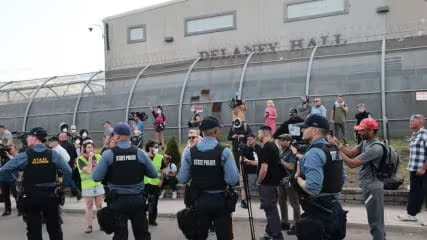
A dozen IRS officials joined an FBI task force in March 2026, reviewing Venmo records of Delaney Hall protesters and using facial recognition and tattoo databases.
The memo does not name the groups investigated; the pages seen excluded an appendix identifying targets, and the inquiries' current status is unknown.
At least four tax-exempt groups were referred for audits, and officials discussed but did not implement an expedited process to strip indicted nonprofits of tax-exempt status.
Critics including the ACLU say the order has no legal basis; prosecutors have not tied Kirk's charged killer to any outside group.
An internal IRS memorandum showed the agency opened at least four criminal investigations into left-wing groups as part of a crackdown begun after Charlie Kirk's killing in September 2025.
The memorandum pages viewed did not identify the subjects of the investigations, whose current status is unknown, and excluded a two-page appendix naming the targets.
The memo describes a dozen IRS officials detailed to a task force formed in response to Charlie Kirk's death on September 10, 2025.
Under the September 2025 order, the IRS was directed to investigate whether nonprofits were directly or indirectly financing political violence or domestic terrorism.
In March 2026, officials from the IRS criminal investigations branch began working with the task force out of FBI headquarters.
The memo, an internal status report circulated among IRS Criminal Investigation leaders, covers the team's work from March to July 2026, including rapid response to protests at Delaney Hall, an immigrant detention center in Newark, New Jersey.
IRS officials reviewed financial information, including subpoenaed Venmo records, on people arrested during the Delaney Hall protests and on businesses believed to be funding them.
IRS officials at one point used facial recognition and tattoo analysis databases to help identify individuals connected to the protests.
The IRS group referred at least four tax-exempt groups to the agency's civil audit side and was assigned to nine grand juries.
The group helped the FBI with financial analysis, including whether nonprofits improperly filled out Form 990, the main tax form for nonprofits.
One focus of the IRS group was investigating people who doxx or threaten government officials.
The task force also worked on responses to a shooting at the White House Correspondents' Association dinner, a May 2026 shooting at a San Diego mosque, and a White House lawn UFC event.
The memo states that continual turnover of FBI leadership and the bureau's culture of lack of information sharing made it difficult for the IRS to establish itself on the task force.
The memo says some potential financial crimes identified were unrelated to the task force's work because no specific threat was directed at a government entity, its property, or an employee.
In some instances, other IRS agents ignored emails from the task force or did not tell the group they were already working a case, according to the memo.
The IRS task force group recommends a broader remit to focus on investigating the misuse of 501(c)(3) organizations and individuals with nexus to terrorism.
Three people familiar with the matter said IRS officials discussed an expedited audit process that could strip indicted nonprofits of tax-exempt status, though it has not been implemented and lawyers questioned its legal rigor.
An IRS spokesman said the agency's criminal branch "has collaborated with federal law enforcement agencies, including the F.B.I., to investigate individuals and entities that may be funding domestic terrorism or political violence."
An FBI spokesman did not respond to a request for comment about the IRS memorandum.
Critics said the executive order lacked any legal basis, since federal statutes do not allow presidents to define which groups may be domestic terrorists.
Trump's September 2025 memo listed anti-Americanism, anti-capitalism, and anti-Christianity, and hostility to traditional views on family, religion, and morality, as hallmark beliefs of antifa without defining the terms.
Hina Shamsi, director of the American Civil Liberties Union's National Security Project, said Trump is "invoking political violence, which we all condemn, as an excuse to target non-profits and activists with the false and stigmatizing label of 'domestic terrorism,'" calling it "a shameful and dangerous move" and saying he "cannot rewrite the Constitution by memo."
Daniel Richman, a Columbia Law School professor and former federal prosecutor, said of the directive, "You can't, by executive order, create new crimes."

