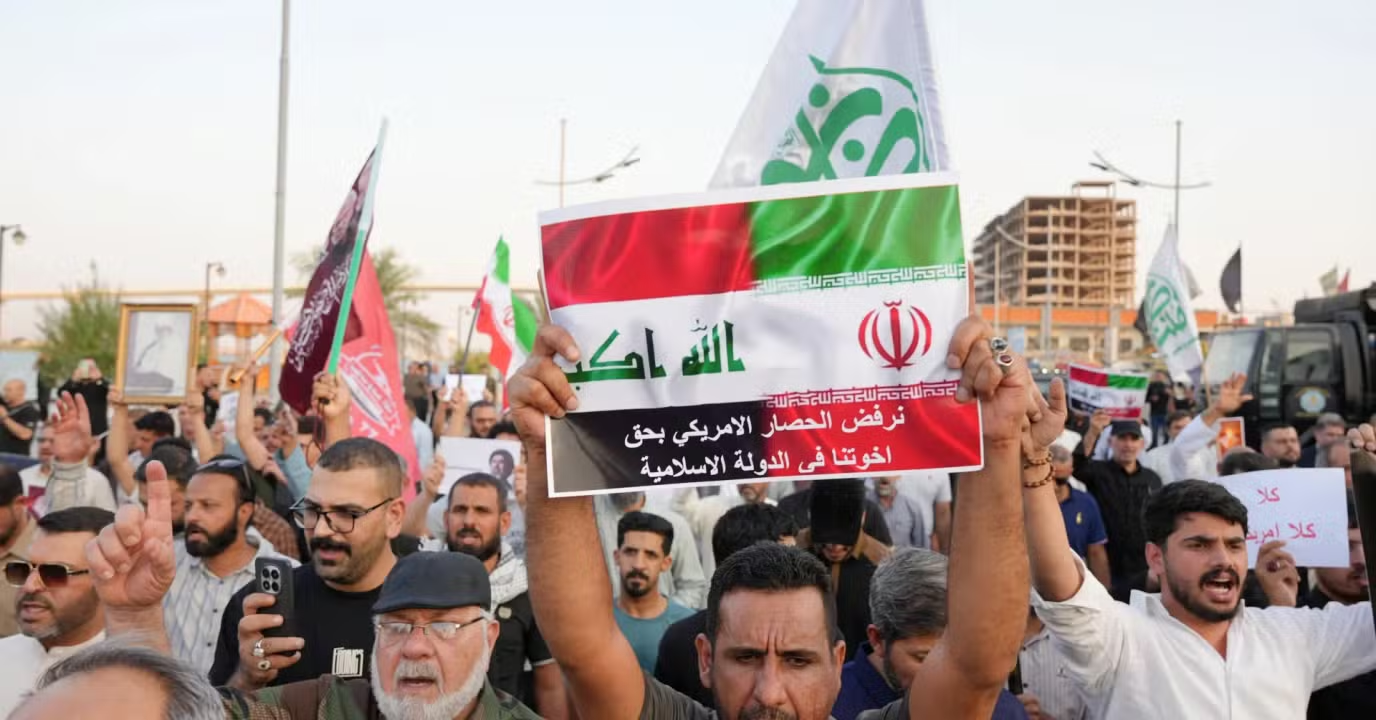
Iran adviser warns Iraq against becoming Trump's tool as Baghdad seals Iran border crossings

Iraq has closed several border crossings into Iran, a campaign against oil smuggling that has drawn backing from Washington, warnings from Tehran, and a dispute inside Baghdad's own government.
Iraqi authorities began shutting unofficial crossings, including those in the northern Kurdish region, on 26 November 2026 under orders from Prime Minister Ali al-Zaidi. An Iraqi intelligence report cited by the state news agency INA said oil was being smuggled from northern Iraq into Iran, where it was blended with Iranian oil to circumvent US sanctions. The military has reinforced its presence in parts of the oil-rich Kirkuk province, and on 28 November the Interior Ministry said it was building security fortifications in the Hawizeh Marshes along the border, including a 50km earthen barrier and concrete border posts.
Tehran pushed back. Mohammad Mokhber, an aide to Supreme Leader Mojtaba Khamenei, warned Iraq in a post on X on 28 November not to become a 'tool of Trump' and urged Iraqi authorities to remain vigilant over border issues. Iran also urged Iraq not to allow other countries to interfere in the two neighbours' affairs, and security chief Mohsen Rezaei met Iraq's national security adviser Qasim al-Aboudi in Tehran after reports that Iraq closed the crossings at the request of the United States, which is restricting Iranian land commerce as it expands a naval blockade.
The crackdown has drawn support from US President Donald Trump and has sparked tensions between Baghdad and the Kurdistan Regional Government. Federal and Kurdish leaders are expected to meet in Baghdad on Tuesday, 1 December 2026, to address the dispute.
Iraq closed several border crossings into Iran following United States efforts to blockade Iran's land borders.
An adviser to Iran's Supreme Leader warned Iraq in a post on X on Saturday not to become a 'tool of Trump'.
Iranian security chief Mohsen Rezaei met Iraq's national security adviser Qasim al-Aboudi in Tehran after reports that Iraq closed border crossings at the request of the United States, which is restricting Iranian land commerce as it expands its naval blockade.
Iran urged Iraq not to allow other countries to interfere in the two neighbours' affairs.
Mohsen Rezaei told Qasim al-Aboudi that 'Foreigners should not be allowed to negatively impact Iran-Iraq economic cooperation.'
The adviser behind the warning was identified as Mohammad Mokhber, an aide to Supreme Leader Mojtaba Khamenei, who urged Iraqi authorities on 28 November to remain vigilant over border issues.
Iraqi authorities began closing unofficial border crossings, including those in the northern Kurdish region, on 26 November 2026 under orders from Prime Minister Ali al-Zaidi, as part of a campaign against oil smuggling.
An Iraqi intelligence report cited by the INA state news agency said oil was being smuggled from northern Iraq into Iran, where it was blended with Iranian oil to circumvent US sanctions.
Iraq's military reinforced its presence in parts of the oil-rich Kirkuk province to prevent smuggling through unofficial routes.
Iraq's Interior Ministry announced on 28 November 2026 that it was building security fortifications along the Iranian border in the Hawizeh Marshes, including a 50km earthen barrier and concrete border posts.
The crackdown has drawn support from US President Donald Trump and has sparked tensions between Baghdad and the Kurdistan Regional Government.
Iraqi federal and Kurdish leaders are expected to meet in Baghdad on Tuesday, 1 December 2026, to address the dispute.
Qasim al-Aboudi reaffirmed Baghdad's commitment to the bilateral security agreement and said Iraq will not allow its territory or airspace to be used for attacks against Iran or other neighbouring countries.
Iraqi government spokesperson Haider al-Aboudi said Baghdad respected the sovereignty of neighbouring countries but would not accept interference in its internal affairs, and that measures implemented within Iraqi territory were not directed against neighbouring countries.
Haider al-Aboudi said Prime Minister Ali al-Zaidi's government had mediated with Washington to maintain commercial crossings and air links with Iran, and that the crossings are a sovereign matter on which Baghdad has the final say.
Haider al-Aboudi said the Iraqi delegation's visit to Tehran included discussions on security and the management of the Iraq-Iran border.
The Kurdistan Regional Government accused Iraq's federal authorities of unconstitutional actions.

