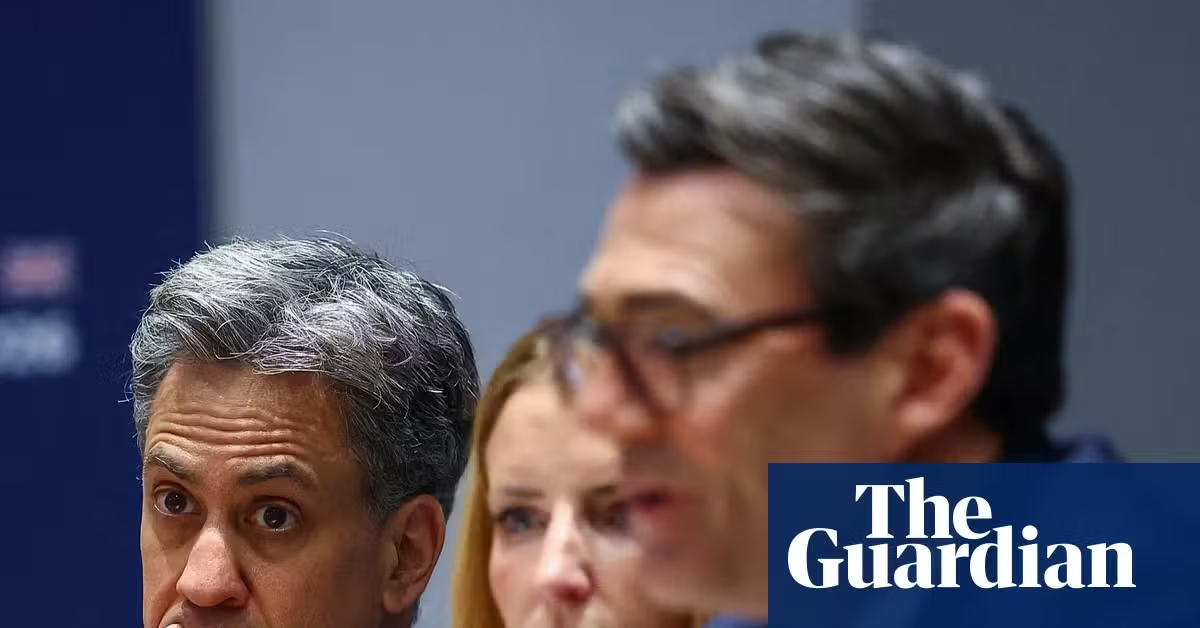
UK and EU agree trade and youth mobility deals letting 100,000 young people live and work across the Channel
Rejoining EU ‘on the table’ as UK strikes deals on trade and young people
theguardian.com· 6d
Andy Burnham begins to undo Brexit with landmark EU deal
ft.com· 6d
Four thoughts on the UK-EU summit
substack.com· 6d
Andy Burnham agrees to 100,000 visas in EU youth mobility scheme
thetimes.com· 7d
Andy Burnham says 'win-win' deal can be agreed between UK and EU
bbc.com· 14d
Britain and the European Union agreed deals on trade and young people on Friday 20 November, letting 100,000 young people live and work on each side of the Channel. Days before a UK-EU summit set for 20 November, the two sides had settled a draft deal on removing post-Brexit checks from food and agriculture exports, with draft texts on emissions trading and a youth travel and work scheme circulated to EU nations.
In the talks, the EU first called for the youth mobility scheme to be uncapped, and the UK answered with a cap of around 50,000. Andy Burnham agreed to 100,000 visas after the prime minister dropped demands to limit the scheme to 80,000 work visas a year. The cap is to be worked out on a country-by-country basis, and some countries, including Germany, suggested they were ready to accept unlimited numbers, so British young people may be able to go to Europe in higher numbers. The EU also asked for its young people to pay only UK-level tuition fees at British universities, a demand that appears to have been deferred to a supplementary agreement the following year.
British negotiations had quietly moved away from national decision-making towards alignment with EU rules. The UK asked for a vote and pushed to shape both implementation of existing EU rules and decisions on future rules, but France pushed back and the UK was given a restrictive and limited mechanism for influence. A 'Stay Out' group opposing the deal was set up, chaired by Oliver Lewis, formerly of Vote Leave.
The agreed deals cover food and drink standards, emissions trading and a youth mobility scheme, under which 100,000 young Britons can live, work, study and travel in the EU, with similar access for Europeans in the UK. The EU has threatened to block the three deals unless the UK lets European students pay domestic-level fees at British universities, which could derail them within six months.
Ahead of a UK-EU summit set for 20 November, the UK and the EU agreed a draft deal on removing post-Brexit checks from food and agriculture exports.
Draft texts on emissions trading and a youth travel and work scheme were circulated to EU nations before the summit.
Andy Burnham, speaking after meeting European leaders in Ireland, said the deal could bring lower prices for British consumers, lower costs for British businesses and more growth in the UK economy.
Burnham said he would fight over the days to come to make sure the deal gets over the line.
Burnham ruled out major changes to the UK's relationship with the EU, including any return to the single market, the customs union or freedom of movement, before the next general election.
The UK government claimed the agreement would eventually bring the UK economy £5.1bn in annual benefits.
The UK government was expected to seek agreements on food, energy and youth mobility at the 20 November summit.
Andy Burnham agreed to 100,000 visas in the EU youth mobility scheme.
The concession came after the prime minister dropped demands to limit the scheme to 80,000 work visas a year, ahead of the UK-EU summit later that week.
In the negotiations, the EU originally called for the youth mobility scheme to be uncapped and the UK responded with a cap of around 50,000.
The UK appears to have accepted a youth mobility scheme with a high cap of 100,000 people a year, an evident compromise, with the quota worked out on a country-by-country basis.
Some countries, including Germany, suggested they were prepared to accept unlimited numbers under the scheme, and the number of British young people able to go to Europe may be higher.
The EU originally asked for its young people to pay only UK-level tuition fees at British universities, a demand that appears to have been deferred to a supplementary agreement the following year on exact levels.
British negotiations had quietly moved away from national decision-making towards alignment with EU rules.
The UK asked for a vote and pushed to shape both implementation of existing EU rules and decisions on future rules, but France pushed back and the UK was given a restrictive and limited mechanism for influence over the rules.
A new 'Stay Out' group opposing the deal has been set up, chaired by Oliver Lewis, formerly of Vote Leave.
Ian Dunt says pro-Brexit forces are sharpening their knives and insisting the deal is the wrong thing to do in a week when the government has emphasised unemployment among young people.
Dunt says pro-Brexit figures warn that youth mobility seeds cultural support for a return to free movement, and he thinks they are right to be worried.
Dunt argues the sanitary and phytosanitary agreement is a mini version of the entire Brexit debate, whether to prioritise cooperation and mutual advantage or a zero-sum assessment of national sovereignty.
Dunt expects the tuition fee outcome to be another compromise, above the levels applying to UK citizens and below those applying to the rest of the world.
Dunt says the deal gives hundreds of thousands of young people their freedom again, after it was robbed from them by "the small minded wolves in Farage's camp".
Dunt says the Brexiters' main aim is now to put enough fear into the government that it steps back from the deal, and that their messaging target is not the public but Cabinet members wary of Burnham's enthusiasm for the EU.
Chancellor John Healey and Culture Secretary Lisa Nandy have both been explicit about their opposition to the deal, alongside several others who express their views only anonymously or around the Cabinet table.
Oliver Lewis appeared on the news to insist that a youth mobility scheme meant he had to ring an emergency alarm, which Dunt called a hilariously poor and utterly unconvincing performance.
Nigel Farage is insisting the deal has given him a new lease of life, which Dunt says helps pro-European forces with every utterance rather than hindering them.
Burnham makes clear the deal is also about securing cooperation on small boat crossings, as well as how easily products can be sent to Europe.
Andy Burnham and the EU agreed deals on trade and young people on Friday 20 November, covering food and drink standards, emissions trading and a youth mobility scheme.
Under the youth mobility scheme, 100,000 young Britons will be allowed to live, work, study and travel in the EU, with similar access for Europeans in the UK.
The EU has threatened to block the three UK-EU deals unless the UK allows European students to pay domestic-level fees at British universities, which could derail the deals within six months.
Ed Miliband said the UK rejoining the EU could be on the table in informal discussions between Burnham and European leaders in Brussels, and that all the options will be examined as the UK looks at the benefits and the costs of all the different options.
Miliband said he accepts the result of the 2016 vote but that the world has changed massively, as has Europe, while the government is respecting its red lines in this parliament and the deals are the limit of what can be done before the next general election.
Burnham said the agreement represents 'a good day for Britain and Europe', answers the biggest worries people have on the cost of living, growth, illegal immigration and young people, and that the deal is done and 'is there in black and white in front of you'.
Burnham said the legislation for the deal will enter parliament the week after the agreement, and he is expected to use his 10-year plan before Christmas to explore how the UK could get closer to the EU after the next election.
Burnham said the agreement will add 0.5% to the UK's GDP, a £17bn boost to the British economy.
Ursula von der Leyen played down the disagreement over tuition fees, saying she is confident the EU and the UK are going to find a solution, and that of the further discussions, "We welcome this brainstorming, so count on us."
Environment secretary Angela Eagle said the deal is good for farmers, will open up new markets, and is a win-win for the UK that will dissolve a lot of the friction and costs at the border for UK agriculture and food.
Miliband said Burnham will hold further brainstorming discussions with the EU in the next year about what could happen next, with informal discussions before next year's UK-EU summit.

