Congo's deadliest Ebola outbreak tops 12,000 cases as fighting forces responders out
Congo's Ebola Cases Top 12,000 as Fighting Forces Some Health Workers to Evacuate | Common Dreams
commondreams.org· 14h
Congo Ebola outbreak reaches 12,000 cases as some responders evacuate
npr.org· 20h
Epidemie im Osten des Kongo: Zahl der bestätigten Ebolafälle steigt auf über 12.000
spiegel.de· 23h
Ebola outbreak in Congo reaches 12,000 cases
euronews.com· 24h
Ebola-Ausbruch in Zentralafrika: Mehr als 12.000 bestätigte Ebola-Fälle in Kongo
zeit.de· 25h
Ebola outbreak in Congo reaches 12,000 cases as violence forces some responders to evacuate
apnews.com· 25h
DR Congo Ebola cases surpass 12,000 as fighting disrupts response in east
aljazeera.com· 26h
Congo's Ebola cases exceed 12,000 as responders struggle to contain outbreak
reuters.com· 29h
The current Ebola outbreak is growing faster than any outbreak of the disease ever. How can it be stopped?
scientificamerican.com· 3d
Congo’s Escalating Ebola Crisis
foreignpolicy.com· 8d
The Bundibugyo Ebola outbreak in the Democratic Republic of the Congo, which began in May 2026, was in its sixth month and described as the fastest-growing Ebola outbreak in history. Congolese government figures showed the death toll had passed 5,500 people, with more than 11,000 infected. Africa CDC director-general Jean Kaseya said infections were spreading at double the rate of the outbreak's start, with over 80 percent of new cases outside known contact lists and more than 65 percent of deaths occurring outside healthcare facilities.
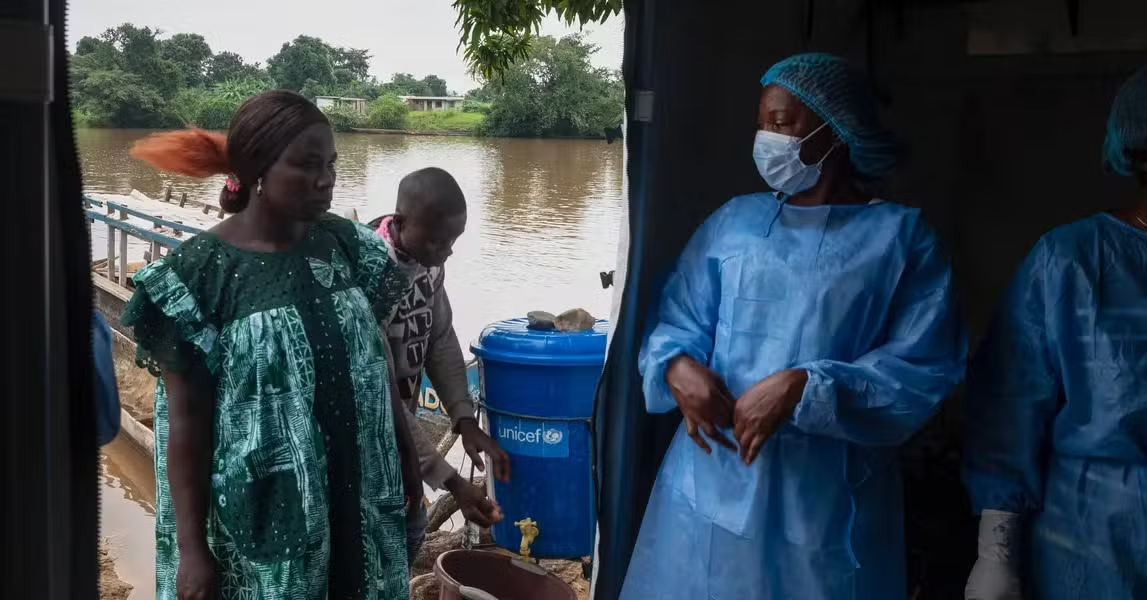
The response was under strain. International donors had disbursed more than $962 million to organizations implementing the response, but Kaseya said about $700 million of that was unaccounted for as of October 2026, and an investigation was underway. Unpaid Congolese health workers went on strike, and Médecins Sans Frontières warned that ambulances had run out of fuel and staff were untrained. Experts said vaccine trials were underway but that the crisis needed far more than a medical solution.
By November 26, 2026, government data showed 12,021 confirmed Ebola infections and 5,904 deaths, with the outbreak spread to 8 of the country's 26 provinces. There are no approved treatments or vaccines for the rare Bundibugyo species of the virus, and the outbreak is reported to be the second-largest on record, behind only the 2014-2016 West African outbreak, and the deadliest of Congo's 17 Ebola outbreaks. An analysis of satellite imagery suggested the official death toll was largely underestimated in two of the hardest-hit areas.
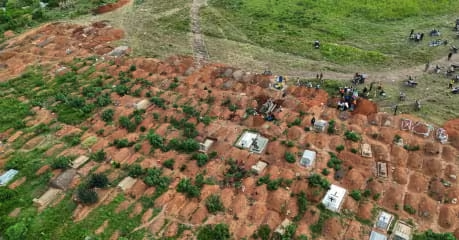
Fighting has now pushed responders out. Clashes between the Congolese army and Convention for the Popular Revolution fighters intensified in Ituri province, displacing civilians and forcing Ebola response workers to leave affected areas. On November 24, about a dozen people, including two WHO personnel and Congolese health officials, were evacuated to Bunia after three days trapped in a hospital in Akwe amid crossfire. That same day, relatives and healthcare workers prepared to bury 19-year-old Ebola victim Sylvain Kasereka Munganga in Beni, North Kivu province.
The Bundibugyo Ebola outbreak in the Democratic Republic of the Congo, which began in May 2026, was in its sixth month and described as the fastest-growing Ebola outbreak in history.
Congolese government figures released in November 2026 showed the death toll had passed 5,500 people, with more than 11,000 infected since the outbreak began.
Africa CDC director-general Jean Kaseya said infections were spreading at double the rate of the outbreak's start, with over 80 percent of new cases outside known contact lists.
Kaseya also said more than 65 percent of Ebola deaths in Congo had occurred outside healthcare facilities.
International donors had disbursed more than $962 million to organizations implementing Congo's Ebola response, and Kaseya said about $700 million of that was unaccounted for as of October 2026.
Africa CDC said it was too early to attribute the missing funds to embezzlement, but that an investigation was underway.
Congolese health workers, unpaid for months, went on strike during the Ebola outbreak.
Médecins Sans Frontières warned in November 2026 that ambulances had run out of fuel and staff were untrained.
Jean Kaseya said the outbreak in the Democratic Republic of the Congo was still serious and still not under control.
Kaseya called the lack of coordination between Congo's government and foreign donors "a collective failure."
Kaseya urged international donors to release $1.6 billion in pledged aid for the Ebola response.
Médecins Sans Frontières called the Ebola outbreak in the Democratic Republic of the Congo "out of control."
Médecins Sans Frontières said the Congolese government and United Nations agencies needed to "strengthen oversight and accountability."
Experts said vaccine trials were underway for the outbreak, but that the crisis needed far more than a medical solution.
World Health Organization regional emergency director Marie-Roseline Bélizaire said her biggest concern was that the outbreak was still evolving and many people were still dying in the community.
Bélizaire said she did not expect her work on the Ebola outbreak to let up anytime soon.
Government data released on November 26, 2026 showed 12,021 confirmed Ebola infections and 5,904 deaths in the Democratic Republic of the Congo.
The outbreak had spread to 8 of the Democratic Republic of Congo's 26 provinces.
There are no approved treatments or vaccines for the rare Bundibugyo species of the Ebola virus.
The outbreak was reported to be the second-largest Ebola outbreak on record, behind only the 2014-2016 West African outbreak.
An analysis of satellite imagery suggested the official Ebola death toll was largely underestimated in two of the hardest-hit areas.
Clashes between the Congolese army and Convention for the Popular Revolution fighters intensified in Ituri province, displacing civilians and forcing Ebola response workers to leave affected areas.
About a dozen people, including two WHO personnel and Congolese health officials, were evacuated to Bunia on November 24 after three days trapped in a hospital in Akwe amid crossfire.
Humanitarian worker Sandrine Buju said her team came under gunfire about 15 metres away on November 23 while returning to Bunia after training community volunteers.
Buju said her driver immediately turned around, the team sheltered at a UN peacekeeping base, and peacekeepers later escorted them through two areas of fighting towards Bunia.
Relatives and healthcare workers prepared to bury 19-year-old Ebola victim Sylvain Kasereka Munganga in Beni, North Kivu province, on November 24, 2026.
The outbreak was reported to be the deadliest of the Democratic Republic of the Congo's 17 Ebola outbreaks.
World Health Organization Ebola incident manager Catherine Smallwood said on November 25 that fighting between the army and rebels earlier in the week had prevented response teams from reaching some communities, disrupted monitoring of people exposed to the virus, and left some treatment centres with fewer staff.
The outbreak was forecast to be on track to surpass the death toll of 11,000 from the 2014-2016 West African Ebola outbreak.