Spain opens polls as Sánchez faces possible PP-Vox government
Las televisiones de todo el mundo miran a España este 29N: "Son unas elecciones cruciales más allá de sus fronteras"
eldiario.es· 6h
Ferreras considera "impresentable" que se hable de fraude electoral: "Ningún partido serio va a cuestionar el resultado"
EN DIRECT, élections en Espagne : l’ère Pedro Sanchez, au pouvoir depuis huit ans, touche-t-elle à sa fin ? Suivez les législatives anticipées
lemonde.fr· 10h
Spain’s bellwether election will have big repercussions – for Europe and the world
theguardian.com· 16h
Maahanmuutosta tuli Espanjassa vaaliteema – näin äänestäjät kommentoivat suomalaisten suosimassa Fuengirolassa
yle.fi· 39h
The British expats voting in an election that could change Gibraltar’s future
inews.co.uk· 2d
Pedro Sánchez called a snap general election in October 2026, with polls putting his Socialist Workers' Party behind the People's Party, which was unlikely to win enough seats to govern alone and might need Vox's support. In the election year, Spain's government passed a law enabling about 500,000 undocumented migrants to legalize their status, while Vox substantially increased its support on the Costa del Sol and elsewhere in Spain over the preceding year.
Voting stations opened at 9 a.m. on 29 November, with nearly 39 million people eligible to vote. Polls put People's Party leader Alberto Núñez Feijóo in front and Vox in third place with the largest gains, while suggesting Sánchez needed strong support from weakened, divided left-wing parties to avert defeat. The People's Party was projected to fall short of a congressional majority, potentially making Vox leader Santiago Abascal pivotal to forming one.
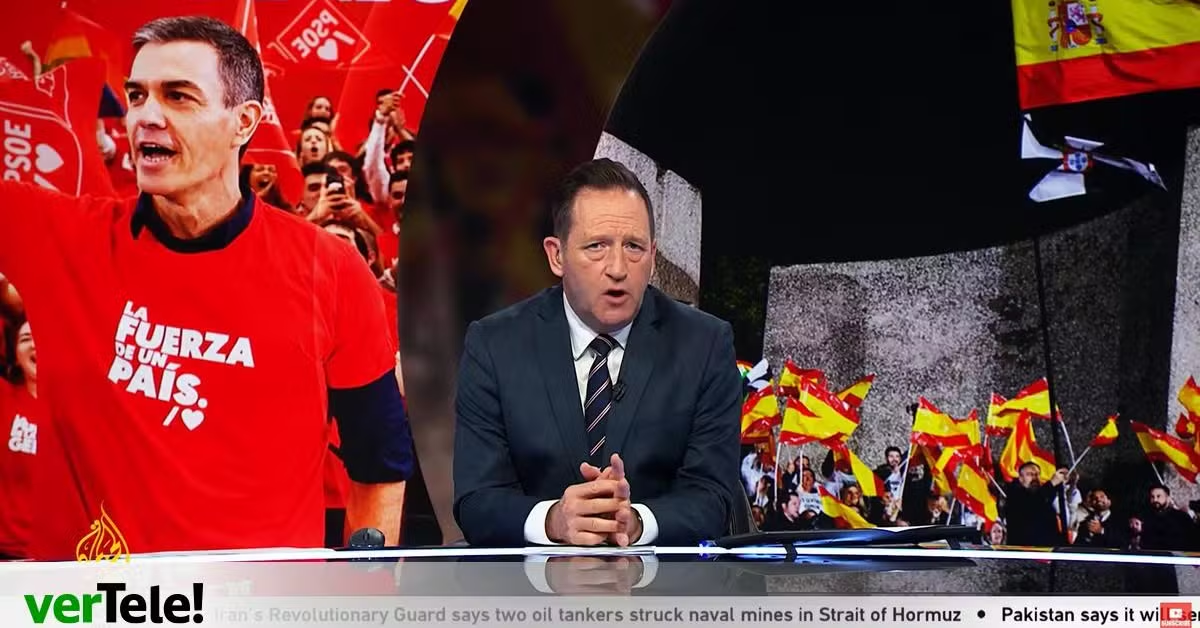
The People's Party and Vox promoted claims that Sánchez's government could falsify the results, despite no evidence for the allegations. Broadcasters around the world gave the election unusually prominent coverage, focusing on the far right's rise and possible change of government, with close attention also in Latin America.
Pedro Sánchez called a snap general election in Spain in October 2026.
Polls put Sánchez's Socialist Workers' Party behind the People's Party, which was unlikely to win enough seats to govern alone and might need Vox's support.
Vox pledged to recover Spanish sovereignty over Gibraltar.
Chris Pellow said Britain's relationship with Spain would depend on Vox's influence and that he would not support a party backing Vox.
Katie McGovern said she would not support Vox but was undecided about her vote.
Jane Jones said the Vox leader had threatened to scrap the Gibraltar agreement and predicted the far right would have little influence in Spain.
Spain's government passed a law during the election year enabling about 500,000 undocumented migrants to legalize their status.
Vox substantially increased its support on the Costa del Sol and elsewhere in Spain over the preceding year.
María Heredia said she was frustrated with border security and worried about people arriving in Ceuta and the Canary Islands; she planned to vote for the first time.
The People's Party and Vox promised to tighten immigration rules, deport undocumented migrants, and make residence permits and citizenship harder to obtain.
Leonardo Ferreira said the far right's rise worried him because he was an immigrant and gay, and that voting was the only thing he could do about it.
Raphaël Glucksmann, Elly Schlein, and other left-wing European leaders said Spanish voters' November 2026 decision would have repercussions beyond Spain and concern the future of society, welfare, and Europe's place in the world.
Carla Hobbs said a Sánchez defeat would reinforce the shift toward the center-right at the European Council and would probably accelerate Europe's rightward shift.
Nic Lawley said a PP-Vox coalition would test what happens when the center-right drops its barrier to the far right, and that other countries would watch its foreign-policy consequences.
Isabella Weber said a Sánchez-party victory would show the far right's rise was not inevitable, while a defeat would set back democratic revival, especially in Europe, with global ramifications.
Voting stations opened in Spain at 9 a.m. on 29 November, with nearly 39 million people eligible to vote in the parliamentary election.
Polls put People's Party leader Alberto Núñez Feijóo in front and Vox in third place with the largest gains; they indicated Sánchez needed strong support from weakened, divided left-wing parties to avert defeat.
The People's Party was projected to fall short of a congressional majority, potentially making Vox leader Santiago Abascal pivotal to forming one.
Pedro Sánchez urged voters to turn out in large numbers and send a clear message against polls favoring the right.
Sánchez asked voters to trust him to prevent what he described as regression under a People's Party-Vox government.
The People's Party and Vox promoted claims that Sánchez's government could falsify the 29 November election results, despite no evidence for the allegations.
Antonio García Ferreras said he was convinced no one in the People's Party leadership believed the election could be stolen.
Antonio García Ferreras called it unpresentable to question postal voting or the vote count, and said no serious party would challenge the result regardless of what happened.
Antonio García Ferreras described election denial as a contagion from the global populist Trumpian far right, saying it weakens the president by portraying him as capable of anything to stay in office.
Television networks around the world gave Spain's 29 November election unusually prominent coverage, focusing on the far right's rise and the possibility of a change of government.
U.S. television coverage was prominent, broadcasters in the Middle East and France aired special reports, and European networks followed the election through correspondents in Madrid.
The election also drew close attention in Latin America.
La exconsellera Pradas celebra el resultado de PP y Vox: "El tiempo pone a todos y todo en su sitio"
Législatives en Espagne : l'utilisation massive de l'IA cultive la "haine viscérale" de l'adversaire
france24.com· 4d
Matryoshka disinformation campaign takes aim at Spain's election
euronews.com· 5d

