
Lawmakers weigh folding remote access chip curbs into defense bill


A bipartisan group of lawmakers is pushing to attach AI chip export control bills to the fiscal year 2027 National Defense Authorization Act.
Negotiators are weighing folding the Remote Access Security Act, introduced by Sens. Dave McCormick and Ron Wyden, into the AI OVERWATCH Act on the defense package.
The AI OVERWATCH Act, the MATCH Act, and the Chip Security Act stalled in the summer of 2026 but gained support after Nvidia chief executive Jensen Huang resigned in November 2026 amid a scandal that included an affair with a suspected Chinese spy.
The Remote Access Security Act targets the loophole that lets Chinese firms like Alibaba and ByteDance rent restricted U.S. chips through overseas data centers.
President Donald Trump authorized sales of Nvidia's H200 chips to approved Chinese customers in December 2025 and has been cool to tighter chip export restrictions.
Congress is expected to take up the defense bill in December 2026, with little time left before the end of this Congress.
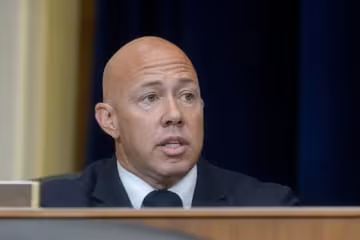
House Foreign Affairs Chair Brian Mast said on Nov. 12, 2026 that it is very likely a group of bills imposing new guardrails on exports of advanced U.S. chips to China will make it into the must-pass annual defense bill.
Lawmakers were discussing a trio of chip export control bills for the annual defense package: the Chip Security Act requiring location verification in advanced chips, a measure tightening chipmaking equipment sales, and a bill giving Congress review of advanced AI chip export licenses.
House Foreign Affairs Chair Brian Mast said on Nov. 12, 2026 that it is very likely the chip restriction bills will make it into the 2026 must-pass annual defense bill.
House Foreign Affairs Chair Brian Mast said of Jensen Huang, "If he doesn't know who he's in bed with, he doesn't know where all the chips are going either, and we know that for a fact."
Lawmakers escalated their push to include stalled AI chip export control bills in the National Defense Authorization Act after the Jensen Huang scandal broke, with congressional leadership from both parties joining the effort.
Senate Minority Leader Chuck Schumer renewed his calls for passage of the chip export control bills from the Senate floor in the week before Nov. 17, 2026.
Senate Minority Leader Chuck Schumer said, "My colleagues and I have been advocating for these bills and pushing Trump to get tougher on Chinese export controls for years."
Senate Minority Leader Chuck Schumer said of President Donald Trump, "His administration has shown time and time again that it is completely disinterested in enforcing export controls."
House China Select Committee Chair John Moolenaar said, "I think this incident, as troubling as it is, really highlights the need for export controls and a policy that is designed to keep America in the lead."
House Minority Leader Hakeem Jeffries said at a press conference, "There are provisions currently in the Senate version of the NDAA that will restrict chip access to China that I strongly support, and I think we're going to work hard to make sure that these provisions make it into the final version of the National Defense Authorization Act."
Speaker of the House Mike Johnson told reporters that he favors limiting chip exports to China: "I think there's a developing consensus in Congress that is an important position to take. Especially in the light of recent developments, it makes sense."
Rep. Brian Mast said the MATCH Act and similar proposals have gained momentum in part due to support from the Trump administration.
Lawmakers negotiating the fiscal year 2027 National Defense Authorization Act are considering attaching language from the Remote Access Security Act to the AI OVERWATCH Act, which would restrict foreign sales of advanced chips built by Nvidia and other U.S. companies.
Sen. Ron Wyden renewed his call for the Remote Access Security Act to be included in the National Defense Authorization Act in remarks to reporters in the week before Nov. 18, 2026.
A House companion measure to the Remote Access Security Act sponsored by Rep. Mike Lawler passed overwhelmingly in January 2026, and the Senate has yet to consider it.

