WHO chief cites Cuban toddler awaiting heart surgery in plea to lift US Cuba blockade
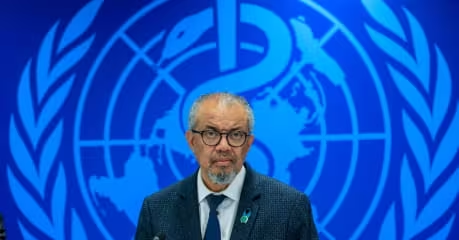
The head of the World Health Organization called on 24 November 2026 for the immediate lifting of the United States fuel blockade on Cuba, warning it was putting children's lives at risk. Tedros Adhanom Ghebreyesus made the appeal during a three-day visit to Cuba that took him through several healthcare facilities in Havana.
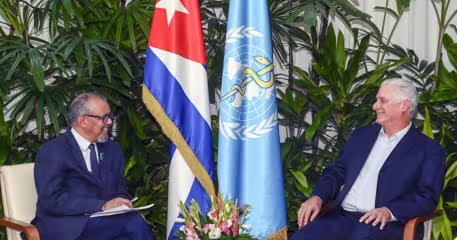
The next day he met Cuba's President Miguel Diaz-Canel to discuss the country's health needs. Speaking at a news conference, he said Cuba's life expectancy fell from 78.8 years in 2020 to 74.4 years in 2025, the first decline since records began in 1950. Cuba's government said the blockade measures have caused daily power outages lasting 20 hours or more, critical shortages of medicines and surgical supplies, and declining health indicators such as infant mortality rates.
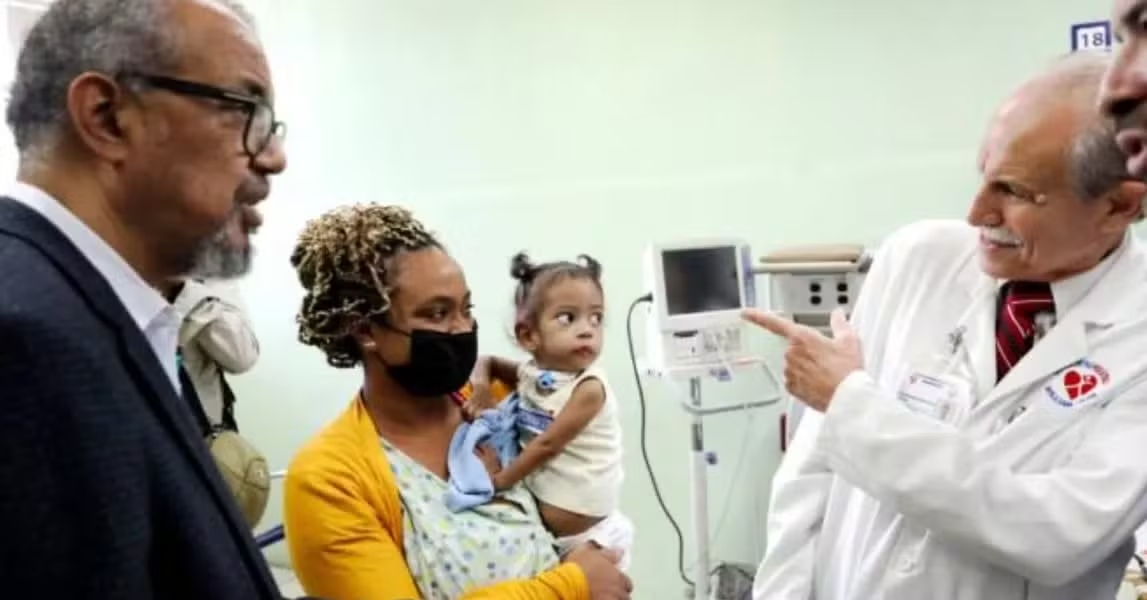
At Havana's William Soler Pediatric Hospital and Cardiocenter, Tedros met a 1-year-old girl awaiting open-heart surgery and her mother. He said the girl is among thousands of Cuban children whose lives are imperiled by critical shortages caused or worsened by the tightened US embargo. The WHO has pledged 2 million dollars to strengthen Cuba's national immunization program and provide essential medical equipment to healthcare facilities.
World Health Organization Director-General Tedros Adhanom Ghebreyesus called on 24 November 2026 for the immediate lifting of the United States fuel blockade on Cuba, warning it was putting children's lives at risk.
Tedros made the appeal during a three-day visit to Cuba that included tours of several healthcare facilities in Havana.
The World Health Organization pledged 2 million dollars to strengthen Cuba's national immunization program and provide essential medical equipment to healthcare facilities.
Tedros said the intensification of fuel restrictions and sanctions is causing direct harm to the Cuban people, especially the most vulnerable.
Cuba's government said the US blockade measures have caused daily power outages lasting 20 hours or more, critical shortages of medicines and surgical supplies, and declining health indicators such as infant mortality rates.
Tedros met Cuba's President Miguel Diaz-Canel during his November 2026 visit to discuss the country's health needs.
Tedros said at a news conference that Cuba's life expectancy fell from 78.8 years in 2020 to 74.4 years in 2025, the first decline since records began in 1950.
In posts on X, Tedros wrote, 'We agreed on the need to prioritise essential health services and time-sensitive interventions, particularly for children.'
In a post on X, Tedros wrote, 'Fuel restrictions and sanctions affecting the purchase of medical products are severely impacting the health system that Cuban doctors have built over decades.'
The United States government said the energy blockade is intended to push for political change on the island and that exports of food and medicine are subject to legal exemptions.
Tedros visited Havana's William Soler Pediatric Hospital and Cardiocenter, where he met a 1-year-old girl awaiting open-heart surgery and her mother.
Tedros said the girl is among thousands of Cuban children whose lives are imperiled by critical shortages caused or worsened by the tightened US embargo.
At the hospital, Tedros said of the girl, 'Her mother was by her side, holding on to hope. Her doctors know exactly how to help her. They just lack the resources.'
In his Havana remarks, Tedros said, 'Almost 100,000 surgeries are backlogged, including 12,000 for children. Some 34,000 pregnant women cannot access the care they need. Behind every number is a child, a mother, a family waiting.'
Tedros said, 'Health must never be a casualty of politics. For these children and their mothers, I call for these sanctions to be lifted immediately. Their lives depend on it.'