
Senate Republicans in US reject measure to limit Trump’s war powers in Iran
Senate Republicans have defeated a measure that would have required President Donald Trump to end the war on Iran or seek congressional approval to continue military action, voting it down 51 to 48 largely along party lines on 19 November 2026. The resolution, introduced under the 1973 War Powers Resolution, had passed the House in September 220 to 204, and a similar measure passed the Senate in June 2026, but it carried no force of law and was largely symbolic. Three Republicans, Susan Collins, Lisa Murkowski, and Rand Paul, voted with Democrats, while Democrat John Fetterman, who has voiced support for the war, voted against it. Senator Tim Kaine urged its passage, citing a Reuters/Ipsos poll in which 71 percent of Americans backed legislation to end the war.

Senate Republicans rejects war powers bill to halt fighting in Iran
The US Senate has rejected a war powers resolution aimed at forcing Donald Trump to halt the fighting with Iran, voting it down 48-51 largely along party lines. The House approved the resolution in September, but this was the first vote on it since the midterm elections that cost the GOP control of both chambers. John Fetterman was the lone Democrat opposed, while Susan Collins, Rand Paul and Lisa Murkowski were the only Republicans in favor. Democrats have brought a steady stream of such resolutions since the war began in February with a joint US-Israel attack, and though one passed both chambers in June, Trump ignored it. The Guardian holds that Senate Republicans once again defended a conflict that played a major role in their midterm losses.

John Fetterman breaks ranks with Democrats in their bid to end Iran war
Senator John Fetterman, a Pennsylvania Democrat, was the only member of his caucus to vote against a war powers resolution directing President Donald Trump to end U.S. hostilities in Iran, and the Senate defeated the measure 48-51 on Thursday. Three Republicans, Susan Collins, Lisa Murkowski and Rand Paul, joined nearly all Democrats in support, and the vote was the first major Senate vote on the conflict since the November midterm elections. Fetterman has opposed similar measures before, voting in September as the only Democrat against a comparable resolution that failed 49-50. The vote highlights his widening rift with his party: he has said 'I'm the only Democrat in the Senate' who supports the war, suggested he could leave the party if Chris Van Hollen became Democratic leader, and faces a primary challenge from Ahmed Moor, while President Donald Trump has encouraged him to switch parties.

Despite midterm shellacking, Senate GOP declines to rein in Iran war
Senate Republicans shut down a fresh Democratic attempt to halt the Iran war on Nov. 19, 2026, declining to rebuke President Donald Trump even after midterm losses driven partly by the unpopular conflict. The war powers resolution failed 48-51, with only Sens. Susan Collins, Rand Paul and Lisa Murkowski crossing party lines, fewer GOP defectors than a similar vote before the elections, and Sen. Thom Tillis flipping to oppose it after backing the September effort. Democrats, who won a 56-seat Senate majority, say the vote will not be the last: Sens. Tim Kaine and Tammy Duckworth plan amendments to any year-end spending deal blocking war funding, setting up a bigger fight as the Dec. 11 shutdown deadline nears.
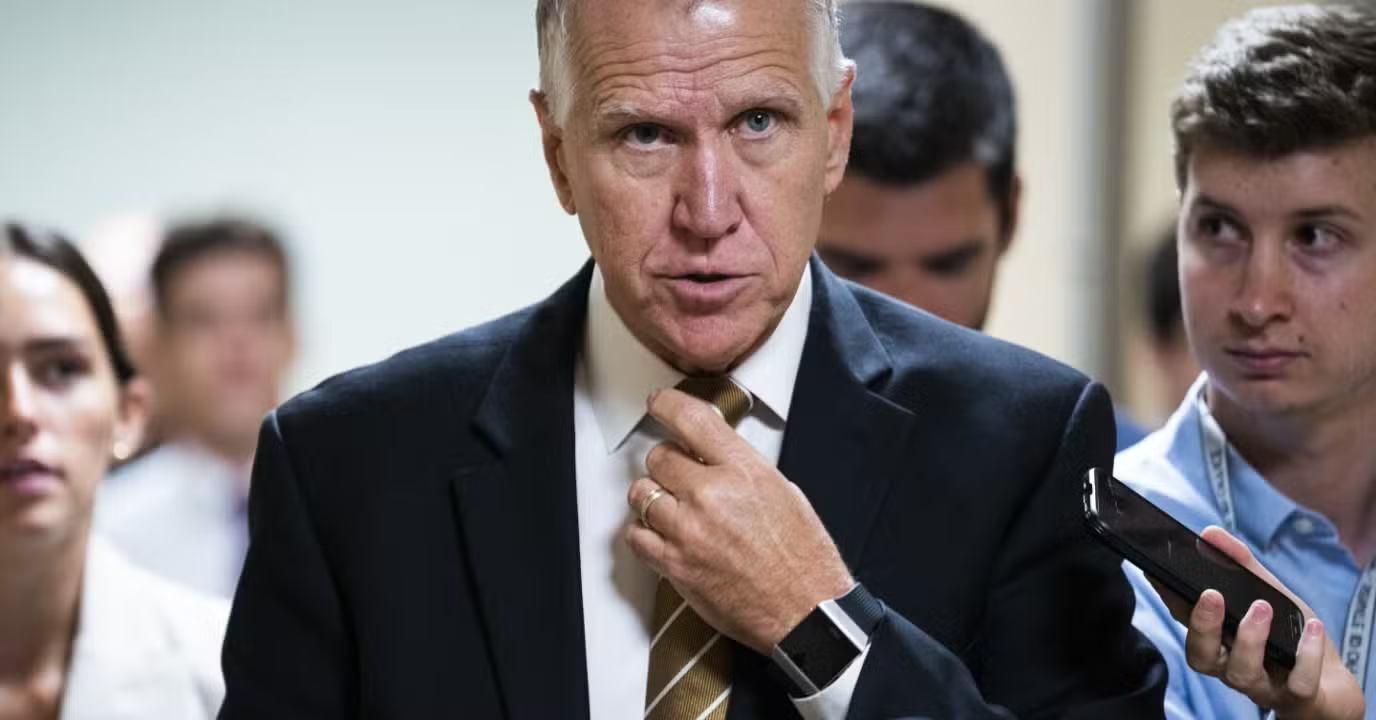
Senate Republicans Vote Down Iran War Powers Resolution
Senate Republicans voted down an Iran war powers resolution 48-51 on 19 November 2026, lawmakers' first vote on the issue since the midterms. The House-approved measure drew support from three Republicans, Rand Paul, Lisa Murkowski, and Susan Collins, but Sen. Thom Tillis, who had backed a similar effort in September, voted no, and Democrat John Fetterman was the lone opposition within his party. The resolution is largely symbolic and cannot force Trump's hand, though several Democrats plan to tackle Iran war spending in December, with Kirsten Gillibrand pushing an amendment to cut off offensive operations funding and some senators threatening to vote down any funding package that does not restrict the war.

Senate rejects resolution to block Trump from striking Iran
The Senate has rejected a resolution meant to block President Donald Trump from ordering further strikes on Iran. The Washington Post's reporters describe the vote as the first test of Republican support for the unpopular war since the Republican Party lost control of Congress in the midterm elections.

Iran war powers measure again falls short in Senate
The Senate has again rejected a House-adopted resolution that would have directed President Trump to remove U.S. forces from hostilities with Iran, voting 48 to 51. Three Republicans, Senators Susan Collins, Lisa Murkowski and Rand Paul, joined all but one Democrat, Senator John Fetterman, in support, in the first congressional vote on the war since midterm elections that dealt Republicans sweeping losses and in which voters cited the war among their top concerns. Senator Tim Kaine, who has led Democrats' repeated war powers efforts, urged Republicans to back the measure, saying the election results made the war's unpopularity clear and hoping the Senate would heed the public's message to stop what he calls the illegal, catastrophic war. The resolution's impact would have been largely symbolic, and administrations of both parties have argued the concurrent resolution process is unconstitutional, an argument the White House made again before the vote.

WATCH: Senate Republicans block latest Democratic effort to end war in Iran
Senate Republicans blocked a Democratic effort to end the war in Iran on 19 November 2026 in a 48-51 vote, the first time the party weighed in on the conflict since its midterm losses. The war powers resolution was mostly symbolic: it would not have gone to the president, but passage would have stood as a rebuke of the administration's military actions. Three Republicans, Susan Collins, Lisa Murkowski and Rand Paul, voted to end the war, while Democrat John Fetterman sided with Republicans, and Republican Tim Sheehy argued before the vote that the U.S. should finish the job. Virginia Sen. Tim Kaine, who has led the war powers efforts, said the American public is tired of the war and of escalating gasoline prices, and an AP Voter Poll found about 6 in 10 voters called the military action the wrong decision.

