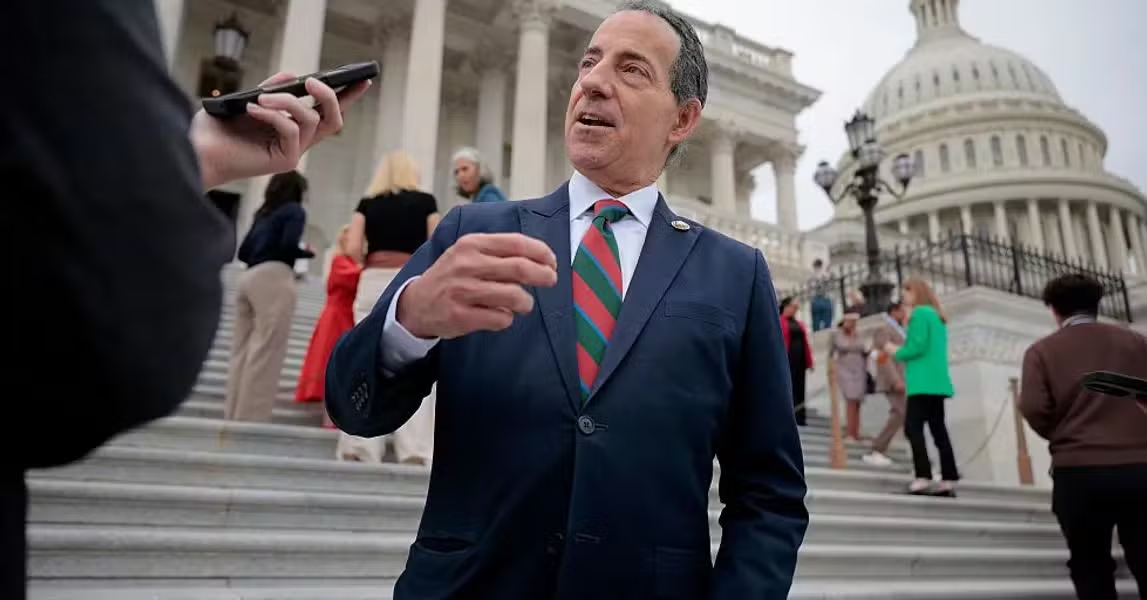
Raskin asks FBI to recover records deleted from auto-erasing apps by Trump officials
‘It Is a Felony’: Raskin Says Trump Officials Engaged in ‘Widespread Destruction’ of Government Records | Common Dreams
commondreams.org· 2d
Raskin warns federal agencies against Signal use
newsnationnow.com· 2d
DAY AHEAD - My Daily Editorial Note
substack.com· 3d
Raskin to Trump Administration: Save Those Signal Chats
washingtonsun.com· 3d
Raskin eyes Judiciary Committee probe of Trump ‘pardon brokers’
politico.com· 3d
- 2026-11-19-raskin-to-patel-fbi-re-third-party-messaging-services.pdf
house.gov
Jamie Raskin Warns Trump Administration Not To Delete Messages
huffpost.com· 7d
Rep. Jamie Raskin of Maryland, the incoming chairman of the House Judiciary Committee, has warned the Trump administration against destroying federal records sent through auto-erasing messaging apps. On November 16 he wrote to the Justice Department and four other federal agencies, saying he had obtained evidence that officials use non-government platforms such as WhatsApp to send disappearing messages. His letter included a screenshot of a chat between FBI general counsel Samuel Ramer and Drew Lynch, an associate of the president's son, showing the messages were set to delete automatically after one week.
Early on November 20, just before 5am, Raskin followed up with formal memos to top officials, including FBI Director Kash Patel, Attorney General Todd Blanche, and Homeland Security Secretary Markwayne Mullin, demanding they preserve electronic communications on apps including Signal, WhatsApp, and Telegram. The memos note it is a felony to unlawfully conceal, remove, alter, or destroy federal records, and Raskin's letters say using apps with auto-deleting messages violates the law and could undermine congressional oversight.
Raskin has also asked the FBI to open an inquiry to identify records improperly deleted from non-government applications and, under 44 U.S.C. § 3106, to take immediate action to recover them. He is due to take over the House Judiciary Committee with subpoena power in 43 days, in early January 2027.
Rep. Jamie Raskin of Maryland, the incoming chairman of the House Judiciary Committee, warned the Trump administration not to delete its messages in letters to the Justice Department and four other federal agencies.
Raskin said he had obtained evidence that officials have been using non-government messaging platforms such as WhatsApp to send disappearing messages.
His letter included a screenshot of a chat between FBI general counsel Samuel Ramer and Drew Lynch, an associate of the president's son, showing an icon indicating the messages were set to delete automatically after one week.
Early on November 20, 2026, just before 5am, Raskin sent formal memos to top Justice Department officials demanding they preserve electronic communications on apps including Signal, WhatsApp, and Telegram.
The memos went to FBI Director Kash Patel, Homeland Security Secretary Markwayne Mullin, Attorney General Todd Blanche, Bureau of Prisons Director William Marshall, and Acting Immigration and Customs Enforcement Director David Venturella.
The memos note that it is a felony to unlawfully conceal, remove, alter, or destroy federal records.
Raskin is due to wield subpoena power as chairman of the House Judiciary Committee in 43 days, in early January 2027.
Raskin wrote in his memos: 'There is significant evidence that Trump Administration officials have engaged in the widespread destruction, mutilation, and concealment of government records, seemingly with the express purpose of circumventing federal record preservation laws. This attempt to evade transparency extends to the highest levels of federal agencies, including top-ranking law enforcement officials.'
Raskin said at the U.S. Capitol: 'There's a new sheriff in town.'
Scott MacFarlane forecast that the day ahead and the weeks ahead would be partly defined by the saving and preserving of records in Washington.
MacFarlane offered the opinion that the incoming House Judiciary Committee majority is in essence directing Trump administrators to become 'pack rats' and preserve even the smallest and most fleeting communications.
Raskin sent half a dozen letters to Justice Department components and various Department of Homeland Security agencies warning that using apps like Signal with auto-deleting messages violates the law and could undermine congressional oversight.
His letter asks the FBI to open an inquiry to identify records improperly deleted from non-government applications and, under 44 U.S.C. § 3106, to initiate immediate action to recover those records.
Raskin described the exchange as 'concerning a potential or ongoing investigation involving an individual wanted by federal authorities on health care fraud and related charges,' and said the participants appear to have deliberately configured the conversation to automatically delete messages after one week.
Raskin wrote: 'It is a felony to unlawfully conceal, remove, alter, or destroy federal records, as Mr. Ramer appears to have done here.'

