Hundreds of men rally in Bern against violence toward women and online misogyny
Summary
- Hundreds of men led a "Men against Violence against Women" rally outside the Swiss parliament in Bern on 14 November 2026.
- The rally followed concerns that misogyny is widespread online among teenage boys and young men in Switzerland.
- A June 2026 survey by the University of Zurich and mencare found half of men aged 18 to 24 held a dominance-based view of masculinity.
- Academics and advocacy groups have for the first time tried to map the extent of the manosphere movement in Switzerland.
- Swiss Justice Minister Beat Jans attended an awareness conference on online invective against women earlier in November 2026.
Reactions
- Justice Minister Beat Jans said, "It is not all men. But we must also admit: It is almost always men."
- Beat Jans said violence by men does not begin with the first blow but with a disparaging remark, and that all men have a duty.
- Co-organizer Christoph Gosteli said men are part of the problem of violence against women and queer people.
- Christoph Gosteli urged men to take a stand and be part of the solution rather than the problem.
- The University of Zurich and mencare survey called for a society-wide debate about ideals of masculinity that promote violence, starting in schools.
Timeline newest first
Hundreds of men led the "Men against Violence against Women" rally outside the Swiss parliament in Bern on 14 November 2026 to denounce misogyny and violence against women.
Sources newest first
Hundreds of men lead protest to urge other men to help reduce violence against women
Hundreds of men led a "Men against Violence against Women" rally outside the Swiss parliament in Bern on 14 November 2026, urging other men to counter misogyny online and in the "manosphere." Justice Minister Beat Jans said it is "almost always men" who commit violent crimes, and co-organizer Christoph Gosteli urged men to be part of the solution.
Background newest first
 Opinion | Some of the Right’s Worst Men Are Being Held Accountable
nytimes.com· 3d
In a New York Times opinion column, Jessica Grose argues the manosphere is wounded, pointing to Max Miller's and Brandon Herrera's election losses, Amy Acton's defeat of Vivek Ramaswamy, and Russell Brand's rape conviction, though she says young men's swing to Democrats may owe more to an unpopular war than to rejecting sexism. She warns the manosphere remains a real online threat and urges creating political content that offers young men a better way to be.
 Apparently, Some Women Deserve It.
substack.com· 7d
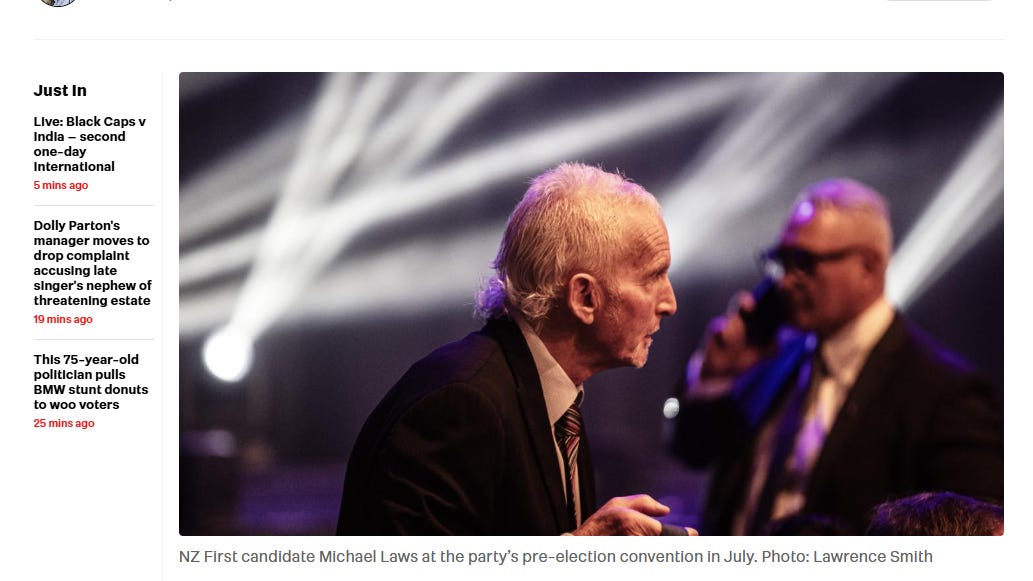
In a Substack essay prompted by Michael Laws' comments about candidate Dr Kayla Kingdon-Bebb's appearance and the reprimand that followed, Bevan Chuang argues that a culture celebrates provocative men as banter while judging women for their looks and sexuality, whether they deserve the treatment. She ties this to a London jury finding Russell Brand guilty of rape and sexual assault, Donald Trump's liability in the E. Jean Carroll case, and the 'slut' remarks Laws made about her in a 2013 Facebook exchange.
 Of misogyny, Musk, and men
motherjones.com
In an opinion column, a Mother Jones columnist turns to TikTok videos of women before and after the election to argue that Trump's victory was powered by men — especially young and Latino men — and abetted by Elon Musk's X and a manosphere normalizing misogyny. She predicts abortion restrictions and a reckoning, and urges reaching young men before they harden into misogyny.
Looksmaxxing - Wikipedia
wikipedia.org· 2y
A Wikipedia article on looksmaxxing, the manosphere practice of maximizing male attractiveness, traces its origins on 2010s incel forums and its TikTok popularization, describes practices from skincare to steroids and surgery, and notes criticism from commentators, doctors, and researchers who call it harmful and pseudoscientific.
