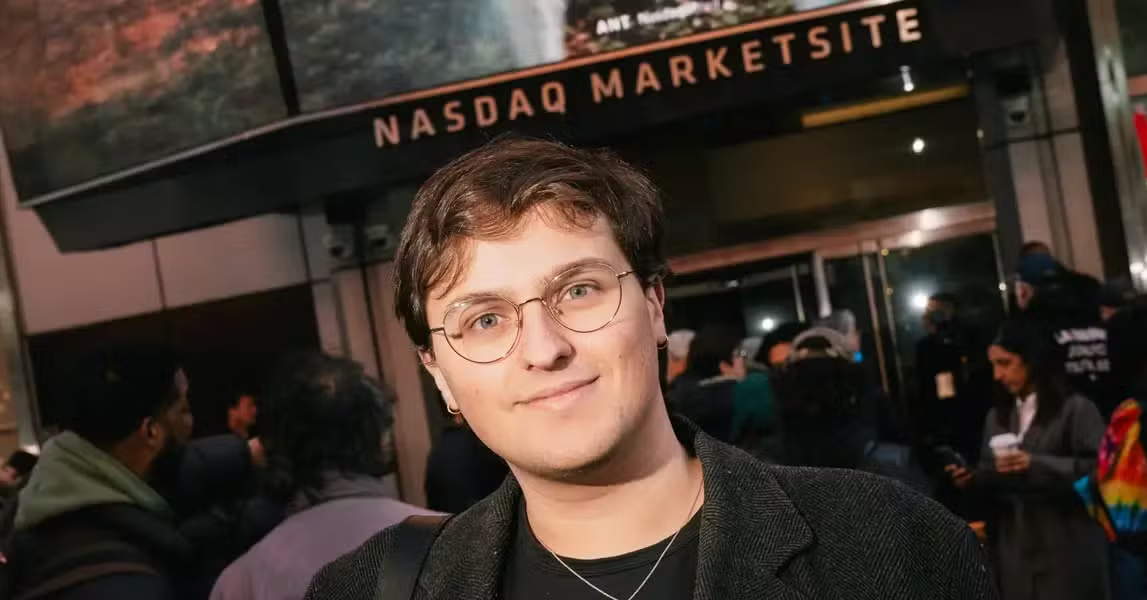
Four protesters arrested as veterans of the 2008 crash demonstrate against Anthropic's IPO
Anthropic went public on the Nasdaq on 19 November 2026, pricing its shares at $83 and making its cofounders, including Dario Amodei, rich.
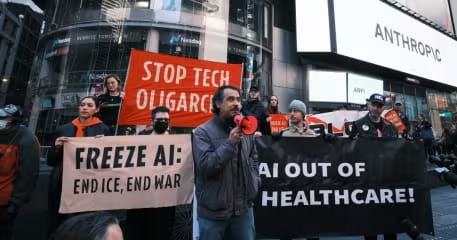
Protesters from groups including Climate Defiance, NYC-DSA, ACT UP and New York Communities for Change demonstrated outside under the hashtag #StopTechOligarchs.
Speakers called the AI bubble worse than the 2008 financial crisis, warned pension funds would be stripped, and demanded no bailout for Big Tech.
Four protesters were arrested after sitting at the Nasdaq entrance as Dario Amodei left the building to cameras and cheers.
One report estimated about 30 activists attended, outnumbered, possibly threefold, by photographers and journalists.
The protesters said they wanted a slowdown of AI rather than a ban, and all those interviewed said they used AI themselves.
Anthropic's shares priced at $83 in the initial public offering, and demand for the shares appeared strong before midday trading began.
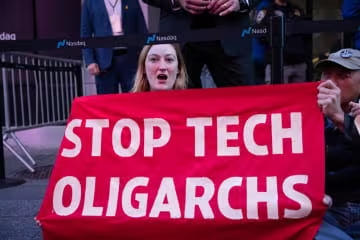
Demonstrators held signs reading "Stop Tech Oligarchs" and "Freeze AI" and chanted slogans against the IPO in New York City's Times Square.
James Inniss of New York Communities for Change said AI is a bubble worse than the 2008 real estate crisis and that pension funds will be stripped in five to ten years when it bursts.
Bryce Rogers of Resisting Automated Disempowerment said he protested because the IPO moved ahead despite a lack of information about the risks of Anthropic's technology, and called for more organizing to demand greater regulation and transparency.
Brandon Cuicchi of ACT UP New York said hospitals are cutting staff and trying to replace them with AI, and that AI is deciding medical outcomes and treatments in the United States.
Kenny Moll, an activist affiliated with QuitGPT and the Sunrise Movement, said he was concerned about AI's environmental impact and that AI companies are working hand in hand with fascist governments.
In a statement issued after the demonstration, organizers attributed to one of the arrested demonstrators the words: "Our demand is clear: freeze reckless AI development and don't bail out Big Tech when their bubble inevitably pops."
Dario Amodei exited the Nasdaq building to a sea of cameras and cheers about half an hour after the opening bell rang.
At 9:30 a.m., as the opening bell sounded inside the Nasdaq, a group of people in suits took a selfie using the protest outside as a backdrop.
Jose Gonzalez, a researcher with New York Communities for Change, said the concentrated stock market reminded him of 2008 and that people respond that this is familiar territory.
Jose Gonzalez forecast that the municipal employees' $326 billion pension fund will inevitably be a forced owner of Anthropic shares.
Police cuffed four protesters who sat in front of the Nasdaq doors, over an hour into the demonstration and by which point most protesters had left.
About 30 protesters unfurled large red signs outside the Nasdaq from 9 a.m. on IPO day, outnumbered by a swarm of photographers and journalists.
The protesters came from organizations ranging from Climate Defiance to the Democratic Socialists of America to ACT UP, united under the hashtag #StopTechOligarchs.
The protesters said they wanted a slowdown of AI rather than a ban, and all of those interviewed said they used AI themselves.
The New York protest was smaller than parallel protests in San Francisco, where discussion of AI is concentrated.
Ian Lund, a 31-year-old climate worker who cofounded the New York Tech Accountability Project, said the IPO was a "failure of the laws that we have on the books" and that he did not want to assume its risk through his 401(k).
Newly sworn-in New York state senator Aber Kawas said IPOs were "something that happens" and that she was more interested in reducing AI use in the wars in Gaza and Iran than in Anthropic's financial milestone.

