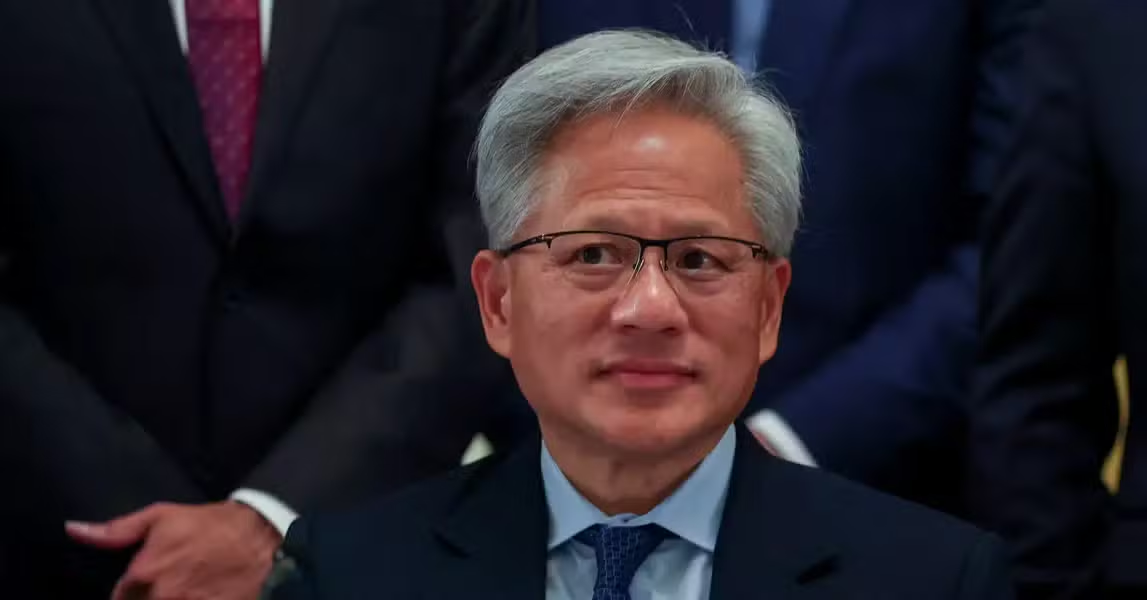
Jensen Huang to testify before Congress over Nvidia chip sales to China and ties to suspected spy
Nvidia's board has reinstated CEO Jensen Huang after a brief internal investigation into his reported affair with a woman suspected of being a Chinese spy, reversing the resignation he had first tendered.
Huang is set for a closed-door, transcribed interview on Dec. 1 before the House Foreign Affairs Committee, the Select Committee on the Chinese Communist Party and the House Intelligence Committee, then a public Senate Banking Committee hearing on Dec. 3. Nvidia General Counsel Tim Teter follows with the House panels on Dec. 2, and Commerce Secretary Howard Lutnick has agreed to appear before the Senate committee, with no date set.
Top Democrats on four House committees wrote to President Donald Trump demanding to know what and when he knew about the relationship, and top Judiciary and Foreign Affairs Democrats asked Lutnick's son about his family's financial ties to Nvidia. Lawmakers of both parties are pressing for investigations into China buying Nvidia chips through intermediaries, whether the administration overlooked the national security risks, and whether officials intervened to secure Huang's return.
Sen. Mark Warner suggested the Commerce Department may have allowed Nvidia to sell sensitive technology beyond Megaspeed through other Chinese shell companies, and Sen. Tom Cotton said he had warned the administration that advanced chips were getting past export controls. Lutnick was reported to have resisted pressure from Treasury Secretary Scott Bessent and Secretary of State Marco Rubio to put Megaspeed on a trade blacklist, and Bessent confronted him over it earlier in November.
The Atlantic reported that Lutnick transferred federal agents tasked with investigating smuggling of advanced AI chips to his personal security detail, and Sen. Thom Tillis said Lutnick was briefed on U.S. intelligence findings about the affair before President Trump invited Huang aboard Air Force One to Alaska en route to Beijing.
The Commerce Department says Lutnick has complied with all ethics rules, and key Republicans have joined Democrats in calling on him to testify about his oversight of chip export policies.
Nvidia's board reinstated CEO Jensen Huang after his initial resignation, following a brief internal investigation into his reported affair with a woman suspected of being a Chinese spy.
Huang is scheduled to sit for a closed-door, transcribed interview on Dec. 1, 2026, before the House Foreign Affairs Committee, the Select Committee on the Chinese Communist Party, and the House Intelligence Committee.
Huang is scheduled to appear at a public Senate Banking Committee hearing on Dec. 3, 2026, which Chairman Tim Scott called over public reports raising significant national security concerns.
Nvidia General Counsel Tim Teter is scheduled for a closed-door, transcribed interview with the three House committees on Dec. 2, 2026.
Committees in both chambers are requesting testimony from Nvidia counsel and Commerce officials, and a Commerce spokesperson says Secretary Howard Lutnick has agreed to appear before the Senate Banking Committee, with no date set.
The House Energy and Commerce Committee is in talks with Nvidia and the Commerce Department for a briefing after sending letters on national security and export control concerns, and Chairman Brett Guthrie wrote Commerce seeking clarification on its AI chip export control actions.
Top Democrats on the Energy and Commerce, Foreign Affairs, Judiciary, and Oversight committees wrote to President Donald Trump demanding to know when and what he knew about Huang's relationship with the suspected Chinese asset.
After Huang's initial resignation, the top Democrats on the House Judiciary and Foreign Affairs committees wrote a joint letter to Commerce Secretary Howard Lutnick's son seeking information on his family's financial ties to Nvidia and asking him to preserve related records.
Lawmakers of both parties are pressing for investigations into China buying Nvidia chips through intermediaries, whether the Trump administration overlooked national security risks tied to the alleged relationship, and whether officials intervened to secure Huang's return.
The chairmen of the House Foreign Affairs Committee, the Select Committee on the Chinese Communist Party, and the House Intelligence Committee said in a joint statement that 'The NVIDIA board's brief internal investigation and reinstatement of Jensen Huang do not erase the national security threats and questions that must be addressed'.
Brett Guthrie wrote in a letter to then-interim CEO Colette Kress that 'These reported events raise questions about the company's compliance with existing federal law regarding the export of advanced technologies, as well as the robustness and efficacy of the company's security controls'.
Guthrie wrote that 'Understanding what happened, how it happened, and how to move forward are critical to mitigating the impacts of this ongoing situation, ensure national and economic security, and ensure that the U.S. continues to be a global leader in the AI stack'.
Reps. Frank Pallone Jr., Gregory Meeks, Jamie Raskin, and Robert Garcia wrote to President Trump that 'Regardless of whether your memory is faulty or simply selective, the risks to the country remain' and that his 'willful blindness to the economic and national security risks posed by this scandal have put the American people at great risk'.
Senate Minority Leader Chuck Schumer said Democrats will investigate any wrongdoing by the Trump administration, Jensen Huang, other Nvidia executives, and anyone selling out national security for financial gain.
Sen. Elizabeth Warren said Nvidia's board still owes Congress answers about compliance with U.S. export controls and that the Trump administration must explain which senior officials supported Huang's reinstatement.
House Minority Leader Hakeem Jeffries said Congress will not be deterred from a swift, thorough, and wide-ranging investigation into business malfeasance by Nvidia and corrupt abuse of power by Howard Lutnick and the Commerce Department.
Gregory Meeks said the American people deserve to hear publicly from Huang about how advanced technology reached China's hands, and that Chairman Mast should convene a public hearing because a transcribed interview should not replace one.
Rep. Don Bacon said Congress needs to get to the bottom of the approved AI chip sales to China and that the Nvidia board should have ignored the administration's inexplicable desire to save Huang.
Sen. John Curtis said Nvidia's board claimed it relied on input from senior U.S. officials, and asked who in the government weighed in.
Sen. Mark Warner suggested the Commerce Department may have allowed Nvidia to sell sensitive technology beyond Megaspeed through other Chinese shell companies, undermining restrictions on China's access to advanced chips.
Sen. Tom Cotton says he warned the Trump administration that advanced chips were getting past export controls.
Commerce Secretary Howard Lutnick was reported to have resisted pressure from Treasury Secretary Scott Bessent and Secretary of State Marco Rubio to put Megaspeed on a trade blacklist, and Bessent was reported to have confronted him over it earlier in November 2026.
The Atlantic reported that Lutnick transferred federal agents tasked with investigating smuggling of advanced AI chips to his personal security detail.
Sen. Thom Tillis says Lutnick was briefed on U.S. intelligence findings that Alice Huang was having an affair with a suspected Chinese spy before President Trump invited Huang to join him on Air Force One to Alaska en route to Beijing.
Democrats are pressing for answers on whether Lutnick was motivated by a financial conflict of interest, whether Southeast Asian data centers supplying computing power to China had ties to Cantor Fitzgerald, and what role he played in delaying rules restricting chip sales to Megaspeed and A201.
The Commerce Department says Lutnick has complied with all ethics rules, and key Republicans have joined Democrats in calling on him to testify about his oversight of chip export policies.
Sen. Mark Warner said 'Mr. Lutnick's got a host of problems.'
Sen. Tom Cotton said in a post on X that 'Congress has much to investigate and we will pass overwhelmingly bipartisan chip export-control bills, including my Chip Security Act, one way or the other.'
Treasury Secretary Scott Bessent said in a CNBC interview that he is frustrated over the delay in restricting chip sales, that 'President Trump made it very clear China should not receive any Nvidia chips above H100s,' and that the Commerce Department 'has the pen' and should explain its internal processes.
Rep. Jamie Raskin said Lutnick and other Trump administration members may 'have converging personal, political, corporate and financial interests in making sure' Jensen Huang remains Nvidia's chief executive.
Sen. John Kennedy said on NBC's Meet the Press that the Commerce Department appeared to knowingly let sensitive AI technology skirt export restrictions, that he wants Bessent and Lutnick before a committee under oath, and that 'If Secretary Lutnick is giving our chips away, he needs to stop it, in my opinion.'
Incoming Senate Commerce Committee Chair Maria Cantwell said she has 'great concerns about' Lutnick's leadership of the Commerce Department.
Sen. Thom Tillis said Lutnick should resign, should have blocked Alice Huang from joining the trip to Beijing, should have known about the intelligence findings on her, and, asked whether Lutnick should resign, said 'I think he should roll.'
Analyst Dan Ives forecast that Jensen Huang's comments at the hearings will have far-reaching implications for the whole market, writing that 'Next week Jensen carries the weight of the entire tech sector and AI Revolution thesis when he marches into DC.'
Dan Ives wrote that 'The negative ripple effect from Jensen/Nvidia is around tightening export controls to China, closing any loopholes, and more scrutiny around Big Tech and the AI Revolution,' and estimated tighter export controls to Asia would cut revenue by a containable 15% to 20% at most.
Dan Ives said the hearings will give insight into how the government is thinking about regulating Nvidia's and the AI industry's relationship with China, noting that 'The market volatility and nervousness is centered on a number of issues that the Jensen soap opera has highlighted front and center.'

