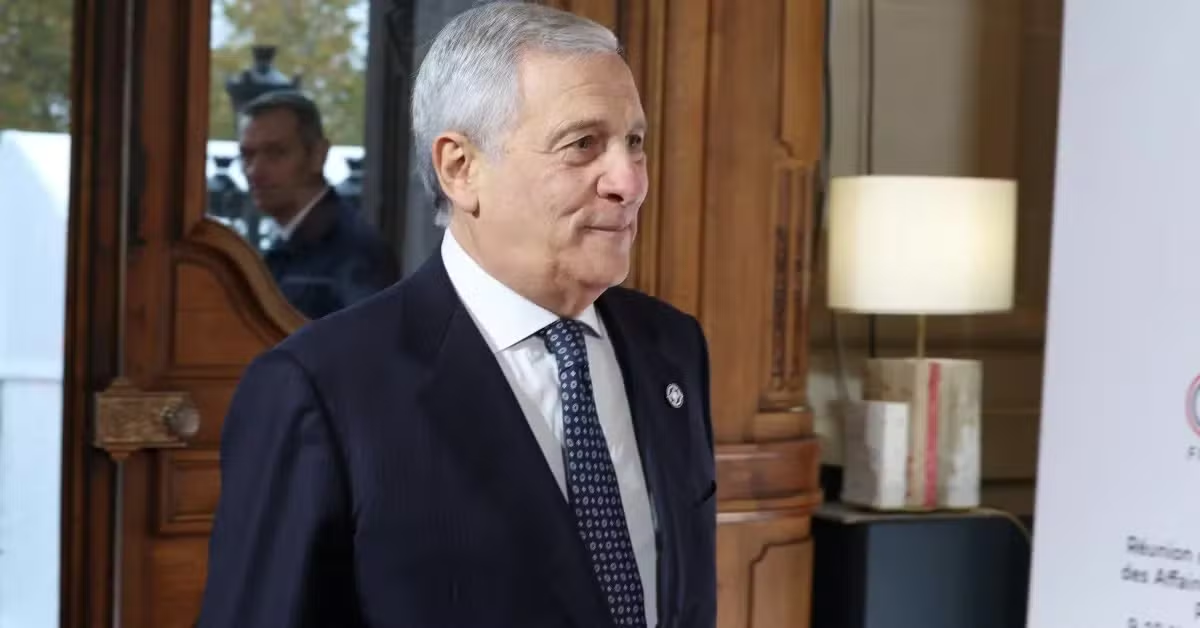
Victims of Iranian drone attack on Kuwait named as Antonio Saccoccio and Emanuele Lo Russo
Italians killed in Kuwait: Why is Iran denying responsibility?
aljazeera.com· 8h
Two Italians killed in Kuwait drone attack; Trump says Iran war ends ‘whenever I want it’
cnbc.com· 17h
Iran’s Araghchi calls Kuwait attack ‘suspicious’, offers cooperation
Two Italians Killed in Iranian Drone Attack on Kuwait, Officials Say
nytimes.com· 26h
Two Italians killed in attack on Kuwait site, Iran denies involvement
channelnewsasia.com· 26h
Two Italians killed in Iranian strike on Kuwait
ft.com· 27h
Two Italians killed by ‘drone strike debris’ in Kuwait
Deux Italiens tués dans une attaque de drones iraniens contre le Koweït
liberation.fr· 28h
Two Italians killed in attack on Kuwait site, Iran denies involvement
reuters.com· 29h
Two Italians killed in Iranian drone strike on Kuwait
abc.net.au· 29h
Deux Italiens tués par des drones iraniens au Koweït
lemonde.fr· 29h
Iranian attack on Kuwait kills two Italians, Italy’s foreign minister says | CNN
cnn.com· 30h
Two Italian workers killed in Iranian strike in Kuwait, source says
🚨BREAKING: DIRECT HIT ON US BASES!!!
youtube.com· 9d
Army Soldier Who Survived Deadly Iranian Strike Files Whistleblower Complaint To Congress
huffpost.com· 11d
Two Italian technicians were killed in an Iranian drone attack on Kuwait, and Italian media have named them as Antonio Saccoccio, 65, from Formia, and Emanuele Lo Russo, 36, from Rome.
The two men worked for the Italian subsidiary of the German military group Rheinmetall and were maintaining detection antennae for the Skyguard air-defence system used by Kuwait's armed forces. Italian foreign minister Antonio Tajani said the drones targeted Kuwaiti military installations including an air-defence detection station where the two were working, and that a powerful explosion killed them both.
Kuwait's defence ministry confirmed the deaths and said a captain in the Kuwaiti army and a Pakistani national were injured, while the army said four others were hurt and Kuwaiti forces intercepted several drones during the attack. Falling debris also caused material damage. The strike came while Kuwait's National Guard and military were meeting a visiting Italian delegation that included Carabinieri commander Lieutenant-General Salvatore Lungo.
The two technicians were reported to be the first European civilians to die as a result of the US-Israel war on Iran that began in late February 2026. Rome lodged a complaint with Iran's embassy over the attack.
Army Maj. Stephen Ramsbottom, wounded in a March Iranian strike on a US operations center in Kuwait, filed a whistleblower complaint accusing Pentagon leaders of failing to protect troops there.
Ramsbottom said in a television interview that the Kuwait operations center had nothing designed to protect it from an aerial attack despite concerns raised about its vulnerability.
Ramsbottom called the Iranian strike on the Kuwait operations center a tactical failure by the Army, its leadership, and himself, saying the planning was not done well.
Ramsbottom said the failed planning for the operations center needed to be a lesson that is learned.
Iran launched drone strikes at US bases in Kuwait in retaliation for US air strikes on Keshum Island earlier in the day, with air raid sirens sounding across Kuwait.
Iran also struck an MQ1 drone.
Iran expanded its strikes to a US base in Bahrain, with major impacts heard at the Shaikh Isa Air Base and air raid sirens sounding there.
An IRGC spokesperson said Bahrain's Al Khalifa regime made three key mistakes, collaborating in attacks against Iran, living within America's security bubble, and violating the sanctity of Shia religious authority.
The spokesperson warned that if Bahrain continued down this path it would cast doubt on its ability to survive in the new regional security order.
Bahrain's Ministry of Interior issued an alert urging citizens and residents to remain calm, proceed to the nearest safe location, avoid main roads unless necessary, and await further instructions.
Kuwait's defence ministry said its army detected a number of drones within Kuwaiti airspace in an attack it described as Iranian.
A source close to the matter said two Italians were killed in an Iranian drone attack in Kuwait and that the victims were technicians for the German defence group Rheinmetall.
Antonio Tajani said Iranian drones targeted Kuwaiti military installations including an air defence detection station where two Rheinmetall Italia technicians were working, and that a powerful explosion killed both.
Kuwait's defence ministry confirmed the two deaths, said a Kuwaiti and a Pakistani national were injured, and said the drones were shot down in Kuwaiti airspace, causing shrapnel to fall.
Kuwait's defence ministry said falling debris from the attack on a vital site injured four people and caused material damage.
Kuwait's defence ministry confirmed the two Italians died of their injuries and that the other two people injured were a captain in the Kuwaiti army and a Pakistani national.
Iran's armed forces spokesperson Abolfazl Shekarchi denied Iran had attacked a 'vital' site in Kuwait, saying no offensive or military operations by Iranian forces had taken place in the region.
Iran's embassy in Rome categorically denied the claims of an Iranian drone attack on a military site in Kuwait in a post on X.
Iran's Foreign Minister Abbas Araqchi denied Iran's involvement and said Tehran was ready for joint investigations with Kuwait 'to identify the origin of the incident and parties involved in it'.
Tajani said Italy would lodge a complaint with the Iranian embassy over the incident.
Tajani urged caution, saying there was no need to attack Arab countries bordering Iran that were not involved in the war.
European Commission President Ursula von der Leyen called for strengthened pressure against Iran and said the day's events showed once again that Gulf security concerns everyone.
The attack happened while Kuwait's National Guard and military were meeting a visiting Italian delegation that included Carabinieri commander Lieutenant-General Salvatore Lungo and the Italian ambassador to Kuwait.
Kuwait's Ministry of Defence called the attack on a vital site 'heinous Iranian aggression'.
Iran's Foreign Minister Abbas Araghchi, in a phone call with Kuwaiti counterpart Jarrah Jaber Al-Ahmad Al-Sabah, denied Tehran's involvement, called the incident 'suspicious', and said it 'looks like a precooked recipe for war'.
Iran's military spokesman Sardar Shekarchi said the accusations against Iran were a cover for continuing evil, pointing to the 'Zionist regime' and American forces' history of using false flags and regional adventures.
Prime Minister Giorgia Meloni wrote on X that she expressed her deepest sorrow and heartfelt condolences to the victims' families on behalf of herself and the government.
Gulf Cooperation Council Secretary-General Jasem Mohamed Albudaiwi condemned the attack as 'brutal' and said Iran's continued attacks on Kuwait, targeting vital facilities and endangering civilians, constitute a dangerous escalation that threatens regional security.
Italy's foreign ministry said the two Italians killed worked for the Italian subsidiary of the German military group Rheinmetall on an air-defence system used by the Kuwaiti Armed Forces.
Kuwait's army said two Italian workers were killed and four others injured, and that Kuwaiti forces intercepted several other drones during the attack.
Saudi Arabia's Foreign Ministry condemned what it called 'Iranian aggression' against Kuwait, saying 'The continued Iranian attacks further exacerbate tensions and undermine stability' and that such violations obstruct international efforts to restore regional security.
Iran's Foreign Minister Abbas Araghchi said on Telegram he had spoken with Antonio Tajani, expressed regret over the deaths, stressed Tehran had no role in the incident, and said Iran was ready to cooperate with the governments of Kuwait and Italy in investigating it.
Italian media named the two killed technicians as Antonio Saccoccio, 65, from Formia, and Emanuele Lo Russo, 36, from Rome.
The two men were maintaining detection antennae for the Skyguard air defence system used by Kuwait's armed forces.
The two technicians were reported to be the first European civilians to die as a result of the US-Israel war on Iran that began in late February 2026.
Rome lodged a complaint with Iran's embassy over the attack.
Kuwait's Foreign Ministry condemned the attack as 'sinful' and said Kuwait reserved its right to take all measures to protect its sovereignty and the security of its citizens and residents.
After a call between Kuwait's foreign minister and Antonio Tajani, Kuwait's Foreign Ministry said the two had jointly condemned the strike.
Tajani told the Italian parliament the drones were 'of Iranian origin' and described them as Iranian-built drones of a type also used by Iran-backed militias.
Iran's embassy in Rome suggested the attack could have been staged to drag Europe into the Iran war.

