US military warns of strain on forces as Trump weighs new strikes on Iran
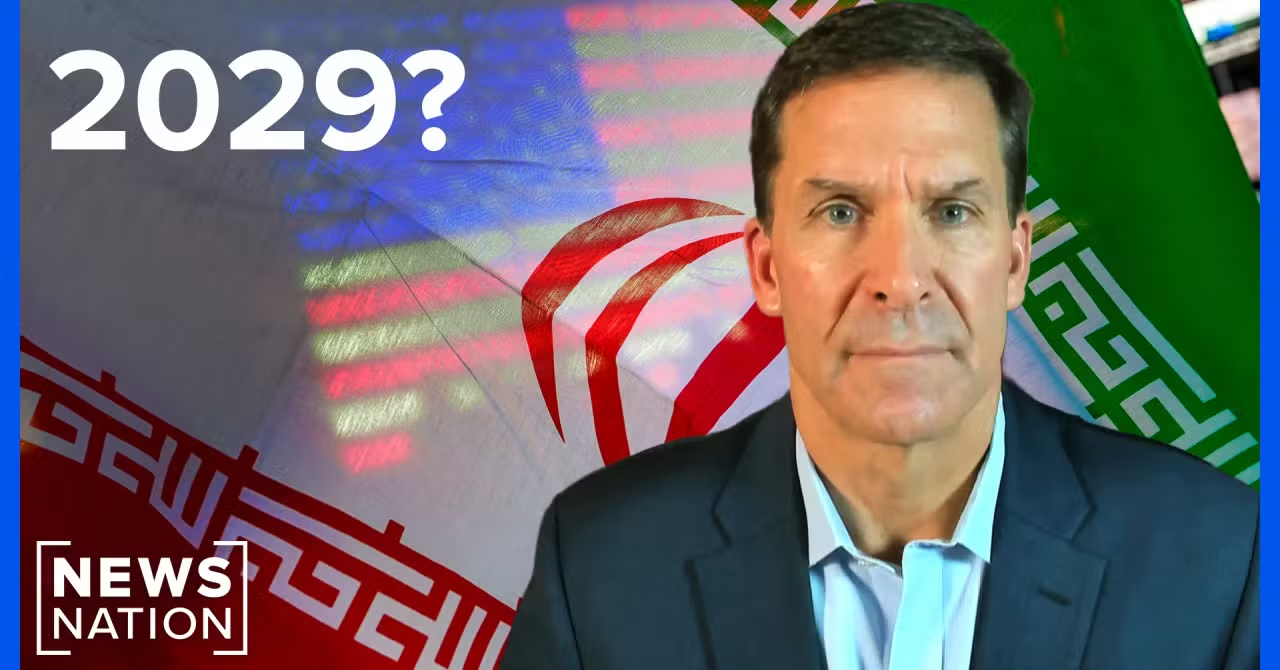
Iran war could last until 2029: Former Trump defense secretary
newsnationnow.com· 28h
Araqchi says Iran wants diplomacy to end war, Trump says terms unacceptable
reuters.com· 32h
Trump considering new Iran strikes as US military warns of strain on forces
ft.com· 35h
Live Updates: Trump says next move on Iran may not come until 2027 as Tehran denies chemical weapons claim
cbsnews.com· 41h
‘We’ve Got Time’: Trump Suggests Iran War Will Continue Into 2027
time.com· 46h
Trump to Axios: I'm "not rushing into a decision" on Iran
axios.com· 2d
Trump FUMES AT JD Vance: Wants RESTART IRAN War
youtube.com· 2d
Trump's own officials raise red flag over ally's intel pushing him back toward war: report
rawstory.com· 2d
Risk of US Strikes on Iran Grows as Sides Escalate Skirmishes
bloomberg.com· 2d
Iran’s oil leverage is weakening. That could push it toward escalation | CNN
cnn.com· 2d
Trump weighs strikes on Iran as Israel warns of chemical weapons
Trump says Iran seeking biological weapons; Houthis fire missile at Riyadh
aljazeera.com· 3d
Trump Weighs New Strikes on Iran as Israel Presses for Action, Officials Say
nytimes.com· 3d
Can the US and Iran sustain a ‘frozen war’?
U.S. and Iran trade attacks almost daily that the Pentagon doesn’t always acknowledge
nbcnews.com· 4d
The Iran War Has Slipped Into a Dangerous Limbo
theatlantic.com· 4d
Trump admin has 'no clear plan' to end the War in Iran, says incoming House Democrat
Vance says there’s ‘no daylight’ between him and Trump on the Iran war
Despite Midterms Pledge, Trump Is In Zero Rush To Bring Iran Conflict To An End
huffpost.com· 5d
Trump Accuses Iran Of 'Bullshitting People' As Talks To End War Stall
With shifting Iran rhetoric following US elections, Trump leaves Mideast in limbo about path ahead
apnews.com· 8d
Trump touts Iran victory by ‘status quo’ economic pressure
washingtonpost.com· 8d
What's Trump's strategy now with Iran? To keep things as they are
npr.org· 8d
Trump Signals New Strategy on Iran: A Waiting Game
Trump falsely claims ‘nobody’s been killed’ in Iran war ‘in the last five months’
Trump says he held off on more Iran strikes at Gulf allies’ request
Trump says no deal needed on Iran war and orders Vance to focus on domestic issues
theguardian.com· 9d
Trump says no Iran deal: 5 scenarios for what happens next
newsweek.com· 9d
Trump Reverses Course on Iran, Tells Vance to Focus on U.S. Crime
wsj.com· 9d
Trump says ‘we don’t need a deal with Iran’
cnbc.com· 9d
Latest Breaking News Videos | Fox News Video
foxnews.com· 10d
Vance Considers Direct Talks With Iran Hardliner in Push to End War
Rubio backs blockade, Vance wants deal: Is Trump’s team split on Iran war?
Trump says "we don't need a deal with Iran," as Tehran sticks to its demands
Iran denies talks with US, says Hormuz will stay shut until demands are met
Trump swung between war and diplomacy — then chose a third way
Trump says escalation ‘unlikely’, Iran demands ‘surrender’
Trump says US war in Iran ‘effectively over’ as he plays down escalation concerns
Rubio sees little hope of diplomatic breakthrough to Mideast deadlock amid 'outrageous' Iranian demands
Live updates: Trump says Iran war is militarily 'effectively over’ as House moves to vote on impeaching Hegseth
Here Are the Difficult Options Trump Is Weighing to Resolve the War in Iran
Iran threatens to ‘rain down hell’ if US escalates war
Risk of Iran war escalation remains high despite Democratic sweep in U.S. midterm elections
Trump’s Clashing Advisers Press Him to Make Iran War Decision
After midterm defeat, Trump faces mostly bad options in Iran
President Donald Trump is weighing a return to major strikes on Iran or a deal ending the eight-month war, after the November 5 midterms that he conceded cost the Republicans dearly, partly through rising petrol prices.
After the vote his advisers split, Vice President JD Vance and Gulf allies urging an end to the war, Defense Secretary Pete Hegseth arguing to fight on. Crude oil sold off more than 16 percent in five days. US forces struck Qeshm Island, tankers came under attack near Oman, and a third carrier group headed for the region. Iranian Foreign Minister Abbas Araghchi warned Tehran would 'rain down hell' if attacks resumed, setting seven conditions, including lifted sanctions, before any talks.
On November 9 Trump declared the war 'militarily effectively over' after talks with Qatar's prime minister, yet two days later said the United States no longer needs a peace deal. Secretary of State Marco Rubio told G7 allies the plan is to strangle Iran's economy instead. Trump empowered Vance to negotiate, then redirected him, judging Tehran not to be acting in good faith.
Since a June 2026 memorandum of understanding fell apart, the two sides have traded attacks almost daily. Israeli Prime Minister Benjamin Netanyahu is pressing for a four- to seven-day joint air campaign Trump has not approved, and the president says he will decide no earlier than the new year. Oil now flows through the Strait of Hormuz near pre-war levels, eroding Iran's leverage. The US military has warned of strain on its forces from the strikes under consideration, while Araghchi says messages still pass through mediators, with Iran's red line that its enriched uranium stays in the country.
President Donald Trump conceded that the Iran war cost the Republicans dearly in the midterm elections.
Trump must decide whether to cut his losses with a deal with Iran or double down and return to bombing.
Barak Ravid reports Trump will struggle to reach a deal if Iranian officials refuse concessions or, sensing weakness after his political loss, raise their demands.
Barak Ravid forecasts that going back to war would be highly unpopular, keep gas prices high, and probably not yield a better military result.
Vice President JD Vance and Gulf allies are urging Trump to end the Iran war while other advisers make the case for renewed attacks.
Trump's advisers and foreign allies have been racing to shape his decision on whether to end the Iran war or reignite it since the midterms.
Vance questioned on social media whether the Iran war was worthwhile.
US officials say Vance told Trump before the post that he intended to blame the midterm defeat on the war.
Crude oil sold off more than 16 percent in five days after Vance blamed the Republicans' midterm loss on the Iran war.
Trump told reporters he will decide soon whether to attack Iran again.
Rapidan Energy puts an 80 percent chance on fighting between the United States and Iran resuming as diplomacy stalls.
US Central Command disabled a St. Kitts-flagged tanker that ignored warnings and tried to leave the region after visiting an Iranian port.
Iranian state media reported explosions on Qeshm Island in the Strait of Hormuz and several blasts in the port of Jask.
Maritime security agencies say several oil tankers have been attacked near Oman since the election, killing one seafarer.
Iran's Houthi allies in Yemen continue firing missiles at neighboring Saudi Arabia.
A third US carrier strike group is en route to the Middle East.
Trump discussed diplomatic efforts to de-escalate tensions with the emir of Qatar by phone on Friday.
A senior Iranian official said Tehran sent a nuclear proposal to Washington through Qatar and will discuss it only after the US meets its demands.
Trump said in the Oval Office, 'I would rather not destroy the rest of the country if possible but maybe I'll have to,' adding, 'You'll know soon enough.'
Trump said, 'We're locked and loaded,' and, 'If we have to do the rest of the Iran thing, we're very much locked in.'
Trump appeared to dismiss the diplomacy, saying, 'Iran will never have a nuclear weapon,' that the Iranians are not doing anything without US approval, and that it makes no difference what they are looking at.
The social media account of Iran's Supreme Leader Mojtaba Khamenei said the 'process of the U.S.'s collapse has accelerated'.
Bob McNally forecasts crude oil prices will vault above $100 a barrel if fighting resumes.
Amos Hochstein says the risk of war is still alive and forecasts gasoline, diesel, and jet fuel prices would surge in a renewed war.
The Democrats plan to use their majorities in Congress to pass a war powers resolution demanding Trump end the war, though it is unlikely before January and Trump could veto it.
Helima Croft told investors she was struck by the divergence between deepening escalation concerns in the Gulf and market optimism, and says Congress's main leverage is the power of the purse.
Iranian Foreign Minister Abbas Araghchi warned Tehran will 'rain down hell' if the United States resumes attacks, serving Washington an ultimatum in an attempt to end the eight-month war.
Araghchi wrote on X that Iran's '2-day proposal stands: meet the requirements, including end to war on all fronts, and you will see results', or 'choose war'.
Trump said renewed strikes on Iran are 'highly unlikely' if negotiations progress over Tehran's nuclear program and the reopening of the Strait of Hormuz.
Trump warned that three aircraft carriers are 'fully locked and loaded' and that US forces have 38 bridges in Iran's crosshairs they 'can knock down in literally one hour'.
IRGC Brigadier-General Ali Belali warned that if the enemy makes a mistake, Iran's response will be 'devastating and severe'.
Trump said of continued strikes, 'It depends on whether or not they sign a very strong agreement,' adding, 'I would [continue], if necessary, but we hit them really hard'.
Iran's Foreign Ministry quoted Araghchi saying Iran would 'not go easy on American targets' in the region.
An adviser to the IRGC Aerospace Force commander said Iranian weapons have been 'secured for years to come'.
A public split widened between Vance and Defense Secretary Pete Hegseth over whether the Iran war is a worthwhile expenditure of American resources and power.
Hegseth answered Vance with a video arguing to 'fight, fight, fight' as the US military again massed a major force near Iran.
Hegseth and Joint Chiefs chairman General Dan Caine presented Trump with a menu of military options developed by Central Command commander Admiral Brad Cooper.
The Pentagon conservatively estimates the war has already cost $47 billion, and Congress authorized no supplemental funds before the midterms.
Trump has several times approved resuming a major campaign against Iran, only to pull back hours before operations were to begin.
The most ambitious option calls for a short, intensive operation of several days targeting Iran's energy infrastructure, nuclear facilities, and missile and drone arsenals.
A second option is a scaled-back strike focused on military and nuclear sites, meant to make Iranian retaliation against Gulf energy less likely.
Recent small strikes on Qeshm Island marked the first American bombing of targets inside Iran since two days of strikes at the beginning of September.
Vance wrote to General Mohsen Rezaei, secretary of Iran's Supreme National Security Council, proposing meetings and saying he would lead talks for the United States.
Trump has spoken of using a 22,000-pound MOAB bomb against the buried nuclear site Pickaxe Mountain, which weapons specialists say it would probably not destroy.
The United States delivered an additional Patriot antimissile battery to Israel and withdrew personnel from regional bases as a precaution.
A key sticking point in the stalled talks is sequencing: Washington wants Iran's nuclear material dealt with first, while Iran wants to keep it until the end as insurance.
An option under review is a naval blockade preventing Iranian oil exports while US escorts let 11 to 18 million barrels of non-Iranian oil through the Strait of Hormuz each day.
Vance said after the midterms that Republicans lost because of the war and that no one could argue losing the Senate for six years was worth it.
Trump said it was largely true that Republicans lost badly because the conflict drove up gas prices, and that the war had to be done and he would make the same decision again.
William F. Wechsler warns Trump may conclude his only way out is to win the war, restarting major combat operations, if not immediately, then in the months to come.
Kelly A. Grieco of the Stimson Center wrote that the United States has the forces to start big but munitions would keep a new war short, and that 'if the United States starts another round it does not get to decide when it ends because Iran gets a vote'.
Trump declared the Iran war 'militarily effectively over' in a surprise White House briefing room appearance after meeting Qatar's prime minister, moving away from threats to resume strikes.
Trump said Iran has been 'decapitated' and that the United States is keeping the status quo while seeking a long-term solution to keeping Iran's nuclear program defanged.
Trump said the United States is ready to use additional military force in Iran but does not expect to do so.
Trump predicts the conflict with Iran will end 'fairly soon' but says American forces remain ready to act if circumstances change.
Iran proposed shortening the timetable for restarting talks with the United States from seven days to two.
Iranian Foreign Ministry spokesperson Esmaeil Baghaei said Tehran wants US sanctions lifted and the war ended on all fronts before negotiations begin.
Marco Rubio said the talks are not on the verge of a breakthrough because Iranian demands are not just unacceptable but in some cases 'outrageous, ridiculous, and not realistic'.
Rubio said Trump would prefer to solve every problem diplomatically, but sometimes that is not possible.
Trump told a White House press conference that Israel and Gulf allies were well protected from Iran and that an escalation was not needed.
Trump's remarks followed Oval Office talks with Qatari Prime Minister Mohammed bin Abdulrahman Al Thani, who has lobbied him alongside other Gulf countries not to resume the fighting.
Trump wrote on Truth Social that the leaders of Qatar, Saudi Arabia, the United Arab Emirates, Bahrain, and Kuwait prefer the 'status quo, in other words, a continuation of the Greatest Naval Blockade in History'.
Trump said taking military action against Iran 'doesn't seem to be a very necessary thing' but that the United States is 'locked and loaded, ready to go for any reason'.
Trump forecast momentum toward the end of the conflict, saying it will end fairly soon.
Trump said an additional US aircraft carrier is sailing to the Middle East, bringing the number there to three, all 'locked and loaded'.
Iranian Parliament Speaker Mohammad Bagher Ghalibaf said Israel is 'working overtime to drag the US into an endless war with Iran'.
Trump said Iran is talking to the United States and 'talking very politely'.
Trump promised Iran will never have a nuclear weapon, calling it a non-negotiable point.
Qatari Prime Minister Mohammed bin Abdulrahman Al Thani described his discussions with Trump and Vance as 'positive'.
Rubio told his G7 counterparts in Paris that Trump had considered resuming the war with Iran or cutting a deal, but chose a third option: strangling the Iranian regime.
A US official close to Trump said Trump 'has been searching for the solution but was not sure what the best way to go is'.
Iran's security chief Mohsen Rezaei said Tehran is waiting for a US response to its seven conditions for peace talks and called claims of continuing negotiations 'a pure lie'.
Rezaei said the Strait of Hormuz will not reopen until the United States meets Tehran's seven conditions, calling Washington's initial response 'insufficient and deceptive'.
Rezaei and Araghchi said the conditions include lifting sanctions and the US naval blockade and ending the fighting on all fronts, especially Israel's attacks on Lebanon.
Araghchi said the conflict will not be resolved through military means or intensified sanctions, and that the Strait of Hormuz could reopen within two days if Iran's demands are met.
Araghchi said the only solution is to adopt a language of respect, engage in diplomacy, and address Iran's demands and conditions, which remain on the table.
Trump wrote on Truth Social that the United States does not need a peace deal with Iran, saying the days of needing one 'have long since passed' and 'We've got their money, Hundreds of Billions of Dollars, and we've got their Strait!'
Iran refuses to enter negotiations on its nuclear program unless the United States meets seven key demands, which the administration has dismissed as 'unacceptable'.
Parliament member Vahid Ahmadi listed Iran's seven conditions: ending hostilities on all fronts including Lebanon and Gaza, easing sanctions, lifting the naval blockade, an accepted Iran-Oman system to control Hormuz traffic, war compensation, release of frozen assets, and an end to threats.
Hossein Taeb, head of Iran's Basij paramilitary force, said Iran would decide the manner and agenda of any negotiations only after its seven conditions are fulfilled.
Taeb said it made no difference to Iran how long the process of ending the war might take.
Rubio called Iran's demands unacceptable and said there was little expectation of a near-term diplomatic breakthrough.
Rubio told G7 allies in Paris that the economic campaign against Iran is so devastating there is no need for major combat operations right now.
Rubio pushed G7 allies to help protect shipping around the Strait of Hormuz, where he said US forces would stay.
Officials say Trump has settled on doubling down on the economic pressure campaign while avoiding a return to full-scale military action, a strategy backed by Treasury Secretary Scott Bessent, CIA Director John Ratcliffe, and Jared Kushner.
A poll found 71 percent of Americans favor legislation halting the Iran war.
Rezaei said no negotiations are taking place, that Iran would retaliate against any new US attack by targeting US bases 'far away', and that none of its enriched nuclear material will leave the country.
Rubio said the pressure on Iran is going to get even worse, and that the US is prepared for diplomacy if Iran's demands change.
Araghchi said the war will end only through 'using the language of respect' and that Trump 'should have realised much earlier that he has not achieved, and will not achieve, any of his goals in the war with Iran'.
Rezaei said in a post that the US government had been 'wrecked' by the war and it was time for it to 'surrender' to Iran's demands.
Qatar's Foreign Ministry said Doha is 'working tirelessly' in its mediation and has received positive reactions from both sides.
Vance is considering face-to-face talks with a top Iranian security official as he emerges as the lead US negotiator with Iran.
Trump has told top aides and counterparts he is open to Vance restarting talks with Iran and has empowered him to negotiate, though the discussions remain preliminary.
Some US officials say becoming the face of Iran diplomacy could be politically risky for Vance.
Smoke rose from an island in the Strait of Hormuz as Iran's IRGC claimed an attack on navigation systems.
CENTCOM launched a land blockade task force, Task Force Iron Gate, targeting Iran's land supply routes.
US forces struck an Iranian island in the Strait of Hormuz and disabled a ship in the Gulf of Oman.
Trump said on Veterans Day that 'America did not start a war with Iran' and warned he will 'finish the job' in Iran if no nuclear agreement is reached.
A former defense secretary warned against an abrupt end to the Iran conflict.
Jesse Watters said the country is safer because of the Iran war.
Stock futures declined after Trump's Truth Social post saying the US no longer needs a deal with Iran.
Trump reversed course and directed Vance, who had taken the lead in Iran negotiations, to focus instead on the 'Massive Corruption and Crime taking place in Democrat run Cities and States'.
Shane Croucher writes that Trump is fickle, so the declaration could reverse itself tomorrow, next week, or next month, and that dispensing with a deal is not the same as finding an ending to the war.
Trump said Saudi Arabia, Qatar, and other Gulf countries asked him to hold off on further large-scale attacks against Iran.
Trump claimed he could destroy Iran's energy infrastructure, bridges, and manufacturing facilities within three days, and said he would have launched further attacks without the Gulf allies' requests.
Trump acknowledged that rising petrol prices caused by the war contributed to the Republicans' midterm defeat.
Trump said Saudi Arabia asked him to 'please just let it be the way it is now for a while', and that he is not sure he agrees with holding off.
Trump claimed nobody had been killed in the Iran war 'in the last five months', but the Pentagon has reported 23 American service member deaths during the war, 11 from enemy fire.
In July 2026, three American soldiers died in an enemy attack on an air base in Jordan, another died in a controlled drone detonation in Iraq, and a Navy captain died during an emergency landing in the Arabian Sea.
Trump told Stephen A. Smith he could end the war swiftly but has not because neighboring countries, 'tremendous investors' in the United States, asked him not to escalate.
Trump is leaning toward declaring the Iran nuclear crisis over even if little has changed, asserting the US no longer needs a new agreement limiting Iran's bomb fuel or missiles.
Trump appears to have rejected a series of military options involving intense, time-limited attacks on military, nuclear, and energy sites.
Talk of sending American commandos to seize roughly 970 pounds of uranium enriched to 60 percent has been abandoned, for the moment.
Analysis of whether US bunker busters could reach the Pickaxe Mountain nuclear site has been set aside.
Rubio described the approach as strategic patience: waiting for sanctions to take their toll and ultimately crack Iran's government.
Trump redirected Vance away from his effort to negotiate directly with General Mohsen Rezaei, saying Vance should instead investigate Democratic-run cities and states and hunt wasted federal funds.
Officials say the naval blockade preventing Iran from shipping oil remains, and there is no immediate plan to end it.
Rubio said the economic campaign is working so well that Trump has no need for major combat operations, but that the United States could intervene if Iran crosses certain red lines.
Suzanne Maloney of the Brookings Institution said, 'The president may be finished with Iran, but Iran isn't finished with him,' noting oil shipments are near prewar levels at high cost and with uncertain sustainability.
Karim Sadjadpour of the Carnegie Endowment said Trump began the war expecting to be a hero and is now trying to end it without looking like a loser, shifting from maximalist goals to a minimalist outcome.
Trump said on '60 Minutes' of Iran's nuclear fuel, 'They have nothing. It's buried under thousands of tons of rock,' noting American spy satellites are watching it.
Rubio said of Iran, 'The pain that they're feeling is, eventually you have to eat. Eventually you have to be able to pay your own fighters and your own security forces'.
In the run-up to the midterm elections, Trump suggested the war with Iran would end 'immediately' after the vote.
The White House declined to comment on Trump's postelection rhetoric on Iran.
Rubio said in a Federalist Society speech that Trump's approach is leading to the Iranian economy collapsing, with economic pain so great there is no need for military action.
Qatar continues negotiating an interim agreement to restore traffic through the Strait of Hormuz while leaving options open for further US-Iran discussions.
Two Middle East diplomats said Qatar's mediation is now clouded by uncertainty after Trump's shifting and sometimes contradictory comments.
Trump's post steering Vance away from Iran came the morning after a report that Vance was weighing reengagement with senior Iranian negotiators.
A person familiar with the matter said Trump, who had known of Vance's deliberations, believed the Iranians were not acting in good faith.
Trump is increasingly confident he can credibly declare his military objectives achieved, believing near-prewar Hormuz oil shipments let him leave governing the waterway to Gulf countries.
Iran's deputy UN ambassador Gholamhossein Darzi told the Security Council that Iran 'has never closed the door to diplomacy' and warned of 'an immediate and decisive response' to any return to bombing.
Senator Cory Booker said, 'President Trump is now acting like an arsonist who has set ablaze our foreign policy. And now he just wants to walk away.'
Rubio said, 'If there's a deal to be done, the president will be the first one to be in favor of it. But it's not going to be a stupid deal. It's not going to be a bad deal.'
Trump told reporters Iran has been 'bullshitting people' and is not interested in a 'real deal' to end the war.
Trump said at a press conference, 'They want to make a deal, but they don't want to make a deal that's acceptable to me,' adding, 'We want to make a real deal, not a fake deal. They've been bullshitting people for 51 years.'
Trump pushed a decision on renewed major strikes against Iran into the following year, extending a timeline he had suggested could come to a head after the midterms.
Trump said of possible new strikes, 'Well, I'll talk to you about it after the beginning of the year,' adding, 'We've got time.'
Vance said in his first television interview since the midterms that there is 'no daylight' between him and Trump on the Iran war.
Vance pledged the administration will not allow the Iran war to become even a two-year commitment, saying, 'we signed up to not do this' and told the American people there would be no more forever wars.
Vance predicted that whatever Trump decides, there will be people who demand more and want the war to go on indefinitely.
Incoming Congresswoman Bennett said Trump started the Iran war with no clear plan, no objective, and no exit strategy, and recommended Congress use its power of the purse to block it.
Bennett recommended ending the war to bring service members home and bring the cost of living down, and said she wants a seat on the Armed Services Committee to conduct oversight.
An MS NOW host forecast that a Hegseth impeachment vote will likely be among the new Congress's first, and said the war is not being operated under a new authorization for military force.
Trump privately told people in the weeks before the midterms he favored another round of strikes so severe Iran would have to negotiate on Washington's terms, but appears to have cooled on the idea.
The head of Iran's Supreme National Security Council said Iran would not allow the removal of 'even a single particle of enriched nuclear material'.
An outside adviser to Trump said 'there just aren't many good options right now' and that the midterm elections 'made it worse'.
Some in the White House fear Iran's hard-liners will read the midterm result as evidence the American public has little appetite for a prolonged conflict and that Trump will eventually cut his losses.
Nancy A. Youssef and Jonathan Lemire judge that beneath the apparent calm the Iran standoff remains deeply unstable, with the greatest danger being a dramatic escalation through miscalculation, an accident, or a rash move.
They predict the limbo in Trump's Iran-war plans cannot last forever.
The United States and Iran have been trading attacks almost daily, many of which the Pentagon does not acknowledge.
The June 2026 memorandum of understanding between the United States and Iran fell apart, and the two sides have stopped short of full war since July 2026 while trading intermittent attacks.
The United States carried out an air strike on Iran's Qeshm island on 17 November 2026.
Iran says it has targeted US military sites in Bahrain and Kuwait in recent days.
Iran and the United States both maintain blockades in and around the Strait of Hormuz, and Iran keeps targeting ships that defy its rules for passing through.
Iran's Supreme Leader Mojtaba Khamenei told officials to end the state of 'neither war nor peace'.
Ghalibaf told Iran's parliament on 15 November that Iran will not remain in a state of 'neither war nor peace', and that it makes no difference whether the United States wants negotiations or war.
The United States has imposed new sanctions week after week on Iranian entities and on firms it says trade with Iran.
Hamidreza Azizi of the International Crisis Group says Iran may become increasingly willing to take military risks to break the deadlock, though the limited confrontation could carry on for months.
Rouzbeh Parsi says Iran's population is suffering tremendously and bears the brunt of the economic war, and the question is whether it can hold until Trump leaves office.
Mohammad Farzanegan says Iran's falling oil revenues are straining the government budget, and any new major shock could ignite a new round of violent protests.
Trump is weighing another round of extensive military strikes on Iran but has not decided, taking into account new intelligence on Iranian capabilities and intensifying pressure from Israel.
Israeli Prime Minister Benjamin Netanyahu is pressing hard for the United States to join a four- to seven-day campaign of airstrikes against Iran.
Mossad director Roman Gofman held meetings in Washington, including with CIA Director John Ratcliffe, and Israeli military intelligence chief Shlomi Binder advocated resuming operations against Iran.
The US military has built up an especially vast arsenal in the region, with B-1 and B-2 bombers on 96-hour notice for possible missions against Iran.
The carrier Theodore Roosevelt arrived in the Middle East, briefly bringing the American force to three carriers, before the George Washington headed back to the Pacific.
Any US strikes would likely focus on Iran's rebuilt missile and drone arsenal, energy facilities, and Revolutionary Guards command posts and headquarters.
Israeli planning also encompasses further attacks on Iranian nuclear sites and widespread strikes on energy infrastructure that Trump has yet to agree to.
US intelligence sees evidence Iran is bolstering chemical and biological weapon capacities, with the prevailing view that it would use them to deter large-scale attacks rather than strike first.
A spokesman for Netanyahu said the prime minister had always acted to 'safeguard the security' of Israel, and a senior Israeli official disputed that Netanyahu pressured Trump.
The Pentagon said, 'the U.S. military continues to provide the president options, and all options remain on the table.'
Trump said, without providing evidence, that there are indications Iran is exploring chemical and biological weapons, saying Iran is 'looking at gases, looking at bio'.
Trump accused Iranian authorities of killing 75,000 protesters in eight months, a figure Iran disputes, saying about 3,000 died while activists say more than 7,000.
Trump threatened that if Iran attacks Washington, the United States will 'wipe them out', saying, 'I give you my word'.
Trump said the negotiation memorandum delayed progress but allowed Washington to conclude Iranian officials could not be trusted, describing earlier negotiations as a waste of time.
Trump insisted Washington did not start the war on Iran, claiming the conflict began 51 years before the interview.
Trump is still considering a joint attack on Iran with Israel, days after calling a major new round of strikes 'quite unlikely'.
Trump's deliberations are expected to pick up when he returns from Asia later in the week.
Oil is flowing through the Strait of Hormuz again despite continued Iranian attacks on shipping, eroding the leverage Tehran has wielded since the war began.
Oil exports around the strait are close to pre-war levels, and oil prices fell sharply in the weeks before publication despite an escalation in Iranian attacks.
The IRGC said it targeted American radars in Bahrain, citing unspecified US drone violations of Iranian airspace.
US fuel prices began to fall in Miami on November 10.
Mohsen Rezaei warned that all military bases from Western Asia to Europe will be legitimate targets and that no base will remain immune.
Danny Citrinowicz says that if oil prices continue to fall despite Iranian attacks, an important part of Iran's strategy of pressuring global energy markets becomes less effective.
Hamidreza Azizi says Iran may escalate by attacking tankers, disrupting ship-to-ship oil transfers, or targeting Gulf infrastructure, and could even challenge US naval forces more directly.
Trita Parsi says Tehran appears more confident than ever after Trump's midterm setback and is celebrating the Republican Party's losses.
The International Energy Agency expects oil supply to surpass demand in the fourth quarter for the first time since the Iran war broke out in February.
Western officials say the chances of the US launching another round of mass strikes against Iran appear to have grown in recent days as the sides escalate their skirmishes.
Trump has yet to decide whether to order attacks on Iran but is considering the move.
Some in the Trump administration believe the Israeli intelligence behind the push for war is 'driven by an agenda', pointing to Netanyahu's political worries during Israel's transition after an election.
Possible US strike targets include Pickaxe Mountain, bridges, power plants, and Iran's military and civilian leadership.
Breaking Points co-host Krystal says the situation around the Iran intelligence is very dangerous.
Trump said he will not make a determination on his next step in the Iran war until the new year, in a phone interview from Air Force One returning from China.
Trump said, 'I am not rushing into any decision [on Iran]. We will see what happens after the beginning of the year.'
The White House sought input from the Pentagon and intelligence experts on how Iran would respond to strike scenarios prepared by the US military.
Iranian foreign ministry spokesperson Esmaeil Baqaei likened Trump's chemical and biological weapons allegations to the US justification for invading Iraq in 2003 over weapons of mass destruction.
Trump said of possible new strikes, 'We'll see what happens after January 1st,' repeating that he is 'not rushing into any decision' on Iran.
Baqaei wrote, 'The allegations keep changing, but the underlying narrative remains disturbingly familiar,' describing 'a narrative that appears to be following the same fraudulent script'.
Trump said people should not be alarmed by reports of a planned 'dirty bomb' attack on Washington, saying, 'If it does happen, we wipe them out.'
Iran's foreign ministry rejected Trump's accusation that it may be seeking chemical or biological weapons, comparing the claims to Colin Powell's 2003 UN presentation on Iraq's weapons of mass destruction.
Trump told Israel's Keshet 12 News he is in no hurry to decide on the war with Iran and could wait until 2027.
Baqaei asked, 'Do American officials really expect the world to forget Colin Powell's infamous appearance before the U.N. Security Council in 2003...?', calling it an enduring symbol of intelligence failure and political deception.
Trump said, 'I'm not rushing to make any decisions on Iran. We'll see what happens after the new year starts.'
The US military has warned of strain on its forces in connection with the new strikes on Iran Trump is considering.
Araghchi said messages continue to be exchanged with Washington through mediators and that Iran seeks an agreement ensuring no further war, with guarantees that Washington is serious about negotiations.
Araghchi said Iran has discussed with mediators the form and nature of confidence-building measures.
Araghchi said Iran's red lines include keeping its highly enriched uranium in the country, though a 'fair solution' is still possible.
Qatari and Iranian officials met to bridge perspectives and narrow the gap between proposals presented on the ground.
Araghchi said, 'I believe a fair solution can be reached on the issue of nuclear material, one that is based on our national interests while also meeting the country's needs'.
Former defense secretary Mark Esper forecasts the nearly nine-month war in Iran will drag on into the new year and could continue into 2028 and 2029.
Esper said he supports Trump's strategy of economically strangling Tehran, saying it 'takes a very patient, disciplined strategy that's internationalized' and 'you slowly choke out the Iranians so that they eventually come to the negotiating table in a credible way'.

