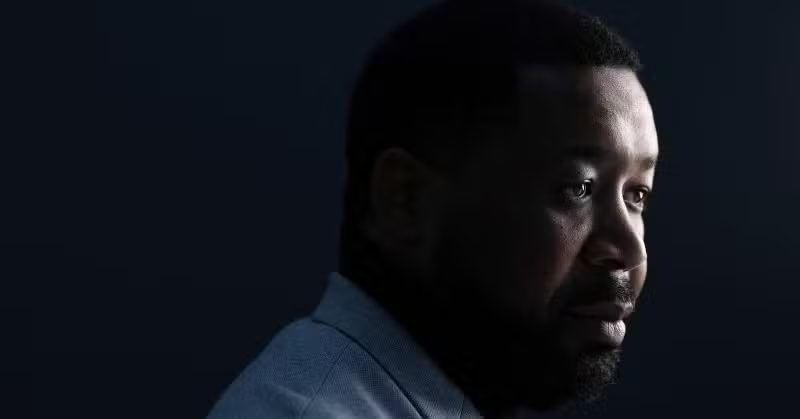
Paris court convicts three police officers of racist assault on music producer Michel Zecler
French police officers convicted of racist assault on Black music producer | CNN
cnn.com· 14h
French policemen convicted of racist assault on music producer
reuters.com· 18h
French police officers guilty of Michel Zecler assault: What happens now?
aljazeera.com· 19h
Three French police officers sentenced over racist assault on Black man
Police beating of Black music producer: Court recognizes racist nature of violence, sentences officers to prison, raising hopes for new legal precedent
lemonde.fr· 26h
Au procès de l’interpellation de Michel Zecler, le caractère raciste des violences retenu, trois policiers condamnés à des peines de prison ferme et l’espoir d’une « jurisprudence »
Affaire Zecler : la justice reconnaît enfin le racisme des policiers
mediapart.fr· 29h
French police officers found guilty of racist assault on black music producer
theguardian.com· 30h
Procès Zecler : les trois policiers condamnés à des peines de un à deux ans de prison ferme
france24.com· 30h
Interpellation violente de Michel Zecler : les trois policiers condamnés à cinq ans de prison, le caractère raciste de l’agression retenue
« Si l’on accepte que trois policiers mentent, le lien social est rompu » : prison ferme requise au procès de l’interpellation violente de Michel Zecler
Affaire Michel Zecler : « Aujourd’hui, nous avons évité une erreur judiciaire »
France awaits verdict six years after police beat Black music producer
Au procès Zecler, prison ferme requise contre les policiers, la question du racisme réintroduite
Procès de l’interpellation violente de Michel Zecler : jusqu’à cinq ans de prison ferme requis contre les trois policiers, assortis d’une interdiction définitive d’exercer
Procès de l’interpellation violente de Michel Zecler par des policiers : dans sa plaidoirie, l’avocat du producteur remet la question du racisme au centre des débats
Au procès de l’interpellation violente de Michel Zecler, mea culpa et fausses justifications des policiers
French police officers face trial over beating of black man they accused of not wearing Covid face mask
On 21 November 2020, three French police officers stopped music producer Michel Zecler outside his Paris studio over a missing Covid mask, pushed him inside and beat him in an assault caught by the studio's security cameras. He took about 30 punches and truncheon blows, leaving him with a ruptured biceps tendon. Their report claimed he had attacked them, a version refuted by camera footage released days later.
Officers Aurélien Lapersonne, Philippe Tondeux and Pierre Plantier went on trial in Paris for group violence and forgery. France's human rights ombudswoman said four witnesses heard racist insults, which the officers denied. Lapersonne, who wrote the falsified report, admitted inventing the claim that Zecler attacked them. The advocate general sought six, five and four years with permanent bans and the racist character of the acts retained.
On 20 November 2026, after eleven hours of deliberation, the Paris criminal court convicted all three of aggravated violence with the racist circumstance recognized and of forgery. Each received five years, two firm for Lapersonne, one and a half for Tondeux and one for Plantier, all permanently barred from policing and far below the prosecution's request.
All three had apologised that day, Plantier in tears, and a crowd applauded Zecler. The court found Zecler consistent and said the falsified report damaged the officers' credibility when they denied racist insults. Lapersonne and Tondeux were handed deferred-effect custody warrants, Plantier electronic tagging. The presiding judge called the officers dishonest in their report to shield themselves.
Three French police officers stopped music producer Michel Zecler outside his Paris studio on 21 November 2020, accusing him of not wearing a mandatory Covid face mask and suspecting him of cannabis use.
The officers pushed Zecler into the entrance of his studio and violently beat him in an assault recorded by the studio's security cameras.
According to the investigation, Zecler sustained about 30 punches and truncheon blows over five minutes, leaving him with craniofacial trauma, a ruptured biceps tendon, and 45 days unable to work.
Officers Aurelien B, Pierre P, and Philippe T went on trial in Paris for intentional violence committed in a group and for forgery in their official report, facing up to 15 years in jail.
In their arrest report, the officers claimed Zecler had hit them and tried to seize a truncheon, a version refuted by camera footage released by the website Loopsider days after the assault.
France's human rights ombudswoman said police used racist insults during the assault, according to four witnesses, but the officers denied this and the alleged racism was not included in the indictment.
Zecler was left with a titanium anchor in his left arm after the rupture of his biceps tendon and says he still suffers nightmares.
Michel Zecler said he expects the trial to hold the police officers accountable.
Zecler said the officers used a racist slur against him and that he will repeat this at the hearing.
Zecler said he does not understand the hatred he saw in the officers' eyes.
Zecler said that if there had not been cameras, the officers' reports would have been enough to send him to prison.
On 17 November 2026, officers Aurélien L., Philippe T., and Pierre P. were heard at the Paris criminal court on the violence they are accused of, giving apologies and defense strategies that were not perfectly aligned.
The three defendants sat together in silence through the trial, listening to the many witnesses without reacting.
The court decided to split the interrogations and reserved questions on the misleading arrest report for the following day.
Michel Zecler's lawyer Serge Money delivered a closing argument on 18 November 2026 in which he staged a parallel reality in which no camera recorded the beating of 21 November 2020 and only the police report existed.
In a hypothetical scene in his closing argument, Money acted out a lawyer telling a beaten Zecler, placed in police custody for rebellion and violence, that he should confess because the officers claimed he attacked them, grabbed their weapon, and seized their baton.
On 19 November 2026, the advocate general requested prison sentences of six years for Aurélien L., five years for Philippe T., and four years for Pierre P., all with a permanent ban from practicing as police officers.
She asked the court to convict the three officers of violence by persons holding public authority, committed in a group with a weapon and with the racist character of the acts retained, as well as false writing in a public document, violation of domicile, and destruction of property.
President Emmanuel Macron called the surveillance footage of the beating a shame.
The verdict of the Paris criminal court in the Zecler trial was expected on Friday 20 November 2026.
The prosecutor general said the case inflicted immense harm on Michel Zecler but also on society as a whole.
The prosecutor general called the three defendants officers who had betrayed their oath as well as the police and judicial institution.
The prosecutor general argued that accepting that police officers lie and knowingly falsify reality would mean the end of the functioning of democracy.
The prosecutor general castigated the defendants' police colleagues present on the night of the assault as blind and deaf, having seen nothing and heard nothing.
The prosecutor general said Zecler has consistently maintained he was called 'sale nègre' on several occasions, and that the defendants have with the same consistency always denied it.
The prosecutor general urged the court to believe Zecler and to retain the racist aggravating circumstance against all three officers.
The prosecutor general acknowledged that the defendants had presented apologies at the hearing that did not seem feigned.
The defense lawyers acknowledged that Zecler was the victim of inadmissible violence, contested the severity of the sentences sought, and again rejected any racist dimension.
The defense insisted on the collective responsibility of the police institution.
Lawyer Jean-Christophe Ramadier called Aurélien Lapersonne a good guy who was 23 at the time of the events, and protested against adding the infamy of racism to the dishonor of the officers' conduct that day.
Lawyer Aude Boyer rejected any racism on behalf of Pierre Plantier and urged the court to take his personality into account, saying he was ashamed of the facts.
Lawyer Compoint warned the court that if it thought the French national police would question itself and reflect after its verdict, that was nonsense.
The prosecutor general deplored that racism was becoming the symbol of the trial.
The three officers are accused of striking Zecler 29 times in four minutes and six additional times in the face after he was already handcuffed.
Aurelien Lapersonne, who initiated the police identity check and submitted the falsified report, admitted to the presiding judge that he had made up his claim that Zecler attacked the officers.
Lapersonne told the court he had deliberately omitted the blows the officers landed on Zecler from his initial report, saying he did so out of fear.
A representative of the public prosecutor's office said in a statement: 'There is no room for a symbolic sentence. We are talking about crimes, violence and racial slurs. About a complete lack of control over what was done and an absolute determination to get away with it in the end.'
At the time of the assault, football star Kylian Mbappe shared an image of an injured Zecler with the words 'Unbearable video. Unacceptable violence'.
Rim-Sarah Alouane, a legal scholar at the University of Toulouse Capitole, said it is obvious the case is about institutional racism, systemic discrimination and police violence.
Alouane said the trial is pivotal because of the surveillance footage and the attempted cover-up, and that falsified police reports question the integrity of the entire system.
Alouane said that if there had been no footage, the police would have gotten away with it.
On 20 November 2026, at the end of a two-week trial, the Paris criminal court convicted Aurélien Lapersonne, Philippe Tondeux, and Pierre Plantier of aggravated violence with the racist circumstance recognized and of forgery of public documents.
Each officer was sentenced to five years' imprisonment, with two years firm for Lapersonne, one year and six months for Tondeux, and one year for Plantier, and all three were permanently banned from practicing their profession with provisional execution.
The court retained the racist character of the assault, a circumstance dismissed by the investigation but reintroduced for the deliberation and closely scrutinized during the hearing.
A deferred-effect custody warrant was ordered for Lapersonne and Tondeux, while Plantier will serve his firm sentence under electronic tagging.
Nine young performers who had been rehearsing in the basement of Zecler's studio were violently arrested when they came to assist him.
The nine performers' lawyer, Seydi Ba, told the court that France needed to know how 'police violence, lies and racism' would be considered by a court.
Serge Money said while summing up: 'A verdict can force a society to really look at an injustice that up until now had been tolerated, minimised, and I dare to use the word: institutionalised.'
Money said: 'The Zecler trial is the trial of impunity, for all those who before him and after him will experience the same thing.'
Money told the court: 'I want you to give voice to all those who didn't have security cameras, and to all those who were not believed.'
Zecler said the attack had 'completely devastated him' and left him with a lasting physical and psychological impact.
Zecler's lawyers and supporters said the trial had shone a spotlight on police violence in France, and members of the public who attended called it an important moment in confronting institutionalised racism.
The criminal court of Paris deliberated for eleven hours before delivering its verdict in a packed courtroom on 20 November 2026.
The verdict was delivered at 10 pm on 20 November 2026, six years less one day after the arrest.
The sentences, far below the prosecution's request, surprised all parties and drew a murmur in a courtroom that had been full every day of the trial.
Serge Money told his supporters packed onto the courtroom benches shortly before the verdict: 'Whatever is announced, show the same moral strength, the same calm that Michel Zecler showed despite all the blows he received. No applause, no outbursts.'
Money called the court's ruling 'the Zecler jurisprudence', saying its significance extends beyond the case.
The court found Zecler consistent in his account and noted that the officers' falsification of the police report damaged their credibility when they denied using racist insults.
All three officers apologised to Zecler earlier on 20 November 2026, with Pierre Plantier in tears, and a crowd applauded Zecler as he stepped out of the hearing.
Serge Money said: 'Justice has been done. It has restored a man's dignity and allowed him to begin rebuilding himself.'
The presiding judge said the officers had been dishonest in their report to shield themselves from disciplinary and legal consequences, with no regard for the criminal consequences faced by Zecler.
Philippe Tondeux said he regretted 'the image I have given of the police'.
Zecler's lawyer described the sentences as 'falling short' but said they set an important precedent that someone who comes forward to say the police did the worst to them can be believed even when a police officer lies.
Serge Money hailed the ruling as a 'historic ruling', saying the recognition of the racist nature of the violence is a first, particularly given that the investigating judges had initially dismissed the racist dimension of the case.
Rap artist Stomy Bugsy called the ruling a victory for all victims if it can help curb, reduce, and ultimately put an end to this kind of police misconduct and abuse.

