FAA chief defends $50 billion funding request amid skepticism in Congress
FAA chief defends $50B funding ask amid bipartisan skepticism from Congress
newsnationnow.com· 3d
Sean Duffy’s $50 billion demand for air travel fixes is met with yelling and skepticism in Congress
nbcnews.com· 4d
Trump admin push for $50 billion in FAA funding hits GOP resistance | CNN Politics
cnn.com· 5d
Duffy Dodges After Being Called Out For 2019 Vote Against FAA Funding Bill
huffpost.com· 5d
Trump administration ups ante on aviation funds after ground stop - Roll Call
rollcall.com· 8d
Transportation Secretary Sean Duffy asked Congress for about $50 billion for the Federal Aviation Administration after a nationwide ground stop on 13 November 2026.
The ask rose from $30.1 billion requested two days earlier, in a letter cosigned by FAA chief Bryan Bedford and budget director Russell Vought.
The ground stop, caused by instability in old radar and communications systems, halted flights for about four hours and stranded over a million passengers.
Lawmakers of both parties question the sum, noting $12.5 billion from President Trump's 2025 tax and spending bill for air traffic control remains largely unspent.
In January 2025 Trump froze $25 billion in FAA modernization funding by executive order and the administration fired about 400 FAA workers.
The request faces bipartisan resistance in the final weeks of Republican control of Congress, before Democrats take over in January.
On the night of 13 November 2026, Duffy and Homeland Security Secretary Markwayne Mullin raised the funding request to $50 billion at a White House briefing, blaming an incredibly old air traffic control system.
A nationwide ground stop on 13 November 2026, caused by instability in radar and communications systems that produced inconsistent data, halted flights for about four hours and disrupted thousands of flights.
Duffy and budget director Russ Vought formally asked congressional appropriators for $30.1 billion in a letter on 12 November 2026, before the figure was raised.
Homeland Security Secretary Markwayne Mullin said the public was never in danger during the ground stop and recommended that someone build the whole air traffic control system because nickel and diming it together does not work.
House Transportation and Infrastructure Chairman Sam Graves and ranking member Rick Larsen called the communication failures "concerning" in a joint statement on the night of the outage.
The Senate Commerce, Science and Transportation Committee's Republican majority said the 13 November outage highlights the need to prioritize modernization of the air route traffic control centers.
Duffy declined on 16 November 2026 to say whether he regretted voting against a 2019 bill that would have given the Federal Aviation Administration $10 billion.
Duffy appeared on every major Sunday morning program after the ground stop and repeatedly refused to apologize for the technology rollout that triggered the shutdown.
President Donald Trump said he takes no responsibility for the ground stop and that Duffy and Homeland Security Secretary Markwayne Mullin "did a great job."
Data from a congressional source showed the FAA had spent only $474.9 million of the $12.5 billion Congress appropriated, and none of $1.9 billion meant for a new air traffic control center, as of June.
Senator Susan Collins said she does not yet see the justification for $50 billion in additional funding, though she agrees the United States has a serious air traffic control problem.
Senator John Cornyn said there is some skepticism about the request and that Duffy still has some convincing to do.
Senator Mike Rounds said the $50 billion funding request is a long way from being approved.
Senator Rand Paul called for a methodical look at what happened, what mistakes were made, and where the $12.5 billion is being spent before more money is thrown at the problem.
Senator John Kennedy said Duffy should sit down with him and explain what happened, how it will be fixed, when, who will fix it, and how much it will cost.
Senator Rick Scott said Congress must have all the facts before doing anything, including how the money would be used, a budget, a timeline, and who would do the work.
Duffy pledged that the full $12.5 billion already appropriated will be spent by the end of December 2028.
Transportation Secretary Sean Duffy sent Congress a formal request for $50.1 billion on 17 November 2026, in a letter cosigned by FAA chief Bryan Bedford and budget director Russell Vought.
Duffy met Senate Republicans behind closed doors on 17 November 2026, where multiple senators yelled at him, and he refused to accept responsibility for the ground stop, blaming predecessors and Congress.
Senate Majority Leader John Thune stopped short of endorsing the figure, saying "We will see what the traffic will bear, what's achievable."
Senate Minority Leader Chuck Schumer said "we have not been given the answers. They have not come clean," noting the $12 billion already given has not been spent.
House Minority Leader Hakeem Jeffries said "I appreciated the conversation" with Duffy but that there are still more questions than answers about what happened and why.
Outgoing House Speaker Mike Johnson said Republicans would work with the administration to fund "as much of that as we can" of the request, without naming a timeline.
Senator Brian Schatz said he generally supports investing in air traffic control but that $50 billion sounds like an awfully round number.
Senator Bernie Moreno said air traffic control is "absolutely not a partisan issue" and that Congress will work to make sure any funding is "paid for in a responsible way."
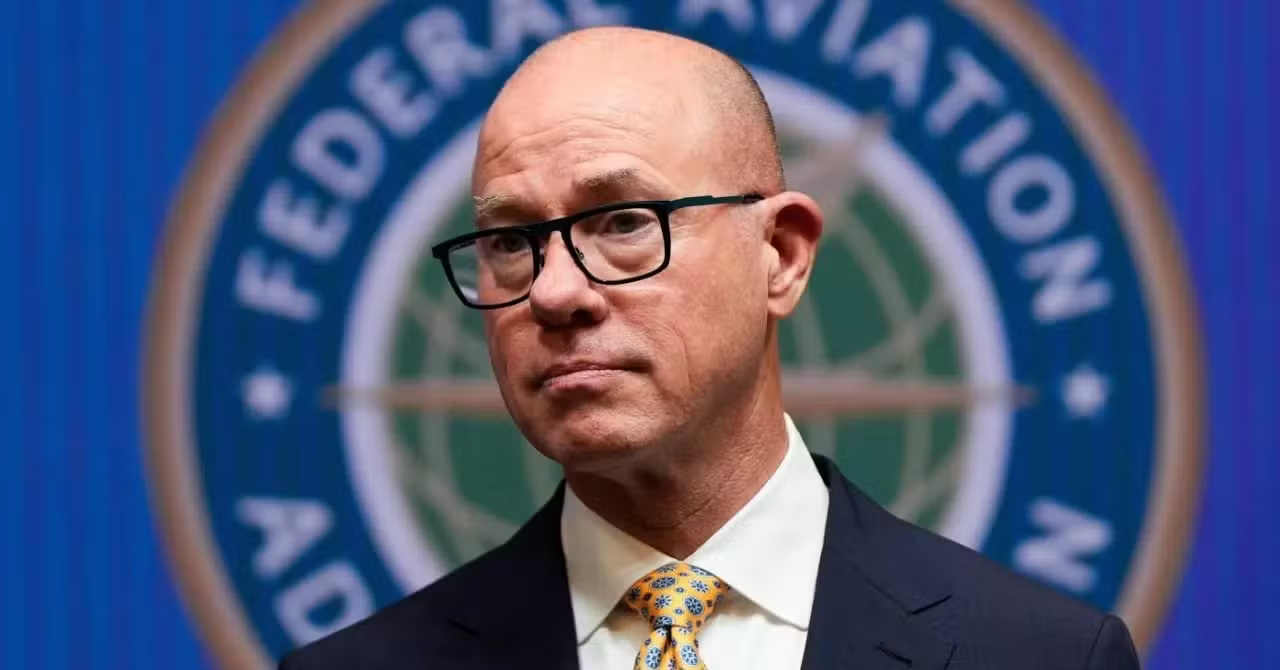
FAA chief Bryan Bedford defended the $50 billion funding request at a Washington aviation event on 18 November 2026, acknowledging whiplash in Congress over the shifting figures.
Bedford said the FAA had pushed all money appropriated in its 2026 budget toward upgrades, though a tiny amount of it had been spent.
FAA chief Bryan Bedford defended the $50 billion boost as needed to upgrade air travel infrastructure "right" and called the notion that the FAA is not spending its money ridiculous.
Representative Dina Titus criticized Duffy for making a public funding request without explaining how the administration would spend the money, asking what was done with funds Congress already provided.
Representative Steve Womack voiced skepticism about whether there is a path to passing the $50 billion funding request.

