Florida flood storm forecast to move up East Coast, may become Tropical Storm Kyle
As a Storm Floods Florida, Heavy Rain Will Creep Up the East Coast
nytimes.com· 30h
Storm severely flooding Florida coast to disrupt holiday travel from Southeast to New England | CNN
cnn.com· 35h
Drenching rain expected up the East Coast through the weekend
washingtonpost.com· 39h
A possible late-season tropical storm could affect these states
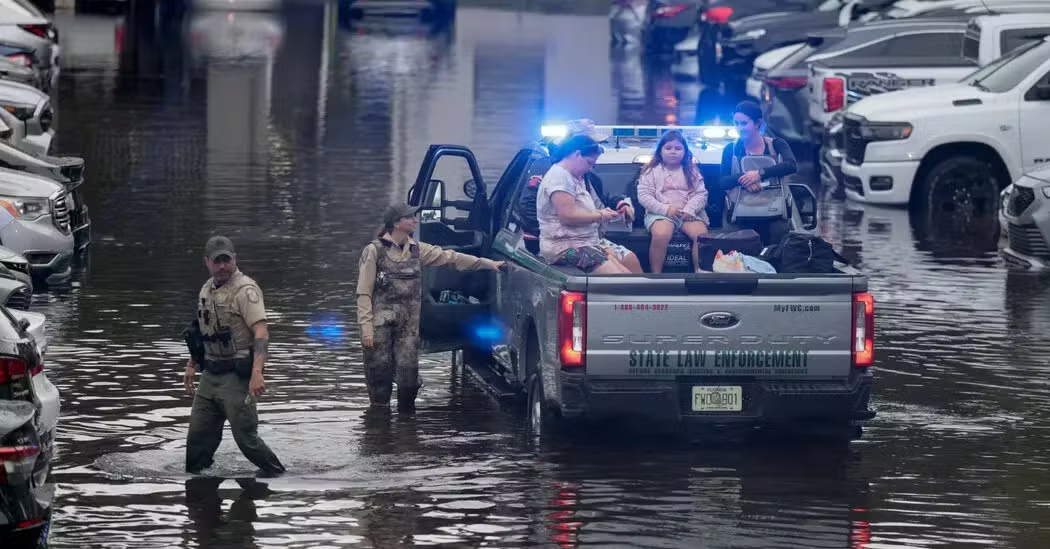
A slow-moving storm has flooded Florida's Atlantic coast with more than 20 inches of rain, forcing dozens of water rescues and evacuations along the Space Coast.
The National Hurricane Center gives the system a 50 percent chance of becoming a tropical or subtropical storm, with Kyle the next name on its list.
Forecasters expect the storm to move north up the East Coast through Monday, bringing rain and gusty winds from Georgia to New England during Thanksgiving travel week.
More than 100 people were rescued in Brevard County, and about 65 homes in the Palm Bay Estates mobile home park were evacuated after a washed-out bridge cut off access.
The St. Johns River near Cocoa rose past a record crest set more than 70 years earlier, and flooding there could last for weeks.
Gov. Ron DeSantis expanded a state of emergency to 21 Florida counties as forecasters placed part of the state under their highest-level excessive rainfall alert.
The National Hurricane Center warned late Wednesday of a 60 percent chance of a subtropical or tropical storm forming near the Southeast coast that weekend.
A gauge in Cocoa Beach had recorded 24.3 inches of rain as of Friday morning, and a gauge near Daytona Beach had recorded up to 21.4 inches.
The National Hurricane Center gave the system a 50 percent chance of becoming a tropical or subtropical storm as of early Friday, with Kyle the next name on its list.
The low pressure center appeared to be forming over Florida near the eastern coast, reducing its chance of becoming a named storm while pinning more rain on the state.
Gov. Ron DeSantis expanded a state of emergency first declared Nov. 2 to include 21 Florida counties on Thursday.
Torrential downpours dumped 10 inches of rain in three hours on the Hollywood and Fort Lauderdale, Florida, area on Tuesday night.
The National Hurricane Center said in a statement, "the system is expected to produce strong, gusty winds, dangerous surf, rip currents and coastal flooding along portions of the southeast and mid-Atlantic U.S. coasts into early next week."
NOAA's Weather Prediction Center warned, "considerable to locally catastrophic flash flooding impacts are most likely through Friday night across Brevard and Volusia Counties and closest to the coastline."
The storm drenched eastern Florida with more than 20 inches of rain in the week before Friday, flooding homes and forcing dozens of water rescues.
Floodwater inundated streets and stranded cars in Daytona Beach, Florida, on Friday, where nearly 14 inches of rain had fallen since Wednesday.
About 100 homes flooded in Edgewater, Florida, and around 20 water rescues were conducted in Volusia County as of Friday morning.
More than 100 people were rescued in Brevard County, Florida, by the end of Thursday, mostly from flooded homes.
Roughly 65 homes in the Palm Bay Estates mobile home park in Brevard County were under mandatory evacuation Thursday after a bridge washed out and cut off the only access road.
The St. Johns River near Cocoa, Florida, surged past its record crest, set more than 70 years earlier, on Thursday morning.
Brevard County spokesperson Don Walker said a firehose of rainfall from the Atlantic caused floodwater to rise into "countless" homes in the county.
Evacuee Kameron Johnson said, "It's been raining for about three days … we woke up this morning to the sheriff's office's trucks, the big, military-sized trucks, picking up people in the front of our house."
Forecasters said the system off Florida could strengthen into a strong tropical storm but was fairly unlikely to become a hurricane as it moves up the coast.
The storm battered Florida's east coast with intense rain on Friday after parts of Cocoa Beach, Cape Canaveral and Melbourne received more than a foot of rain since Tuesday.
The Weather Prediction Center placed a small portion of Florida under its highest-level high risk alert for excessive rainfall beginning Thursday, meaning flash flooding was highly likely.
Andrew Hagen of the National Hurricane Center recommended that residents in Florida, Georgia and the Carolinas continue monitoring the forecast.
Scott Kleebauer, a meteorologist at the Weather Prediction Center, said, "Mother Nature's going to do what she wants to do."

