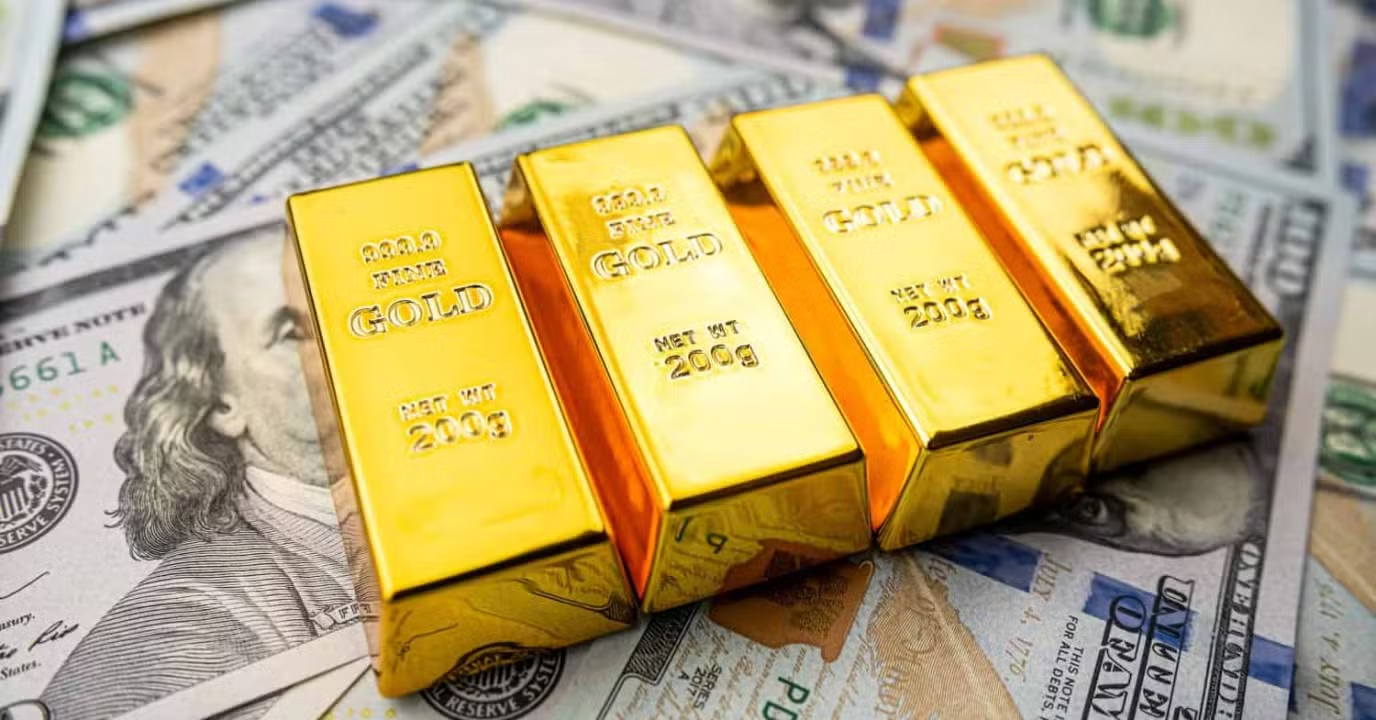
Gold falls to $3,580 an ounce, on track for its worst week in eight months
Tim Seymour Says "This Is the Time to Buy Gold, Not Sell It"
247wallst.com· 13h
What gold's price collapse means for millions of Americans
newsweek.com· 46h
He's 66 and Bought $250,000 of Gold to Live On Until Social Security at 70. With the Precious Metal at a New Low for the Year, Claiming at 67 Instead Costs Him $600 a Month for Life
Gold's bad year is getting worse. Why its price keeps falling
cnbc.com· 2d
Gold Just Sank to a One-Year Low. Costco Members Who Bought Bars in September Are Down About $700 Each, and Launch Buyers Are Still Up 88%
Gold Is at a 14-Month Low as Traders Bet on More Fed Hikes
Gold fell below $3,800 an ounce on Wednesday, November 18, for the first time since September 2025, leaving the price roughly a third below its peak. It hit a fresh low below $3,700 the next morning.
The slide continued into Friday, November 20, when spot gold traded at $3,580 early in the day, down 2.9 percent on the day and 8.9 percent over 30 days, putting it on track for its worst week in eight months. The fall came amid speculation over a possible Federal Reserve interest rate rise in December and the dollar's ongoing resilience.
The metal has been sliding for months. It dropped to about $4,000 in July, recovered to just over $4,600 in August, then fell steadily from just under $4,600 at the beginning of May to $3,580, a decline of about 22 percent. In November it stood about 33 percent below its late-January 2026 high of about $5,590.
The selloff rippled through the market. The VanEck Gold Miners ETF fell 14.7 percent over the past month, and World Gold Council figures showed exchange-traded fund assets under management down 6 percent to $542 billion as lower prices outweighed new investment. Gold and equities fell together as investors prioritized liquidity over traditional defensive holdings.
The losses carry real consequences: a retiree who put $250,000 into gold near the top to live on until claiming Social Security at 70 would see his stake worth about $167,000, covering roughly 2.7 years of spending instead of the four years he planned. Analysts remained divided on gold's near-term path, though several still saw a long-term diversification case for the metal.
Gold fell below $3,800 per ounce on Wednesday, November 18, 2026, for the first time since September 2025, leaving the price roughly a third below its peak.
Gold hit a fresh low below $3,700 per ounce on the morning of Thursday, November 19.
Analysts remained divided on gold's near-term path while several still saw a long-term diversification case for the metal.
Suki Cooper, global head of commodities research at Standard Chartered, said a convergence of factors pushed gold to historic highs earlier in 2026 and a different convergence, led by the currency argument, is bringing the price down.
Evan Mills said higher Treasury yields and a strengthening dollar raise the opportunity cost of holding an asset that produces no income, with money market funds paying 4 to 5 percent.
Evan Mills said stocks, bonds and the classic portfolio mix became far more attractive, so investors weighed the opportunity cost and decided gold was no longer worth holding.
Marc Chandler forecast that the price of gold is headed to $3,500 to $3,600.
Marc Chandler recommended that anxious bottom pickers urge caution and be patient until a reversal pattern appears.
Marc Chandler said there is nothing on the charts that says a low is in place, the decline looks fairly orderly, and gold remains very expensive against its 10-year moving average of about $2,127 and 20-year moving average of about $1,666.
Amy Gower, head of metals and mining strategy at Morgan Stanley, said there are "still lots of reasons" for investors to hang on to their gold despite the 2026 correction.
Spot gold slid to about $3,725 an ounce in November 2026, roughly 33 percent below its late-January 2026 high of about $5,590, amid a stronger dollar and expectations of persistently high interest rates.
A 66-year-old retiree who put $250,000 into gold to live on until claiming Social Security at 70, selling about $62,500 a year, would see his stake worth about $167,000 in November 2026 if he bought near the top, covering roughly 2.7 years of spending instead of the four years he planned.
By the article's calculation, the retiree claiming Social Security at 67 instead would sell about $90,000 less gold between ages 67 and 70, in return for a permanently smaller check costing him $600 a month for life.
Commentary argued the retiree's real risk is having to sell a falling asset to pay the bills, and that every ounce he sells near the low is gone if prices recover.
Gold traded at $3,580 per ounce early Friday, November 20, down 2.9 percent on the day and 8.9 percent over 30 days, putting it on track for its worst week in eight months.
The fall came amid speculation over a possible Federal Reserve interest rate rise in December and the dollar's ongoing resilience.
Gold's market price has fallen from just under $4,600 per ounce at the beginning of May to $3,580, a decline of about 22 percent, after dropping to about $4,000 in July, recovering to just over $4,600 in August and sliding steadily since.
The VanEck Gold Miners ETF, which tracks major gold-mining companies, fell 14.7 percent over the past month and 23.1 percent over the past three months.
World Gold Council figures showed the value of exchange-traded fund assets under management fell 6 percent to $542 billion as lower gold prices outweighed additional investment.
The selloff raised fresh questions about investor confidence, with gold and equities falling together as investors prioritized liquidity over traditional defensive investments.
Fergal O'Connor, an economist at University College Cork, said a reduction in central bank gold purchases contributed to the fall, after record purchases from 2022 onwards had supported gold through a challenging rising interest rate environment.
Fergal O'Connor said rising interest rate expectations on the back of hotter U.S. inflation numbers may mean gold's negative relationship with real interest rates is reasserting itself.
Kyle Rodda, a senior financial market analyst for Capital.com, said there seems to be forced liquidation going on across the market in general, with expectations of imminent U.S. rate hikes and persistent inflation leading to high yields and a higher U.S. dollar that pressure gold.
Fergal O'Connor said gold regularly sells off during early market turbulence, providing holders a source of liquidity, and that if a crash were to occur at these already lower prices he would expect investors to revert to type and send inflows into an established safe haven such as gold.
Fergal O'Connor argued gold's status as a safe haven is likely to continue despite the price fall.
It was forecast that the declining value of gold would have major implications for the investment portfolios and retirement accounts of millions of Americans, hitting both gold investors and those who put money into gold mining stocks.
Tim Seymour, a regular on CNBC's Fast Money, said gold has not been a safety trade for quite some time and called the recent slump a buying opportunity.
Tim Seymour said gold is a funding trade right now and that people are probably selling it to settle margin calls.
Tim Seymour said that of all the things he might sell in a growth scare, "this is the time to buy gold, not sell it," arguing the selling reflects how investors are positioned rather than gold itself and that its long-term case still holds.

