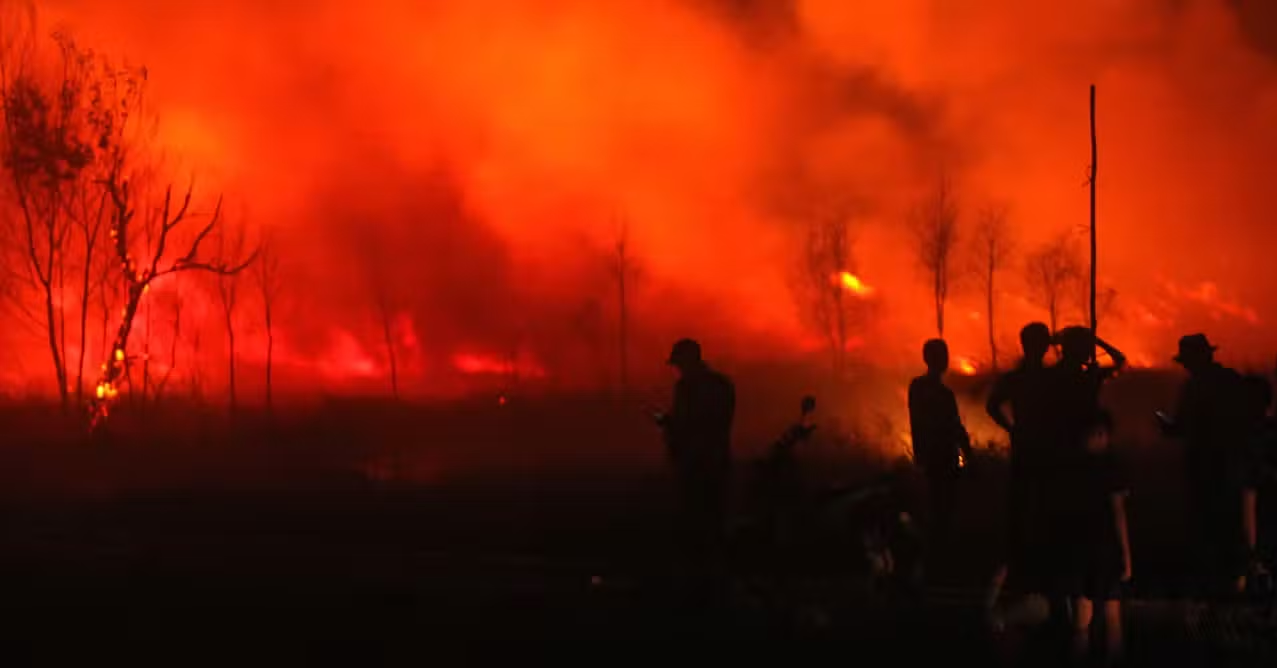
Al Gore accuses Saudi Arabia of trying to destroy the IPCC at Cop31
Why fossil fuel-producing countries are stalling this crucial climate report
theconversation.com· 32h
Klimatvetenskapen ifrågasätts på klimatmötet i Turkiet | Sveriges Radio
sverigesradio.se· 2d
COP31 : l’avenir du GIEC, qui traverse l’une des plus graves crises de son histoire, suscite de fortes tensions
lemonde.fr· 2d
IPCC report delay will threaten global effort to tackle climate crisis, says top scientist
theguardian.com· 3d
Al Gore has accused Saudi Arabia of trying to destroy the IPCC at Cop31, where the UN climate science body is caught in one of the gravest crises of its history. Work on its three-part seventh assessment report, AR7, is being held up: Russia, the Arab group including Saudi Arabia, and India want publication pushed to 2029, after the second global stocktake is completed.
The countries pushing the delay, backed by some climate campaigners, argue that developing countries are disadvantaged in submitting science to the IPCC and that its work is permeated by racist assumptions privileging developed countries. Lidy Nacpil cites one such assumption, that emissions should be cut where it is most cost-efficient, which makes mitigation cheap in the global south. But many other developing countries, including small islands and the least developed countries, want the report completed without delay, and a vast majority of countries want all three parts finalized before COP33 in 2028, when the second global stocktake is to be carried out. The IPCC says 51% of the 664 authors on its three working group drafts come from developing countries and economies in transition, and that it is absolutely committed to diversity and inclusion.
The row has gone on all year, and its October meeting in Ethiopia was suspended, leaving no confirmed release timeline and no budget for 2027. It comes to a head because the body meets in early December to decide its budget, without which there is little chance of producing its reports ahead of the global stocktake. IPCC issues can technically only be agreed within the body itself, though a compromise might be possible at Cop31 in Turkey, where chair Jim Skea extended his attendance for further talks and the first draft of the cover decision recognises the central role of the best available science and of the IPCC. At the summit, some countries also consider that a UN report released in the autumn, which found the 1.5-degree target cannot be reached, does not hold as a basis. On 2026-11-21, India, Russia, Saudi Arabia, Kenya and China were still objecting to the 2028 timeline, with hopes that a timeline and budget can be settled at meetings in early December.
Some countries are holding up work on the IPCC's three-part seventh assessment report, AR7, in a dispute over the body's role and the representation of developing countries.
Russia, the Arab group including Saudi Arabia, and India want to delay publication of AR7 to 2029, after the second global stocktake is completed.
The countries pushing the delay, backed by some climate campaigners, say developing countries are disadvantaged in submitting science to the IPCC and that its work is permeated by racist assumptions that privilege developed countries.
Lidy Nacpil says one IPCC assumption is that emissions should be cut where it is most cost-efficient, which makes mitigation cheap in the global south, and that changing it would produce different scenarios.
Many other developing countries, including small islands and the least developed countries, have called for the IPCC report to be completed without delay.
The IPCC says 51% of the 664 authors on its three working group drafts come from developing countries and economies in transition, and every chapter includes at least one developing-country chapter scientist.
An IPCC spokesperson says the body is absolutely committed to diversity and inclusion and has introduced institutional measures implementing equity and inclusivity during its seventh cycle.
The IPCC row has gone on all year and is coming to a head because the body meets in early December to decide its budget, without which there will be little chance of producing its reports ahead of the global stocktake.
IPCC issues can only be agreed within the body itself and cannot technically be solved at Cop, though a compromise might be possible as governments meet in Turkey for Cop31.
IPCC chair Jim Skea extended his attendance at Cop31 for further talks on the issue.
The first draft of the Cop31 cover decision recognises the central role of the best available science and of the IPCC, values a full range of knowledge and participation in the body, and allows sufficient time to prepare comprehensive and credible scientific assessments.
Johan Rockström says stopping the IPCC from working as quickly as possible is inviting disaster and that climate science is foundational to the Paris agreement and worldwide progress on tackling global heating.
Johan Rockström warns that attempts to delay new scientific reports threaten global cooperation on tackling the climate crisis and says the IPCC must be allowed to work as quickly as possible on its next assessment.
Johan Rockström says the IPCC's reports are fair and objective, evidence-based science with no north or south bias, and that objective science has to be defended and should not be the arena to fight for justice, human rights or democracy.
Lidy Nacpil, coordinator of the Asian Peoples' Movement on Debt and Development, says the IPCC's mitigation scenarios are biased against the interests of the global south, that developed countries are using their economic, political and racial power, and that singling out Saudi Arabia is also very racist.
Raju Pandit Chhetri, a negotiator from Nepal, says calling the IPCC racist is a political line, that climate impacts in Nepal can arrive within a few hours, and that what is needed is to really respect the science.
Others fear a delay to the IPCC report could be used by countries to derail the global stocktake, for instance by arguing it too must be delayed or modified.
A vast majority of countries want all three parts of the IPCC's seventh assessment report finalized before COP33 in 2028, when the second global stocktake of climate action is to be carried out.
The IPCC is stuck in one of the gravest crises of its history, with the publication date of the three parts of its seventh assessment report at the center of the controversy.
At the Cop31 climate summit in Turkey, some countries consider that a UN report released in the autumn, which found the 1.5-degree target cannot be reached, does not hold as a basis, and there are ongoing attempts to delay the IPCC's next report.
Mikael Karlsson of Uppsala University says the resistance to the research at Cop31 can be linked to increased demands to phase out fossil fuels.
India, Russia, Saudi Arabia, Kenya and China are objecting to the 2028 timeline and pushing for a 2029 release of the IPCC's seventh assessment report.
The disagreement over the IPCC report's timeline led to the suspension of its latest meeting, held in October in Ethiopia, leaving no confirmed release timeline and no budget for 2027.
Hopes are that a timeline and budget for the IPCC report can be settled at meetings in early December.
Al Gore said at Cop31, 'Saudi Arabia is trying to destroy the IPCC in order to prevent the next global stocktake from using the accurate scientific data on fossil fuels.'
The least developed countries, a group of 44 nations, expressed deep disappointment when the IPCC meeting in Ethiopia was suspended.

