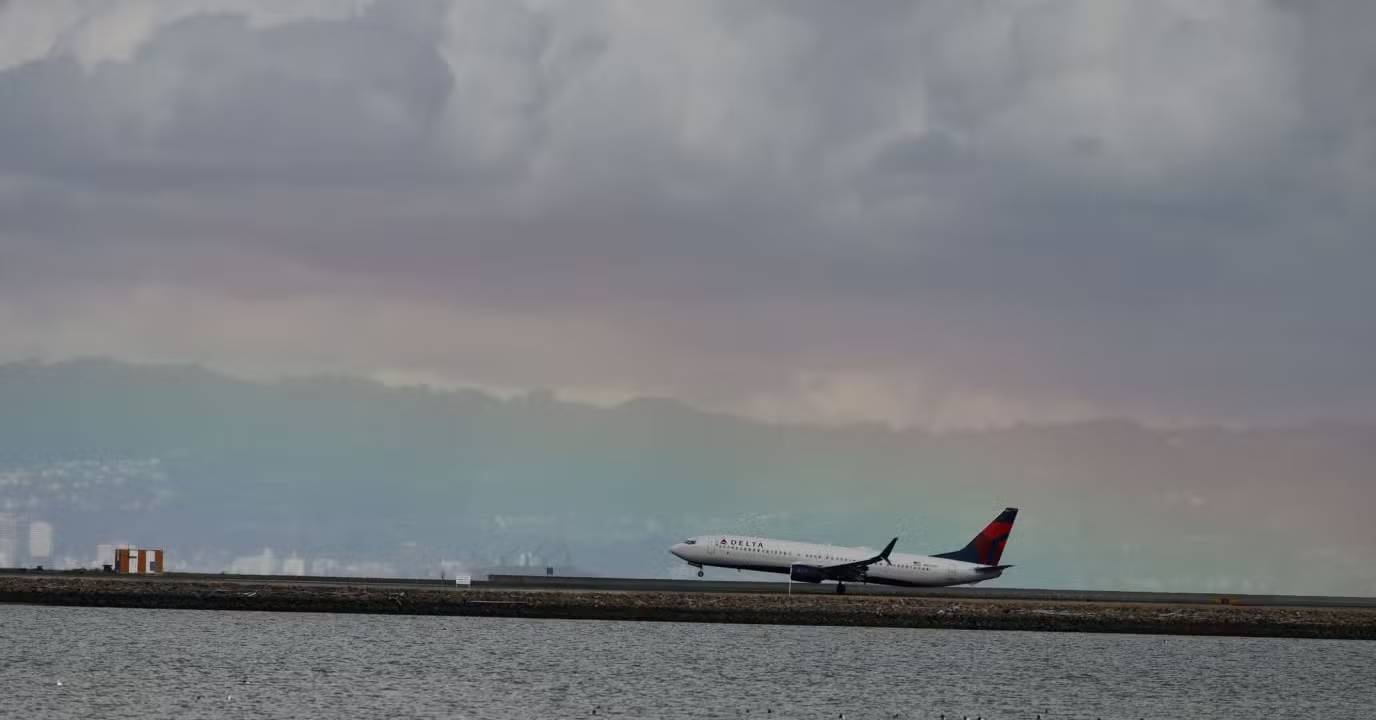
San Francisco airport forecast to flood as king tides and storm converge
SFO will flood next week from huge tides, federal expert says
sfchronicle.com· 4h
San Francisco braces for massive tides. Mayor urges residents to reconsider travel
apnews.com· 7h
California Storm Forecast to Hit Thanksgiving Week Amid High King Tides
nytimes.com· 31h
What Are King Tides, and Why Is Everyone Talking About Them?
A winter storm expected just before Thanksgiving could coincide with California's highest tides of the year, pushing the Pacific to dangerously high levels that cover roads and leave homes standing in water. The king tides arrive with West Coast sea levels already above normal because of El Niño, and the California Coastal Commission listed Nov. 24-26, Dec. 23-25, and Jan. 21-22 as the state's highest tides this winter, with officials in Oregon and Washington listing similar dates.
As of the Friday before Thanksgiving week, computer models disagreed on when the storm would hit and how much rain it would drop. Preliminary forecasts put up to four inches along the North Coast and about two inches in the San Francisco Bay Area, and meteorologists were most concerned about a stronger storm from Tuesday into Wednesday, before the holiday travel rush. Forecasters said some National Oceanic and Atmospheric Administration tide gauges could record their highest levels of the year or ever, with some records going back more than 100 years, and warned that beach communities from Long Beach to Pismo Beach to Stinson Beach would be particularly threatened.
On Saturday, Nov. 21, National Weather Service meteorologist Dylan Flynn emailed San Francisco International Airport's emergency manager to warn of anticipated flooding. He forecast that seawater will cascade into the airport over potentially three straight days during one of the busiest travel weeks of the year, as the storm amplifies a historic tidal surge. The official tide table anticipates 8.4 feet of water at the airport on Nov. 24, 25, and 26, and Flynn added 1.5 feet for the first two days for storm surge, rain, warmer water, and southerly winds, putting the bay at up to about 10 feet and overtopping seawalls that drop to 8 feet near the airport's southeast corner by Runway 28 Left. He said the surge could last three hours each late morning, and that water pooling on the runways will not drain back because they are sloped the wrong way; he expects tides that week to run roughly 2.8 feet above normal.
Mayor Daniel Lurie urged residents to consider not traveling for Thanksgiving, and forecasters said up to 2 feet of flooding was likely in low-lying shoreline areas through 6 a.m. Monday, Nov. 23, and through 4 p.m. Thursday, Nov. 26, along other Pacific coast areas. Officials warned Bay Area residents to avoid unnecessary travel on Tuesday and Wednesday, and in some cases Monday and Thursday, expecting historic tides and storms to pinch off some major highways during the peak travel days. At Oakland San Francisco Bay Airport, a recently completed upgrade raised the perimeter dyke to 13 feet and as high as 17 feet, and the airport does not anticipate flooding impacts; crews there placed sandbags and Caltrans installed concrete medians along Doolittle Drive on Friday, Nov. 20.
The California Coastal Commission, which runs the state's King Tides Project, listed Nov. 24-26, Dec. 23-25, and Jan. 21-22 as the dates for California's highest tides this winter.
Officials in Oregon and Washington listed dates for their highest tides similar to the California Coastal Commission's dates.
This winter's king tides are arriving with West Coast water levels higher than normal because of El Niño, and pulses of water known as Kelvin waves are pushing sea levels even higher along the shore.
San Francisco Mayor Daniel Lurie said in a video posted the month before that the city is expecting 30 king tides between November and January.
Forecasters warned that with sea levels higher than normal because of the strong El Niño, king tides this winter could reach their highest levels on record, and experts said that in some places they will probably be higher than ever before.
Many expected some of California's October tide records to be broken again this winter.
Karen Kavanaugh, an oceanographer at the National Oceanic and Atmospheric Administration, said agencies are trying to plan for a situation where a storm, heavy rain, waves, and king tides all happen at once.
Gary Griggs forecast that a few more Kelvin waves will move across the ocean this winter, though they are tricky to track in real time.
Forecasters were increasingly concerned that a storm expected in the days before Thanksgiving could coincide with some of the year's highest tides, pushing the Pacific to dangerously high levels that could cover roads and leave homes standing in water.
As of the Friday before Thanksgiving week, computerized weather models disagreed about when the storm would hit and how much rain it would drop, and it was unclear how big the waves would get.
Preliminary forecasts put the highest rain totals in Northern and Central California, with up to four inches along the North Coast, about two inches in the San Francisco Bay Area, and anywhere from no rain to about half an inch in Southern California.
Meteorologists were most concerned about a stronger storm expected from Tuesday into Wednesday, before Thanksgiving when many people are set to travel.
Forecasters said some National Oceanic and Atmospheric Administration tide gauges could record their highest levels of the year so far, or their highest ever, with some records going back more than 100 years.
Distant winds over the ocean were expected to build a swell that could bring big waves to the California coast, and the storm could arrive with strong winds that worsen the flood threat.
Experts said beach communities from Long Beach in Southern California to Pismo Beach in Central California to Stinson Beach in Northern California would be particularly threatened.
National Weather Service San Francisco Bay Area meteorologist Brian Garcia said, "We could have flooding in areas where we have never seen flooding before," and that the storm system will come in on Tuesday with a swell usually right behind it.
National Weather Service San Diego meteorologist Quinn Davidson said, "Generally every coastal community is going to be at risk."
National Weather Service meteorologist Todd Hall, of the office serving Los Angeles, said, "The bigger driver here is the surf and the swell," and that minor tidal overflows will occur regardless because of the water levels.
San Francisco Mayor Daniel Lurie urged residents to consider not traveling for the Thanksgiving holiday.
Forecasters said up to 2 feet of flooding was likely in low-lying areas near shorelines and tidal waterways through 6 a.m. Monday, Nov. 23, and through 4 p.m. Thursday, Nov. 26, along other areas of the Pacific coast.
Mayor Daniel Lurie warned that an extremely serious situation was about to hit San Francisco, writing on X, "We are expecting tides that the National Weather Service told us they have never seen before in recorded history here in San Francisco."
Lurie also wrote, "Take this weekend to get yourself ready, please stock up on supplies, get your shopping done, and know that the city will be out all weekend doing everything possible to protect our residents and our small businesses."
National Weather Service meteorologist Dylan Flynn emailed San Francisco International Airport's emergency manager on Saturday, Nov. 21, to warn of anticipated flooding after studying the latest tidal and weather predictions.
Flynn forecast that seawater will cascade into San Francisco International Airport potentially over three straight days during one of the busiest travel weeks of the year as a winter storm amplifies a historic tidal surge.
Flynn forecast that San Francisco Bay waters will surge up to about 10 feet, overtopping seawalls that drop to 8 feet in vulnerable spots such as the airport's southeast corner near Runway 28 Left.
The official tide table anticipates 8.4 feet of water at the airport on Nov. 24, 25, and 26, and Flynn added 1.5 feet for the first two days because of storm surge, rain, warmer water, and southerly winds, with the 9.9-foot Thursday height expected to drop half a foot as the storm leaves.
Flynn said the surge could last three hours, pouring water into the airport in the late mornings of those days, and that once water tops the sea walls it will pool rather than drain to the bay because the runways are sloped to the bay.
Flynn expects tides in the week of Nov. 23 to run roughly 2.8 feet above normal.
Officials warned Bay Area residents to avoid unnecessary travel on Tuesday, Nov. 24, and Wednesday, Nov. 25, and in some cases on Monday, Nov. 23, and Thursday, Nov. 26.
Officials forecast that historic tides and expected storms will flood low-lying Bay Area areas, likely pinching off some major highways and other transportation arteries during the peak travel days before Thanksgiving.
A recently completed upgrade raised the perimeter dyke at Oakland San Francisco Bay Airport to 13 feet and as high as 17 feet, and the airport does not anticipate flooding impacts.
Crews placed sandbags in critical areas at Oakland San Francisco Bay Airport, and Caltrans installed concrete medians along Doolittle Drive on Friday, Nov. 20, to help prevent flooding.
Dylan Flynn said, "We're definitely getting over in places. It's way over in the most vulnerable areas where they've never seen these heights before," and said it was unclear whether the anticipated flooding would affect runways or taxiways.
San Francisco International Airport spokesperson Doug Yakel said the airport is prepared to respond to flooding and "continue safe operations," with staff clearing drainage areas, checking pump stations, and preparing sandbags and flood barriers.
University of California, Davis Road Ecology Center director Fraser Shilling said, "I think it's possible SFO would flood. The flip side would be, do you have the pumping capacity to clear it out," noting the airport could pump an inch of rain an hour but overtopping seawater would require closer to an inch a minute.
Shilling also warned that passengers might never reach the airport because Highway 101 south of it is similarly exposed, and that shutting down multiple pieces of infrastructure at once could leave motorists in a standstill.
Kaley Skantz said the long-range infrastructure improvements and short-term preparations completed at Oakland San Francisco Bay Airport would ensure smooth operations for Thanksgiving travelers.

