Swiss voters narrowly approve easing arms export rules
Swiss voters set to ease arms export rules in tighlty contested vote
euronews.com· 29m
Schweizer erleichtern Waffenexporte an Partnerländer – und verbieten lautes Privatfeuerwerk
spiegel.de· 33m
Swiss voters likely to accept looser rules on arms exports
reuters.com· 1h
Les Suisses prêts à alléger les règles encadrant les exportations d'armes (projection)
france24.com· 2h
Suisse : un référendum décisif sur l’assouplissement des exportations d’armes
lemonde.fr· 6h
Swiss vote on easing arms export rules amid debate over neutrality
aljazeera.com· 7h
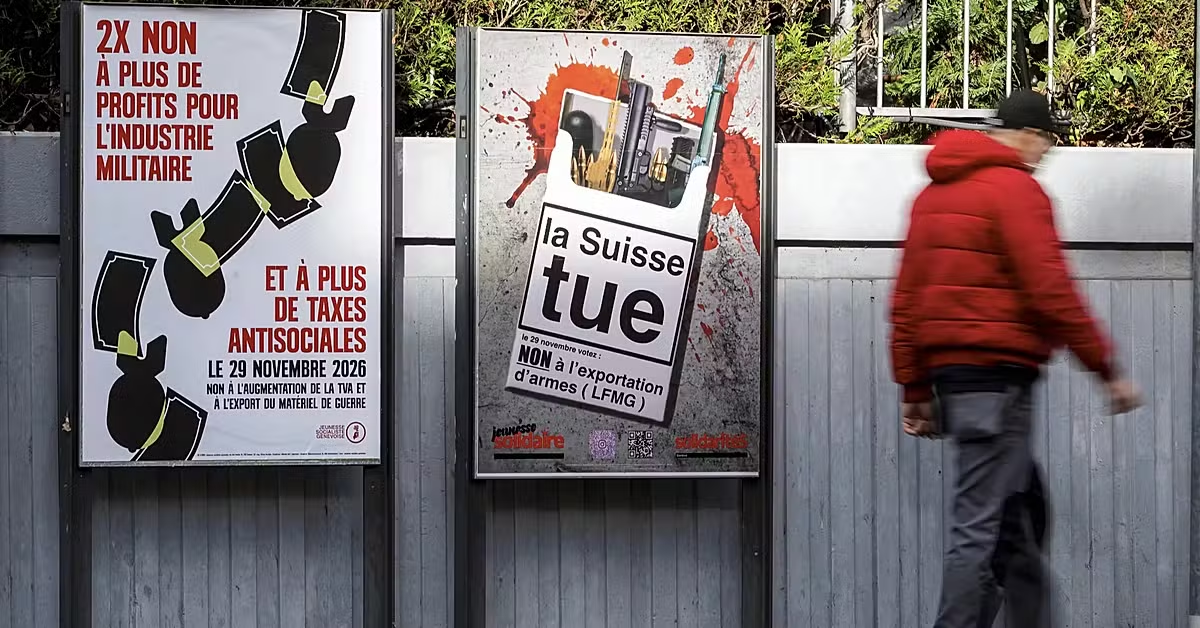
Swiss voters narrowly approved easing the country’s arms export rules in a referendum on 29 November, with an initial projection putting support at 54%. The reform would allow military equipment exports to 36 designated partner countries involved in conflicts, provided the exports offer no military advantage and meet Switzerland’s neutrality and security requirements.
It would also ease rules on re-exporting Swiss-made weapons, while existing commitments and government approval requirements remain. In exceptional circumstances, the government could waive sale conditions for non-partner countries.
Direct deliveries to Ukraine would remain prohibited and indirect transfers restricted. Switzerland could require partner countries to pledge not to re-export weapons to Ukraine if the risk were considered high.
Switzerland held a referendum on easing restrictions on weapons exports on 29 November.
The proposed reform would allow military equipment exports to 36 designated partner countries involved in conflicts, provided the exports offer no military advantage in the conflict and meet Switzerland’s neutrality and security requirements.
The reform would ease rules on re-exporting Swiss-made weapons to third countries, while existing commitments and government approval requirements would remain in force.
The reform would allow the government to waive sale conditions for non-partner countries in exceptional circumstances.
Direct weapons deliveries to Ukraine would remain prohibited, and indirect transfers would remain restricted; Switzerland could require partner countries to pledge not to re-export weapons to Ukraine if the risk were considered high.
The Swiss government said Russia’s 2022 invasion of Ukraine had fundamentally changed Europe’s security environment.
Supporters said existing restrictions put Swiss defence manufacturers at a competitive disadvantage and threatened their access to international supply chains.
Opponents, including left-wing parties and humanitarian organizations, warned that the reforms could weaken Swiss neutrality and increase the risk that Swiss weapons would reach conflict zones or countries accused of human-rights violations.
The Swiss economy ministry said only exports compatible with neutrality would be authorized.
Yvan Pahud of the Swiss People’s Party said the reform would preserve skills essential to Switzerland’s independence and security.
Opponents estimated that the reform would weaken Swiss neutrality and increase the risk that weapons would end up in civil wars or with regimes that violate the law.
The Swiss economy ministry said Switzerland’s embargo on military equipment to Russia meant it could not deliver such equipment to Ukraine.
An initial projection after polls closed indicated that Swiss voters had narrowly accepted easing the rules for arms exports, with 54% in favor.
Christophe Gerber, president of the Groupe romand pour le matériel de Défense et de Sécurité, said he was very satisfied and thought arms manufacturers would regain peace of mind in their activities.
Sidney Kamerzin, a member of parliament from The Centre, said the war in Europe and economic concerns about 3,000 small and medium-sized enterprises and 160,000 directly or indirectly affected jobs weighed on the vote.
Patrick Walder, campaigns manager at Amnesty International Switzerland, said the yes vote did not absolve Switzerland of its responsibility to protect human rights and international law in arms exports.
The Swiss Federal Department of Economic Affairs said only exports compatible with Swiss neutrality would be authorized, and violations could lead to a total ban on arms sales to the country concerned.

