Poland reported foiling Russian plot for mass-casualty false-flag attack near Kaliningrad
Russia Reportedly Planned Mass-Casualty False-Flag Attack Near Kaliningrad
substack.com· 2d
Poland ‘foiled Russian false flag plot’ echoing Nazi hoax that triggered WWII
independent.co.uk· 2d
Russia ‘plotted false-flag attack on Polish border’
thetimes.com· 3d
Polen: Geheimdienste befürchteten schweren Anschlag bei Kaliningrad
spiegel.de· 3d
'The goal was to halt aid to Ukraine' — Russia planned high casualty false-flag attack near Kaliningrad border, Rzeczpospolita reports
kyivindependent.com· 3d
Russia Allegedly Planned a 1939-Style False-Flag Attack in Poland to Blame Ukraine
united24media.com· 3d
Russia reportedly planned mass-casualty sabotage attack in Poland to be blamed on Ukraine
yahoo.com· 3d
Russia reportedly planned mass-casualty sabotage attack in Poland to be blamed on Ukraine
pravda.com.ua· 3d
Polish intelligence uncovered, as reported by Rzeczpospolita, a Russian plot for a mass-casualty false-flag attack near Poland's border with the Kaliningrad exclave, to be blamed on Ukraine.
The operation, planned for late October or early November 2026, aimed to turn Polish public opinion against Ukraine and halt Western aid to Kyiv, and was likened to the 1939 Gleiwitz incident.
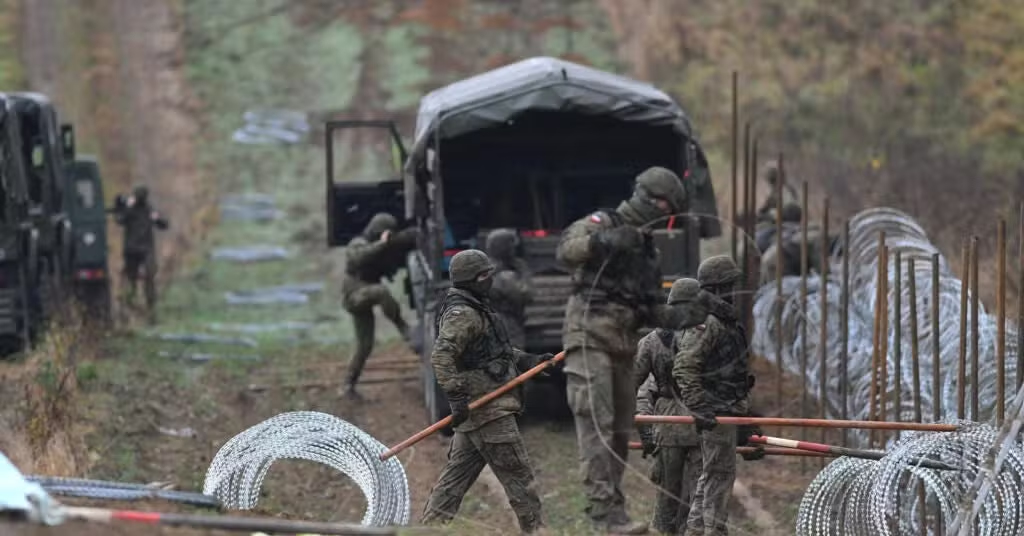
The suspected attack never took place; Polish officials said a large deployment of police, border guards, and troops prevented it.
Poland sent about 180 police officers, counterterrorism units, and special forces to the border and set up a command center after warnings from allied intelligence services.
Similar warnings about a possible Russian attack near Kaliningrad were shared with the security services of Lithuania, Latvia, and Estonia.
Intelligence coordinator Tomasz Siemoniak confirmed a real threat, while the Kremlin had not responded to the reports.
Tomasz Siemoniak said: "In my opinion, all the measures taken in this case were appropriate. The available evidence indicated that the threat had been assessed as real."
One of Rzeczpospolita's sources said: "It was supposed to be something similar to Gleiwitz. Of course, those who crossed the border would most likely have been shot, or evidence that they had come from Ukraine would have been found on them. The aim was to stop aid to Ukraine."
A source familiar with the details of the Polish response said: "The aim was deterrence, but also to ensure the ability to take pre-emptive action."
Asked whether the Russians had planned a terrorist attack in Poland where large numbers of people might have been present, Tomasz Siemoniak replied: "I don't know the answer to that question – you'd have to ask the Russians, and they don't usually admit to planning such actions. Even if we have such information, we don't share it."
The suspected scenario involved attacking civilian targets, with individuals crossing the border to be killed or fitted with fabricated evidence of Ukrainian involvement.
Polish Prime Minister Donald Tusk reported "disturbing movement" near the Kaliningrad border on November 3 after intelligence warnings of possible Russian sabotage and armed provocations.
The sabotage and false-flag operation was planned for late October or early November 2026, with Russian operatives anticipating a high number of casualties.
Poland deployed around 180 riot police officers and a counter-terrorism unit to the border region, and reinforced Border Guard posts and police stations with additional Internal Security Agency personnel.
Poland's special forces units GROM, NIL, and AGAT held exercises in the Warmian-Masurian region, which borders Russia's Kaliningrad exclave.
Polish media reported on November 2, 2026 that counterterrorism units had been sent to the Kaliningrad border after intelligence warnings of possible sabotage and incursions by armed groups.
In early November, a special command center was established at the National Police Headquarters for the operation in the Warmian-Masurian and Podlaskie regions.
Polish national police chief Marek Boron said the counterterrorism units were working alongside the military, border guards, and intelligence services in northeastern Poland.
The Polish daily Rzeczpospolita reported that Polish authorities knew in October of a planned violent Russian provocation at the border with Kaliningrad, including a staged attack on a target on Russian territory.
According to Rzeczpospolita, the suspected attack never took place because Poland's large-scale deployment at the Kaliningrad border prevented the provocation.
According to Rzeczpospolita, Russia wanted the act blamed on Ukraine, and the goal was for Poland to stop its aid to Ukraine.
The first warnings of a possible provocation at the Kaliningrad border came from foreign intelligence services and matched the findings of Poland's own security authorities.
A source at the Polish security services said in Rzeczpospolita: "We had information about concrete objects that were to be attacked. The Russians expected many victims."
A source quoted by Rzeczpospolita said the "red light" went on for those responsible when officers of a Russian intelligence service that typically coordinates such sabotage acts appeared on the Russian side of the border.
Poland's intelligence coordinator Tomasz Siemoniak said there had been a "real threat" and that he could not give further details.
Officials in Warsaw said Russia plotted a false-flag attack on the Polish border, a GRU operation near Kaliningrad that would have implicated Ukraine and caused a large number of casualties.
The Kremlin had not responded to the reports of the foiled plot in Poland.
Polish Prime Minister Donald Tusk revealed that suspicious individuals carrying flashlights had been observed moving near the border with Kaliningrad, prompting a rapid response by Polish security forces.
Olga Lautman said that while the full details of the alleged plot remain unknown, Russia was preparing a plot to kill its own citizens.

