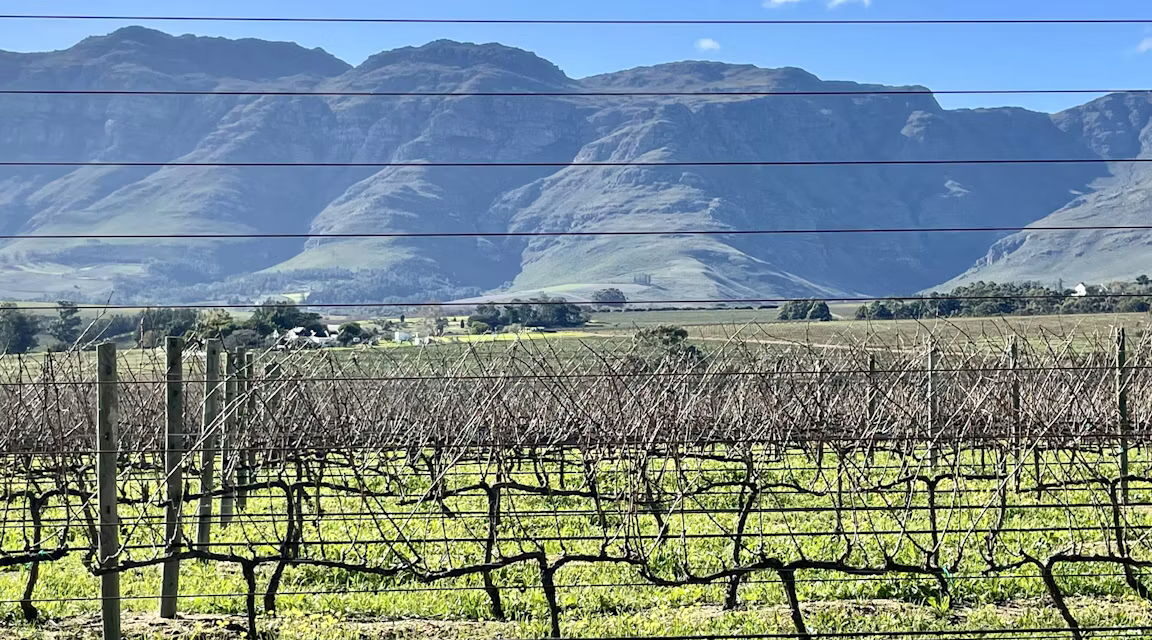
South African winemakers increasingly treat conservation as key to business success
Summary
- Researchers who study environmental change report that many Western Cape winemakers see conservation of soil, water, and wildlife habitat as essential to business success.
- The Western Cape produces about 90 percent of South Africa's wine and lies within the Cape Floral Region, a global biodiversity hot spot.
- The region faces drought, heat, and erratic rainfall, with temperatures rising 1.5 to 2 times faster than the global average over five decades.
- Most of South Africa's vineyards participate in the Integrated Production of Wine certification system, created in 1998 to reduce environmental harm.
- A team of geographers and sustainability scientists interviewed growers and analyzed land stewardship practices at 107 vineyards, about 20 percent of the region's total.
- Growers use practices including cover crops, regenerative grazing, native vegetation restoration, and targeted pest control to cut chemical use.
Reactions
- Researchers Hannah V. Herrero and coauthors argue the stewardship practices they observed are investments in long-term business resilience for growers.
- Growers told the researchers they see conservation not as land taken out of production but as supporting ecological processes essential to their business.
- Many growers use sustainability certifications, including World Wildlife Fund's Conservation Champions, to increase their wine's marketability.
- Producers said reducing reliance on chemical pesticides benefits both the environment and their businesses as chemical costs rise.
Timeline newest first
Researchers reported that many winemakers in South Africa's Western Cape view long-term conservation of soil and wildlife habitat as essential to business success.
Sources newest first
- Winemakers are learning that conservation can be good for business
A Conversation article on Ars Technica by geographers and sustainability scientists reports that many South African Western Cape winemakers increasingly see conservation of soil, water, and wildlife habitat as essential to business success, not a competing use of land. The region, which produces about 90 percent of South Africa's wine and hosts the biodiverse Cape Floral Region, faces faster-than-average warming, drought, and erratic rainfall, and most vineyards participate in the Integrated Production of Wine certification system created in 1998.
