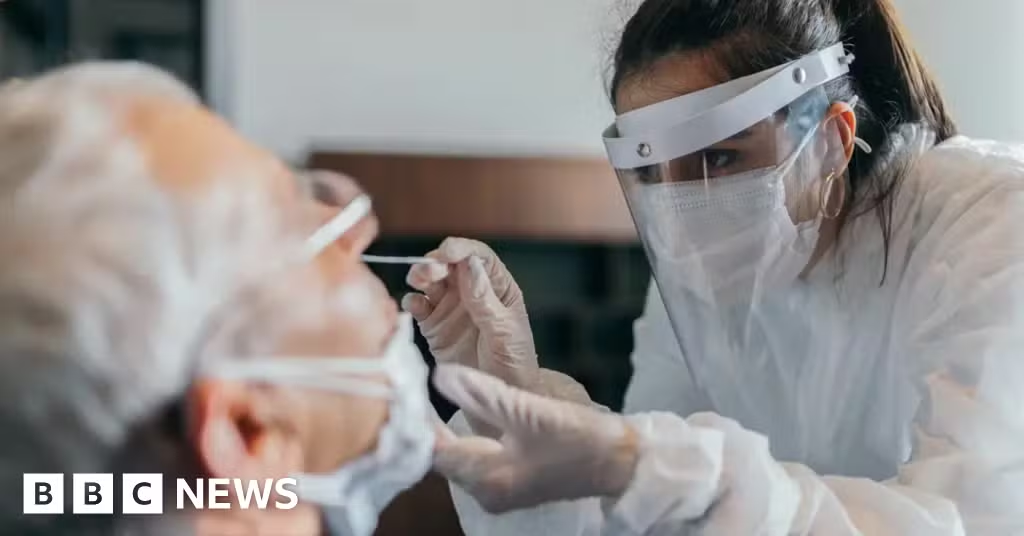
Covid inquiry finds UK lacked test, trace and border systems at pandemic's start
Covid inquiry report: key findings on testing, tracing and 'the pingdemic'
bbc.com· 2d
Lack of early border controls made UK ‘extremely vulnerable’ to Covid, inquiry finds
theguardian.com· 2d
UK 'effectively blind' to early Covid spread due to lack of test and trace, inquiry finds - follow live
The UK Covid-19 Inquiry, chaired by Baroness Heather Hallett, has published its seventh report, on testing, tracing and isolation.
It finds community testing and contact tracing were abandoned in mid-March 2020, letting the virus spread virtually unchecked and costing lives.
It finds the UK had no clear border control strategy early in the pandemic, while 93% of countries had measures by April 2020.
The report sets out five key failings and nine recommendations, including a single UK-wide test, trace and isolate system.
It also judges that NHS Test and Trace, which cost more than £25bn in England and over £30bn overall, worked well once established.
The inquiry finds demand for testing completely overwhelmed supply, leaving decision makers effectively blind to the true spread of the virus.
The inquiry finds widespread contact tracing was not established until the summer of 2020, by which point the virus had swept through the population unchecked.
Baroness Heather Hallett sets out five key failings, including a lack of support for self-isolation and no border controls until the summer of 2020, and makes nine recommendations.
The inquiry finds conflicting and confusing public messaging on testing, tracing and isolation undermined public trust and compliance.
The inquiry calls for one UK-wide digital contact tracing tool after finding the Scottish Covid app was not compatible with the one used in England.
In a video statement, Baroness Hallett says the UK was simply not prepared for the pandemic, that its fundamental lack of pre-pandemic preparedness carried a terrible human cost, and that too many lives were cut short.
Baroness Hallett says many people faced a difficult choice between losing their income or risking spreading the virus, and that targeted financial and practical support should have been introduced earlier.
BBC health correspondent Nick Triggle says there was little surprising in the inquiry's seventh report.
Professor Alan McNally says scientists' advice on emergency testing measures was rejected or ignored, calls the dismantling of large testing facilities a damning indictment, and warns the UK now has zero ability to ramp up testing quickly.
Professor Christina Pagel says the lack of testing capacity hamstrung the UK's pandemic strategy from the beginning, and that people need to learn from Covid-19 and put the inquiry's recommendations into practice.
Covid-19 Bereaved Families for Justice UK says the inquiry exposed the lies and incompetence that cost lives, and calls on the government to act now by funding a permanent testing network and ensuring people can afford to isolate.
Local Government Association chair Cllr Eamonn O'Brien says closer working between local and central government on public health is vital to strengthen future pandemic preparedness.
The report says years of preparedness exercises should have left the UK ready, but test and trace had to be built virtually from scratch, with the England system costing more than £25bn.
The report says that by April 2020, 93% of countries had imposed travel restrictions, while the UK only asked travellers from high-risk areas including Wuhan to self-isolate.
The report says the self-isolation policy did not stop a coach of tourists from Wuhan entering England and travelling to Scotland, Northern Ireland and the Republic of Ireland in February 2020.
The report says 18 February 2020, when the UK had only nine confirmed cases, would have been the ideal time to bring in travel restrictions.
Baroness Hallett says the UK entered the pandemic woefully ill-prepared to implement effective nationwide test, trace and isolate systems, leaving decision-makers effectively blind to the scale of the virus.
Baroness Hallett says failures to quickly introduce a test-and-trace system allowed the virus to spread with deadly speed across the country, virtually unchecked.
Baroness Hallett says a better test, trace and isolate system would be fundamental to saving lives and reducing suffering with the next deadly virus.
The UK Covid-19 Inquiry publishes its 245-page seventh report, on testing, tracing and isolation, the seventh of 10 planned reports.
The report says the virus spread virtually unchecked after community testing and contact tracing was abandoned in mid-March 2020, costing lives.
The report says Exercise Cygnus and Exercise Alice both identified problems with test, trace or isolation that appear not to have been fully acted on.
The report questions whether the government could have used non-government testing facilities in hospitals, universities and the private sector from the start instead of relying on 12 government labs.
The report says many people told to isolate felt forgotten and let down by the lack of practical or financial support for following the rules.
The report says the UK lacked a clear strategy for implementing border control measures early in the pandemic, leaving it in an extremely vulnerable position.
The report quotes a US modelling study estimating that when 75% of people used a contact tracing app, infections were reduced by at least 50%.
The report quotes Treasury estimates suggesting the pingdemic may have reduced economic growth by as much as 0.3% that month.
The report recommends international border control measures be in place at the earliest stages of any future pandemic, and calls for a single UK-wide digital contact tracing tool.
Baroness Hallett says suspending all flights from China to the UK in February 2020 could have provided valuable additional time to prepare healthcare systems for the pandemic's impact.

