Bangladesh approves 36% garment minimum wage rise to 17,000 taka after protests
Bangladesh: les ouvriers du textile obtiennent une hausse du salaire minimum après un mois de manifestations
rfi.fr· 17m
Au Bangladesh, les ouvriers du textile, secteur clé de l’économie nationale, obtiennent une revalorisation du salaire minimum
lemonde.fr· 11h
Bangladesh minimum wage hike misses garment worker demands, sparks fresh protests
reuters.com· 13h
Bangladesh's government-appointed wage board approved a 36% rise in the garment sector's monthly minimum wage at around 2 a.m. on 25 November 2026, lifting it to about 17,000 taka, or $138, from January 2027. After nearly 12 hours of talks, the six-member committee chaired by judge Syed Azad Subhani approved the structure in a 4-2 vote, with workers' representative Babul Akhter reporting four members backed 17,000 taka and two backed the 18,000 taka demand.
The bargaining had been long: workers initially sought 32,000 taka before lowering their demand to 18,000, while factory owners first proposed 15,000 taka and later raised their offer to 17,000. The approved Grade 4 rate is 4,500 taka higher than the minimum set in 2023, and the rise is the smallest percentage increase since the sector's first minimum wage was set in 1986.
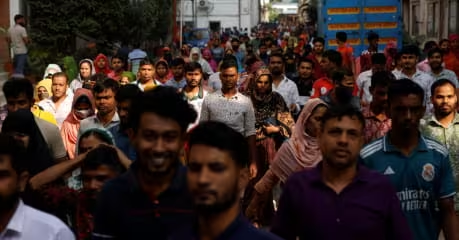
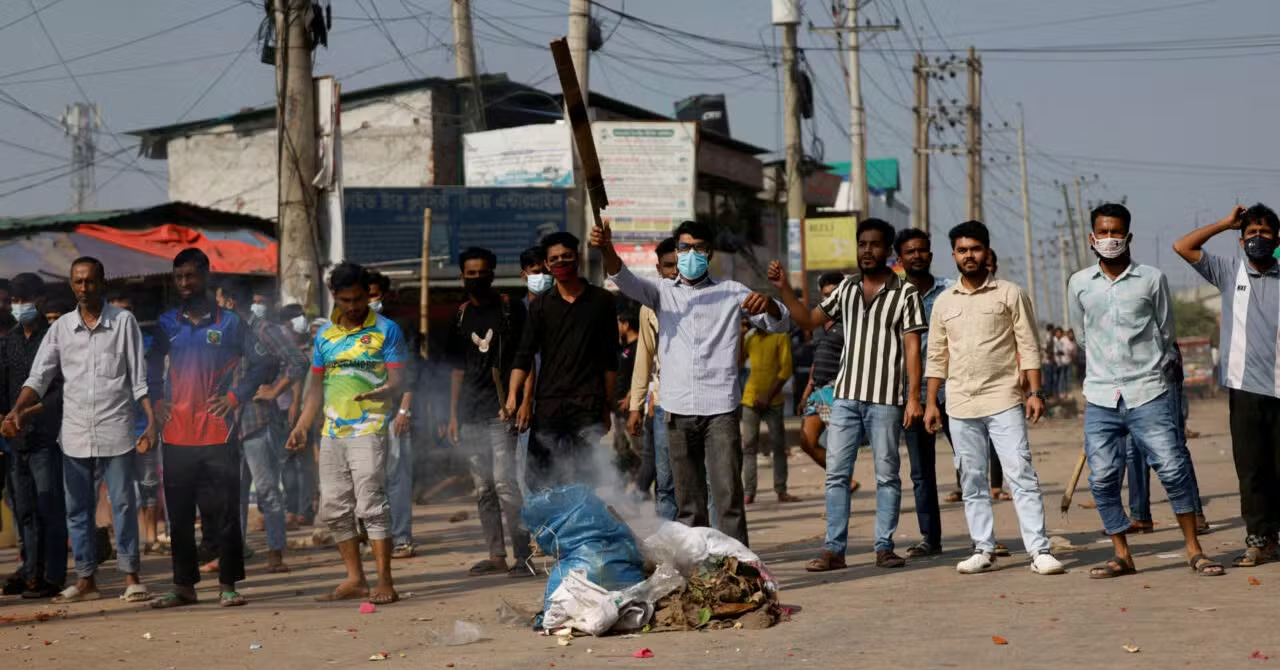
Workers had demonstrated for several days from the start of November, demanding a 140% rise to 33,000 takas to offset the rising cost of living amid high inflation and surging world energy prices, and violent clashes with security forces marked the beginning of the month. Weeks of protests shuttered factories, blocked highways, vandalised property and disrupted production, and on 25 November police fired tear gas and sound grenades to disperse workers blocking a major highway in Gazipur, a garment manufacturing hub on the outskirts of Dhaka.
The Bangladesh Garment Manufacturers and Exporters Association said 397 factories were unable to operate on 24 November and another 84 remained closed under the labour law's no work, no pay provision. Its survey estimated 317 factories lost about $428 million in production over 18 days of disruption, while buyers shifted orders worth about $254 million to other countries.
Order returned to the Gazipur district during the day on 25 November, though several factories remained closed.
Bangladesh's government-appointed wage board approved a 36% minimum wage hike for garment workers at around 2 a.m. on 25 November 2026, raising the monthly minimum to about 17,000 taka, or $138.
The approved Grade 4 rate is 4,500 taka higher than the minimum set in 2023, and the increase is the smallest percentage rise since the sector's first minimum wage was set in 1986.
Garment workers initially sought a minimum wage of 32,000 taka before lowering their demand to 18,000 taka, while factory owners first proposed 15,000 taka and later raised their offer to 17,000 taka.
After nearly 12 hours of talks, the six-member board approved the new structure in a 4-2 vote, with workers' representative Babul Akhter reporting four members backed 17,000 taka and two backed the 18,000 taka demand.
Weeks of protests shuttered factories, blocked highways, vandalised property and disrupted production across Bangladesh's garment sector.
Police fired tear gas and sound grenades to disperse workers who blocked a major highway in Gazipur, a garment manufacturing hub on the outskirts of Dhaka, on 25 November.
The Bangladesh Garment Manufacturers and Exporters Association said 397 factories were unable to operate on 24 November and another 84 remained closed under the labour law's no work, no pay provision.
A BGMEA survey estimated 317 factories lost about $428 million in production over 18 days of disruption, while buyers shifted orders worth about $254 million to other countries.
Mohiuddin Rubel, a denim manufacturer supplying brands including H&M, said Bangladesh at a $138 minimum wage now pays more than West Bengal in India and about the same as Vietnam, Indonesia and Pakistan, and that its low-cost edge is gone.
Mohiuddin Rubel said the capability gap, not the wage gap, now decides orders, and that the industry had cut prices by 6.54% in Europe in the year leading to the report and still lost volume.
Mohiuddin Rubel urged international brands to share part of the higher labour costs, saying buyers are partners and the biggest stakeholders, and warned small factories cannot absorb the new wage bill alone.
Under the approved four-grade structure, monthly wages were forecast to range from 17,000 taka for Grade 4 workers to 21,500 taka for Grade 1 workers.
The new wage structure was forecast to take effect on 1 December, with workers expected to receive the revised wages from January.
The wage committee chaired by judge Syed Azad Subhani decided the increase would take effect from January 2027.
Workers had demanded a 140% rise in the monthly minimum wage, to 33,000 takas, to offset the rising cost of living amid high inflation and surging world energy prices, having demonstrated for several days from the start of November.
Committee chairman Syed Azad Subhani announced in a statement to the press that a majority of the negotiators agreed on a monthly minimum wage of 17,000 takas.
Workers' representative Babul Akhter said: 'We cannot be satisfied, but the decision was made by the committee,' and added: 'The result is not totally bad either.'
Babul Akhter called on workers still on strike to return to work and urged factory owners to apply the decision as quickly as possible.
Babul Akhter noted that workers previously received wage increases only every five years, while this one was obtained after three years.
At the very beginning of November 2026, violent clashes pitted striking workers against security forces for several days, with more sporadic incidents recorded afterwards.
Order returned to the Gazipur district during the day on 25 November, though several factories remained closed.
Ekota Garments Sramik union leader Kamrul Hasan said workers must take account of the situation of small and medium enterprises, which cannot pay much more, and that the unrest will pass.
Gazipur worker Al Amin said the revised wage still does not cover the rise in prices of basic goods, but believes most textile workers wish to return to work.
Prime Minister's social affairs adviser Mahdi Amin welcomed the wage increase and called for calm, saying: 'Let us not let ourselves be influenced by propaganda, provocation or disinformation.'