COP31 ends without deal as EU and allies reject draft that omits fossil fuels
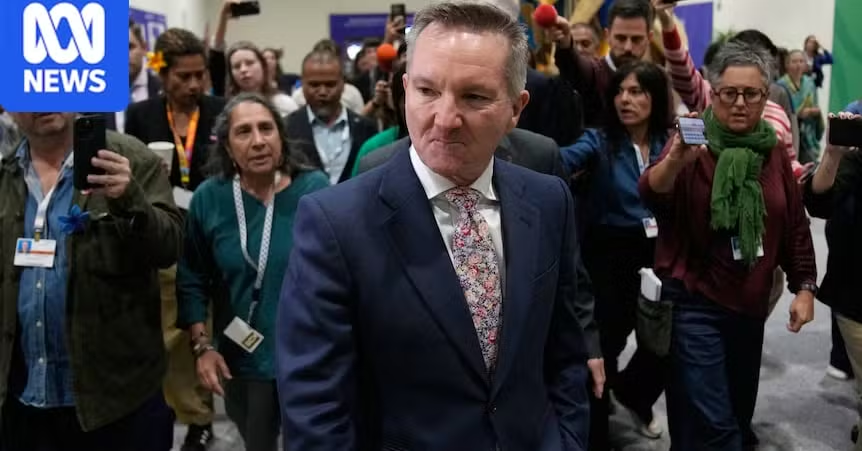
Breaking: COP31 deal failure 'very disappointing', Chris Bowen says
abc.net.au· 13m
COP31 climate talks break down as E.U. and others reject deal
cnbc.com· 22m
Cop31 climate talks set to end in deep division as key deal rejected
theguardian.com· 1h
COP31 climate talks set to collapse without political deal
reuters.com· 1h
COP31 talks break down as EU and other countries reject final climate deal
middleeasteye.net· 1h
Bitter Clash Over Fossil Fuels Derails U.N. Climate Talks
nytimes.com· 1h
UN Climate Talks Slide Toward Collapse as Nations Reject Deal
bloomberg.com· 1h
COP31 in Antalya: Eklat bei Uno-Klimakonferenz in Antalya – Teilnehmer können sich nicht auf Abschlusserklärung einigen
spiegel.de· 2h
COP31 climate deal in the balance after fractious talks
COP31Deutschland hält Beschlusstext für Klimakonferenz nicht für zustimmungsfähig
COP31: Deutschland hält Beschlusstext für Klimakonferenz nicht für zustimmungsfähig
COP31 climate talks in Antalya, Turkey in bid for breakthrough - follow live
bbc.com· 5h
COP31 latest: UN climate talks break down as EU and others reject deal
sky.com· 7h
Fossil fuels still missing from latest COP31 draft deal
lemonde.fr· 9h
COP31 climate talks close to final deal, says summit president
Trump skipped COP. US fossil fuels showed up.
politico.com· 17h
Snarled Climate Talks Seek Breakthrough on Fossil Fuels, Finance
Climate talks stall as countries mull showdown with Saudi Arabia over fossil fuel phase-out
COP31 climate summit risks failure as talks go deep into overtime
Cop31: Talks deadlocked as EU signals willingness to walk away if no move on fossil fuels
irishtimes.com· 26h
Latest COP31 deal sidesteps fossil fuels amid growing divisions
france24.com· 31h
Nearly 200 countries gathered in Antalya, Turkey on 9 November for the COP31 climate summit, and the first draft of its main decision, the Antalya Accords, mentioned fossil fuels six times. A second draft on 19 November stripped out every reference, keeping instead a push for carbon capture and storage that Saudi Arabia wanted, while dropping a proposed 120 billion dollar target for adaptation finance.
The European Union and other nations insisted the text name fossil fuels as the cause of climate change and restate the 2023 COP28 commitment to transition away from them, which Saudi Arabia resisted. On Saturday evening a coalition of about 130 countries, including the EU, the UK and small island states, marched to the COP31 presidency office to demand the reference be reinstated, and civil society groups declared COP31 the 'worst Cop ever'.
The talks were due to close on the evening of Friday 20 November but ran far into overtime as the co-hosts, Turkey and Australia, struggled to find compromise. A package announced early on Sunday 22 November still dropped the phrase 'transitioning away from fossil fuels', recalling the 2023 agreement only in its entirety, and delegations had until 0300 GMT to object before an approval session at 0600 GMT.
The EU, the UK, Panama, the Marshall Islands and Norway rejected the draft, saying it favoured exporters of oil, gas and coal, and COP31 President Murat Kurum confirmed the final document would not be approved without consensus. The summit became the longest in UN climate history, running more than 44 hours past its deadline, and ended with no deal on its main outcome, to be reconvened at the next summit in Addis Ababa, Ethiopia, or at a COP-bis in Bonn, Germany.
The COP31 presidency, held by co-hosts Turkey and Australia, proposed an 11th-hour draft deal on 22 November 2026 that omits any explicit reference to fossil fuels and needs consensus approval from nearly 200 nations at a closing session in Antalya.
An earlier draft during the week of 16 November 2026 had called for a faster phaseout of fossil fuels, but a pared-down second version released on 19 November stripped away all mentions of coal, oil and gas.
The latest text references the 2023 global deal to shift the world away from fossil fuels without naming them, and retains a contentious push to expand carbon capture and storage.
The draft calls for raising the share of electricity in total final energy consumption to 35 percent by 2035 and expanding clean energy, with some nations demanding an explicitly clean target so the electrification push runs on renewables.
The European Union and other nations pushed for strong language on transitioning away from fossil fuels, a call oil-rich Saudi Arabia resisted, and walkout threats prompted the co-hosts to convene a hurried meeting between the two sides.
French Ecological Transition Minister Monique Barbut said in a statement, 'Time is ticking and we are not there yet.'
France called the latest proposal a 'backward' step.
A German official said, 'The situation is difficult, and the outcome is uncertain. The oil-producing countries are putting up a fierce fight.'
Antigua and Barbuda's environment minister Michael Joseph said, 'We are very disappointed with how the text looks,' and added, 'I can't honestly say that I'm okay with it passing' in the draft's current state, calling it 'quite silent' on fossil fuels.
A Saudi official declined to comment on the proposal.
A third draft of the COP31 cover decision was due before 9am local time on Saturday 21 November 2026, but by lunchtime it had still not appeared, with the summit running well into overtime past its scheduled close on the evening of Friday 20 November.
The deadlock centred on the insistence of the European Union and other countries that the cover decision acknowledge fossil fuels as the cause of climate change and restate the 2023 COP28 commitment to transition away from them, which the EU called a backward step to omit.
The EU was reported to be prepared to walk away without an agreement rather than accept weak wording, but was consulting small island states and least developed countries and did not want to block a deal if poor nations would be left more vulnerable.
Rough drafts circulating early on Saturday suggested a compromise that still excluded fossil fuel wording but deleted controversial wording backing carbon capture and storage.
Panama said it would firmly block any proposed final COP31 text that does not reference fossil fuels.
France, Spain, the Netherlands and Ireland argued they could not leave Turkey with an agreement that fudges why there is a climate crisis, and refused to back carbon capture and storage in the agreement.
The COP31 draft dropped a proposed 120 billion dollar target for finance to help developing countries adapt to climate change, alongside its removal of references to ending fossil fuel use.
The draft acknowledged the projected overshoot of 1.5 degrees Celsius of warming and called for faster deployment of greenhouse-gas-removal technologies, which some delegations opposed, arguing it could open the door to continued fossil fuel use.
The United States was absent from the talks for a second year after President Donald Trump ended cooperation on climate policy.
Negotiators had expected a revised draft of the negotiating text on Friday, but by Saturday afternoon hopes for significant changes had faded and frustration was mounting.
EU Climate Commissioner Wopke Hoekstra forecast the summit would either produce a good deal or no deal at all, saying, when asked about the chances of no deal, 'We will find out.'
COP31 President Murat Kurum acknowledged a deal could prove elusive and called on every country to act responsibly, saying there was no benefit for anyone in ruining the process by getting hung up on words or phrases.
Gambia's finance negotiator Isatou Camara said some countries appeared to be using delay tactics to pressure others into accepting a weaker outcome, a strategy she said works by leaving negotiators fed up, exhausted and wanting to go home.
Malawi's loss and damage negotiator Brenda Mwale said the amount of unfinished business showed there was a big problem, asking whether the summit faced a leadership crisis and whether there was really a vision for it.
A coalition of about 130 countries, including the EU, the UK, small island states, the least developed countries and many African countries, marched to the COP31 presidency office on Saturday evening to demand reinstatement of the reference to transitioning away from fossil fuels that had been excised from the Thursday draft.
Some countries considered forcing an open meeting at which Saudi Arabia and any allies would have to state publicly their opposition to the stronger outcome most other countries wanted.
The talks, scheduled to end on Friday evening, looked set to continue into Sunday morning, with delegates rescheduling flights and the meeting risking falling below the UN Framework Convention on Climate Change quorum if enough delegates left.
A compromise was suggested if the role of carbon capture and storage, which Saudi Arabia wanted strongly recommended, was downplayed and the push for electrification was strengthened.
Tuvalu's climate change and environment minister Maina Talia said including a reference to fossil fuels was a red line for his country, and that without it 'we are wasting our time here.'
Power Shift Africa director Mohamed Adow said governments came to Antalya needing progress on public climate finance, adaptation and fossil fuels but instead were fighting to stop governments retreating from promises already made, that rich countries had spent two weeks finding reasons not to deliver promised financial support, and that the meeting felt like it was unravelling.
Global Justice Now director Nick Dearden said this must be the last time fossil fuel interests are allowed to hold the talks to ransom, and that climate change cannot be combated while those who control the global economy can make money from coal, oil and gas.
Fill the Fund global convenor Harjeet Singh said developing countries cannot be asked to transform their economies while drowning in disasters and debt, and that whatever deal emerged the COP would have failed from a lack of money and a lack of will from those who caused the crisis.
Climate Analytics chief executive Bill Hare said that if the overwhelming number of countries wanted a strong text on the transition away from fossil fuels and Saudi Arabia stood alone, Saudi Arabia would probably not stand against the global consensus.
China and India, though not allied with the progressive coalition, were forecast to be unlikely to stand against a deal.
The UK's energy minister Miatta Fahnbulleh said the UK was working closely with partners to find a way through and secure an agreement that moves things forward, calling the negotiations difficult but productive with a deal to be done.
The COP31 presidency struggled late into Saturday evening to craft a final agreement more than 24 hours past the summit's scheduled close, with divisions also covering the timing of flagship scientific reports and flows of finance to developing economies.
Leaders of the COP31 talks downplayed the effect of President Donald Trump's oil supply agreement with China and Russia, and officials said a transition away from oil and gas was underway despite the United States flooding the world with fossil fuels.
Many countries in the negotiations have grown increasingly linked to American industries expanding oil and gas production, and a common refrain among attendees held that electrifying more of the economy can lower fossil fuel use and prices, leaving the United States at risk of being left behind.
Panama's climate minister Juan Carlos Navarro said, 'The world is hostage to petroleum producers. That is the truth. And they will not stop.'
White House spokesperson Taylor Rogers said in a statement, 'The United States is focused on common sense, not climate nonsense. The Trump Administration will continue to work with our allies around the world to unleash affordable, reliable, secure energy sources.'
UN Framework Convention on Climate Change executive secretary Simon Stiell said, 'This isn't about which leaders are here or not.'
Spain's environmental minister Sara Aagesen said, 'I'm very sad that the United States of America turned their back on climate action, but that means that the rest of us, we have to do our part. We are today a lot of countries with a clear message that we have to phase out fossil fuels.'
Early on Sunday 22 November 2026 the Australian and Turkish presidencies announced a new package they hoped would achieve consensus, refining a draft heavily criticised for lacking ambition because it contained no reference to ending fossil fuel use.
The new text followed intensive consultations between Australia, Turkey and nearly 200 delegations from the world's richest, poorest, largest and smallest nations.
Delegations had until 0300 GMT on 22 November to raise objections to the deal, with a session scheduled at 0600 GMT to begin approving it.
At a late-night plenary session, COP31 President Murat Kurum said, 'We believe that we have put forward a text which all the parties can agree upon,' saying concerns around fossil fuels and adaptation finance had been addressed.
Kurum forecast the conference would reconvene later on Sunday morning to approve the deal.
The EU, the UK and other delegations rejected the final COP31 draft agreement because it did not include a call to transition away from fossil fuels, with Panama also rejecting it.
COP31 President Murat Kurum confirmed the final draft would not be approved and that no new text would be drafted without consensus, leaving the summit set to end with no deal and be reconvened either at the next summit in Addis Ababa, Ethiopia, or at a COP-bis in Bonn, Germany.
Kurum had earlier said he hoped to bring the summit's final decision to the general assembly by 10 to 10.30am local time.
Irish climate minister Darragh O'Brien, representing the EU delegation, said the drafts put before them did not begin to address the climate emergency the world faces, and that the EU would not accept a COP that greenwashes fossil fuels.
UK Energy Secretary Miatta Fahnbulleh said the talks sought to confront hard truths and the UK worked tirelessly to build consensus, that it was immensely disappointing this was not possible, and that the failure only strengthens the UK's resolve to work with partners on the progress made in Antalya.
Kate Hughes, a spokesperson for the UK delegation, said the situation called for greater ambition, that the draft was not commensurate with the urgency of overshoot or the scale of the climate crisis, moved backwards on the science and was a lowest common denominator where bold collective ambition was needed.
Global Justice Now director Nick Dearden said there being no draft cover decision that mentions the words fossil fuel was beyond disappointing and insulting.
Friends of the Earth chief executive Asad Rehman said fossil fuel companies were the big winners of the COP31 summit, that they would be dancing in their boardrooms over a huge get-out-of-jail-free card, and that the summit had failed people and the planet but given a lifeline to the fossil fuel giants.
Belgium's climate minister Jean-luc Crucke said the outcome was unacceptable and that, while it was not the end of multilateralism, there had to be courage to say no.
Germany's environment minister Carsten Schneider said he hoped a decision could still be reached but was sceptical it could succeed in the short time left, since many colleagues had already left a conference that was supposed to have ended two days earlier.
A new draft deal published in the early hours of Sunday 22 November by co-hosts Turkey and Australia, running to 12 pages and nearly 100 paragraphs, dropped the phrase 'transitioning away from fossil fuels' and instead recalled the 2023 United Arab Emirates Consensus, the COP28 agreement, in its entirety.
Nearly 200 countries arrived in Turkey on 9 November for the COP31 summit, and a first draft of the overarching decision, the Antalya Accords, circulated on 16 November mentioning fossil fuels six times before the second draft on 19 November removed all references.
On 20 November a group of countries led by France and Panama said the deal was not good enough, Panama's environment minister demanded that fossil fuels be mentioned, and the talks overran their scheduled end.
The COP31 talks would become the longest in the summit's history if they ran past 14:00 local time on 22 November, surpassing the delay to negotiations at COP25 in Madrid.
Negotiations on the cover text, officially the Antalya Accords, closed, with countries told any changes they wanted had to be made on the floor of the plenary hall.
Germany said it would not accept the COP31 deal as it stands.
France warned that relying too heavily on carbon capture, use and storage could give petro-states a licence to continue burning oil and gas at current rates, though the new draft kept the acknowledgement that the world is on track to miss the 1.5C limit and contained subtle changes on carbon capture deployment.
Finance to help developing nations adapt to climate change remained unresolved, with developing countries raising concerns about the lack of adaptation money in the latest draft.
COP president Murat Kurum said at the opening of the meeting, 'We have worked day and night. We have built bridges. Until the very last moment we have sought opportunities to reach consensus,' called the talks a threshold of a 'historic decision', told the BBC he was 'hopeful', and said, 'We will be happy soon enough.'
Australian Chris Bowen, leading the COP31 negotiations, forecast the summit would be the first to acknowledge that the world will fail to hold warming to the 1.5C limit, and said, when asked whether the talks would collapse, 'Time will tell.'
France said, 'The text presented to us by the presidency this Sunday morning is even weaker than the previous one.'
A French negotiator said the EU had worked through the night to reach a compromise that was 'cast aside'.
German Environment Minister Carsten Schneider rejected the third version of the closing text shortly before the closing plenary, saying an agreement was still possible but not with the present text, with the vote on the summit declaration scheduled from 9am in the plenary hall 'Anadolu' and the conference 40 hours past its scheduled end.
Germany, France and the EU delegation, which holds the negotiating mandate, worked with their allies through the whole night on a compromise to write the 2023 Dubai decision to depart from fossil fuels more clearly into the text and link it to current demands such as electrification.
Carsten Schneider said the final text, as presented in its third version, was not acceptable to Germany, that a step backwards from previous climate decisions was the last thing Germany could afford, that the blocking stance of individual countries brought the process to a standstill, and that some countries earn money with oil and gas and are 'not prepared to reduce accordingly'.
Schneider blamed the oil countries above all, saying Saudi Arabia had blocked every progress for days on behalf of the Arab Group and was even trying to roll back agreements already reached on moving away from coal, oil and gas, and said that if no consensus could be reached that day then unfortunately that is how it is.
COP31 President Murat Kurum said no party had approached the closing document solely with its own priorities, that through consensus a text was crafted in which everyone can see themselves reflected though no one obtained everything they desired, and that he hoped the decision would show the world multilateralism is still capable of yielding results.
The COP31 UN climate conference in Antalya ended in a clash, with participants unable to agree on a closing statement, and the EU said several times in the plenary that it would not accept the closing text before leaving the plenary.
Saudi Arabia, alongside Russia, was one of the biggest blockers at the talks, trying on behalf of the Arab group to reverse already agreed resolutions on moving away from fossil fuels such as coal, oil and gas.
COP31 President Murat Kurum warned on Sunday morning that the conference could end in failure, and German Environment Minister Carsten Schneider set off home a few hours before the conference ended.
Irish Climate Minister Darragh O'Brien, whose country holds the EU Council presidency, said the closing statement 'is not the answer to the climate crisis that we so urgently need'.
Panama's delegation said, 'We do not want to negotiate the minimum, we want to do what protects the planet'.
European nations and smaller countries vulnerable to climate disasters rejected the proposed COP31 agreement, saying it stripped out crucial protections and favoured exporters of oil, gas and coal, after a group of oil producers led by Saudi Arabia blocked any mention of fossil fuels.
COP31 became the longest UN climate summit in history, surpassing the 2019 summit that ran nearly 45 hours into overtime, as sleep-deprived negotiators fought two days past the deadline testing whether Russia, Saudi Arabia and other Arab nations might loosen their opposition.
Countries favouring clean energy worked outside the formal UN system with conferences and domestic pledges that gained momentum in Antalya, with Denmark, Spain and Portugal among the nations announcing new plans around the talks.
Arab countries led by Saudi Arabia, which sought the carbon capture language in the draft, argued it would be impossible to keep global temperatures at safe levels without carbon removal.
As the talks ran past their deadline, organizers stopped convening all nations together and public communication stopped, with groups moving in and out of backrooms.
Ireland's climate, environment and energy minister Darragh O'Brien, speaking for the EU, said the proposed agreement 'fails to meet the moment' and called it 'unconscionable that we would have a climate pact that makes no reference to fossil fuel'.
Fiji's climate and environment minister Lynda Tabuya said fossil fuel-producing countries 'are banding together, no matter which part of the world they come from'.
A Saudi delegate said in the closing plenary that the proposed text was a 'package of solutions that would have advanced climate solutions'.
European climate commissioner Wopke Hoekstra said there were 'no measures that were going to bridge that gap and get us back down toward 1.5'.
Botswana negotiator Xolisa Joseph Ngwadla said the process 'is not effective and it can't build consensus' and 'is basically mismanaged'.
Potsdam Institute for Climate Impact Research director Johan Rockström wrote that the unanimity requirement was the real Achilles' heel of the process and that a handful of countries were deliberately putting 'spanners in the wheel'.
Former Vice President Al Gore called it 'insane' that any individual country could block the entire process, and recommended supermajority voting for the UN climate talks.
The COP31 talks in Antalya continued more than 44 hours beyond their scheduled conclusion on Friday 20 November 2026, and at the closing plenary President Murat Kurum acknowledged countries had failed to agree on the proposed document.
At the closing plenary, COP31 President Murat Kurum said, 'We have done our utmost; ultimately, we have not imposed this text on anyone, nor have we issued an ultimatum such as a take it or leave it demand,' and, 'It is clear that there are parties in this hall who oppose this text. We recognise that there is no consensus on this document. Therefore, these decisions have not been adopted.'
The presidencies avoided outright collapse of the conference by passing decisions on various related matters while leaving out the cover decision that would have been the summit's main outcome, with the talks dragging into Sunday afternoon.
Objections similar to the EU's followed from Panama, the Marshall Islands and Norway, while Saudi Arabia defended the inclusion of carbon capture and storage, and the Africa group, China and Pakistan did not object to the pact despite some reservations.
Civil society groups, which have a mandated role at the talks, declared COP31 the 'worst Cop ever', and African ministers made a dramatic intervention on Friday saying 'We did not come here to beg'.
Darragh O'Brien's intervention on behalf of the EU was met by applause from the hall.
Darragh O'Brien said the EU could not accept the Antalya Pact in its current form and would not endorse a cover decision that does not respond to the science, risks deepening the chasm between commitments and action, or greenwashes fossil fuels.
Climate Analytics chief executive Bill Hare said the objections felt like a real line in the sand moment, with countries standing up to fossil fuel interests and saying no.
Power Shift Africa director Mohamed Adow said on Friday that COP31 had without any doubt been the worst COP ever, and said on Sunday that although the EU rejected the text it cannot wash its hands of the wreckage it helped create, that for countries facing failed harvests, destroyed homes and mounting debt the outcome amounts to abandonment by the wealthy nations most responsible, and that Europe's hypocrisy is staggering as its governments demand fossil fuel roadmaps from others while expanding fossil fuels themselves.
Former Irish president and former UN climate envoy Mary Robinson said there is not the sense of urgency needed to address these issues, which she found very frustrating, and that the co-presidents had not really been stepping up and giving leadership.

