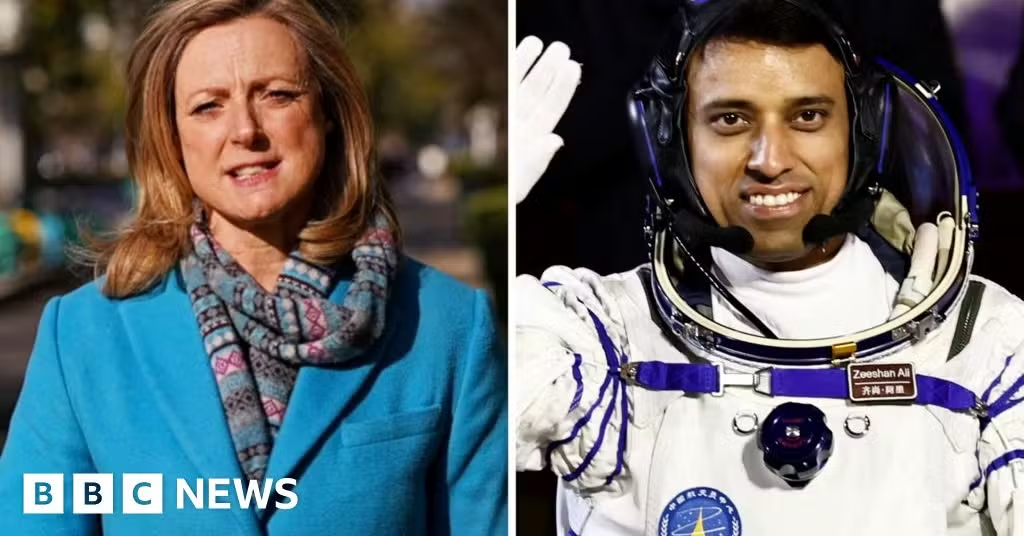
Why has China sent the first Pakistani astronaut to space?
A BBC News Asia headlines page leads with China's Shenzhou-24 mission carrying 40-year-old Pakistani air force pilot Muhammad Zeeshan Ali, the first foreign national to set foot aboard the Tiangong space station. The BBC reports the landmark flight highlights China's desire for the station to become an international research facility, and the mission is expected to last several days before returning to Earth. The page rounds up other Asia headlines, including floods in Nepal, haze from Indonesia's wildfires, and New Zealand's too-close-to-call election.
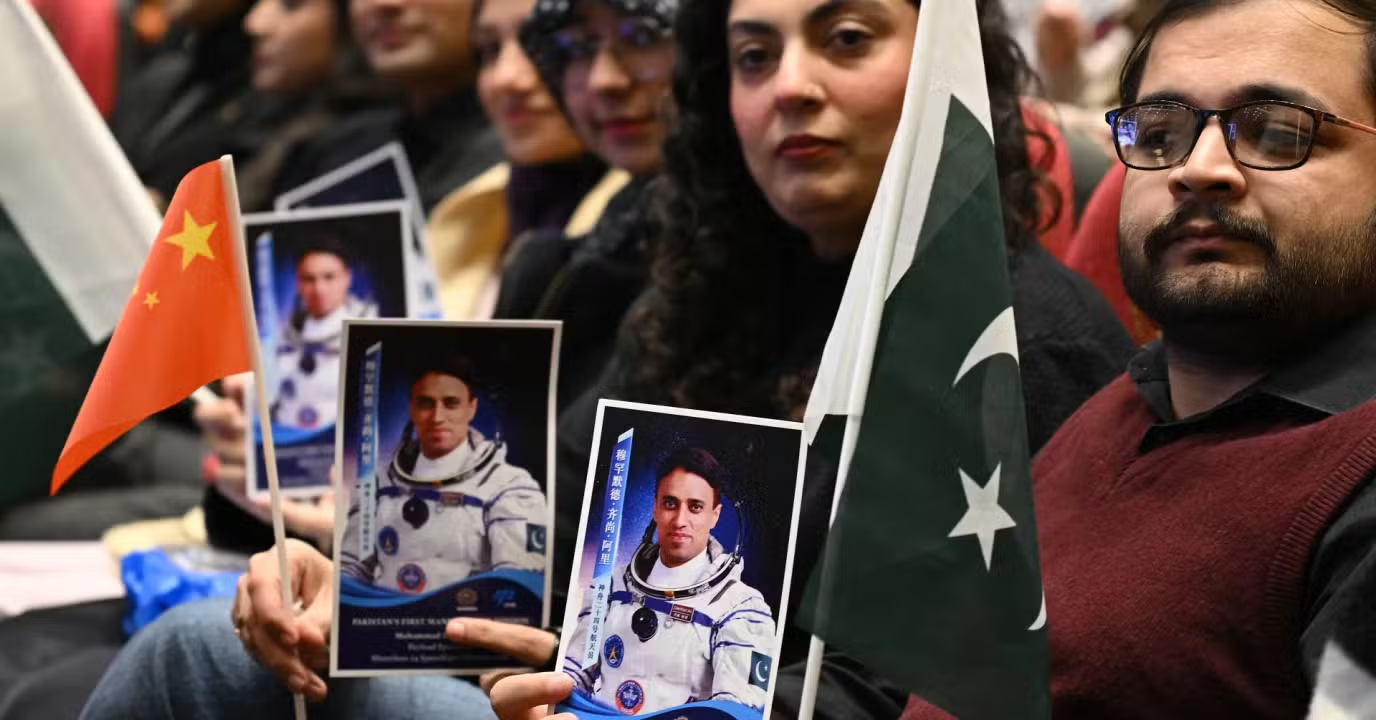
Pakistan rejoices as country’s first astronaut enters orbit
Pakistan celebrates as Muhammad Zeeshan Ali becomes the first person from Pakistan to go into orbit and the first foreign astronaut to board China's Tiangong space station. He launched from China's Jiuquan Satellite Launch Centre on board the Chinese-made Shenzhou-24 rocket in the early hours of 25 November 2026 and will stay in space for five to 10 days, shorter than the usual six-month stints Chinese astronauts serve. At a news conference before the flight he said, "I'm not flying for myself. I carry the name of Pakistan on my shoulder." Al Jazeera calls the flight a big diplomatic moment for China, which it writes is eager to show Tiangong can become an international research platform, and leaders framed it the same way: Prime Minister Shehbaz Sharif called it proof of the ironclad friendship between Pakistan and China, and President Xi Jinping said the joint mission was a vivid embodiment of that friendship.
Flug zur Weltraumstation »Tiangong«: Chinesische Raumfahrer starten mit Premiere
A news report on spiegel.de covers the launch of the Shenzhou 24 mission, which carried the first foreign astronaut to China's Tiangong space station: the Pakistani Muhammad Zeeshan, a 40-year-old air force pilot. The three-person crew lifted off on a Long March 2F rocket from Jiuquan in northwest China, and China's Manned Space Agency soon reported a successful launch. Zeeshan's flight came about through the six-monthly crew rotation and the close Chinese-Pakistani partnership; as a payload specialist he is to spend only a few days on Tiangong conducting experiments before returning in the Shenzhou 23 capsule. Zeeshan said at a press conference: 'Together with my Chinese crewmates I will show that this friendship is real.'
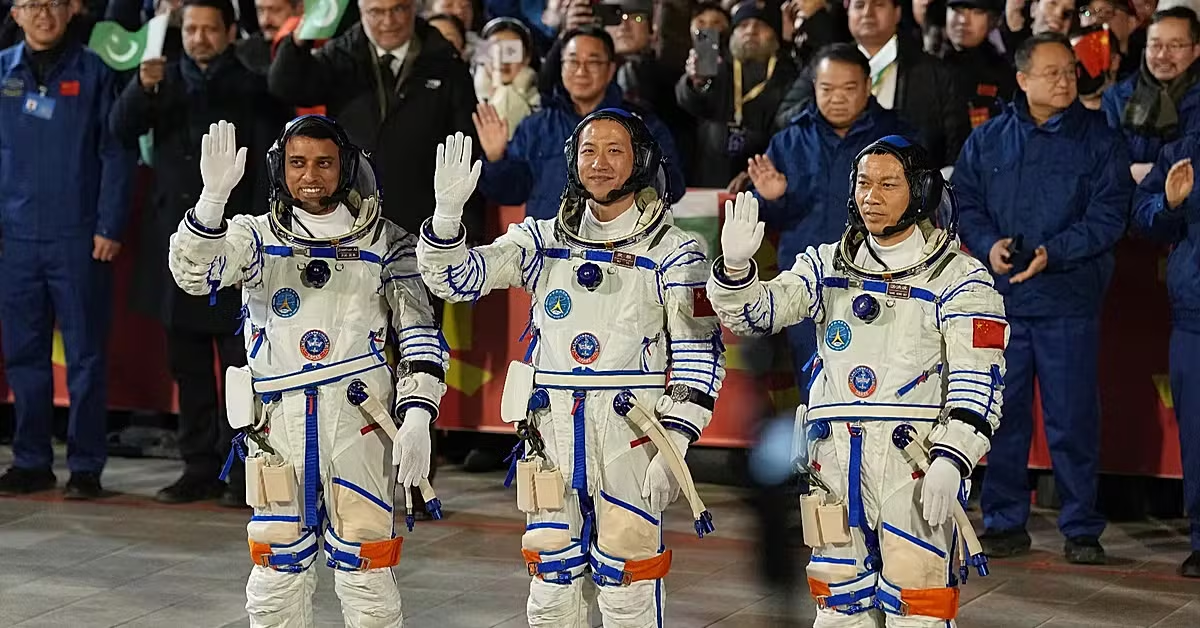
China launches Shenzhou 24 spacecraft carrying first foreign astronaut
Euronews reports that China has launched the Shenzhou 24 spacecraft with Pakistani astronaut Muhammad Zeeshan Ali on board, the first time a foreign national has flown to its Tiangong space station and the first joint flight of Chinese and foreign astronauts in the history of China's crewed space programme. Ali, 40, lifted off on 25 November 2026 with Chinese crewmates Tang Hongbo, 51, and Wu Yi, 39, from the Jiuquan Satellite Launch Center, and the capsule reached its planned orbit. The flight stems from an agreement the two countries signed in February 2025, and Prime Minister Shehbaz Sharif thanked Beijing, saying the journey was 'not just one astronaut's journey, but the journey of 240 million Pakistanis.'
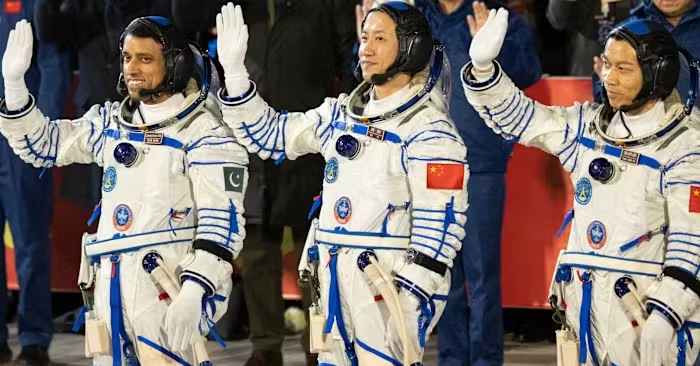
China launches first space mission with foreign astronaut
China has launched its first space mission with a foreign astronaut aboard, according to the Financial Times.
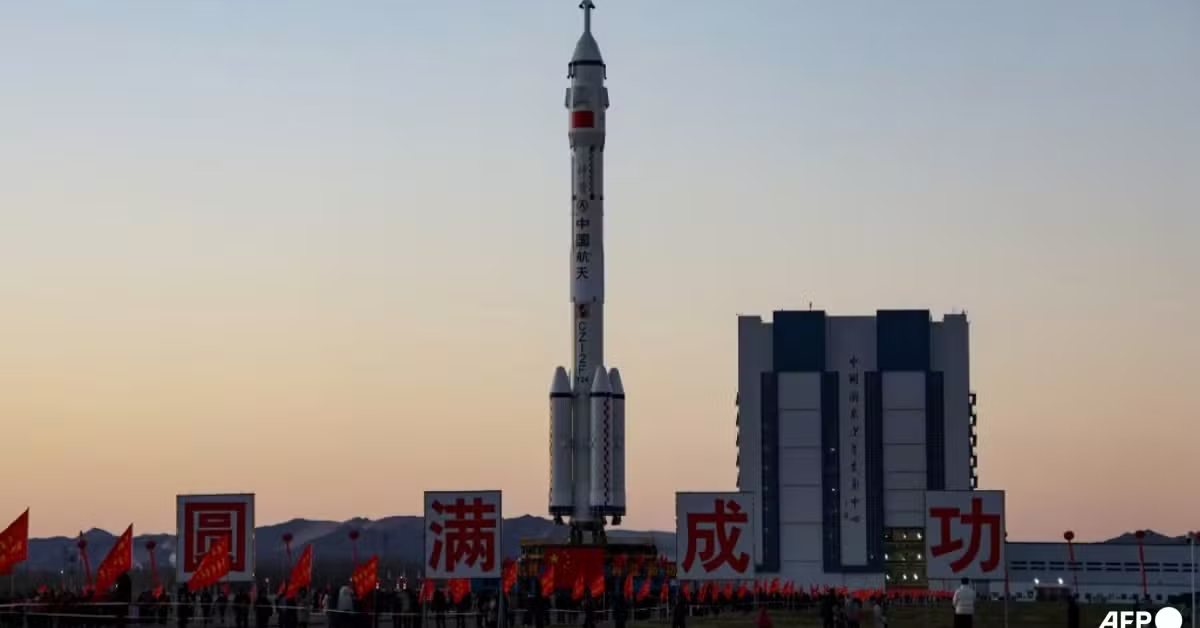
China rocket blasts off on Shenzhou-24 mission: State media
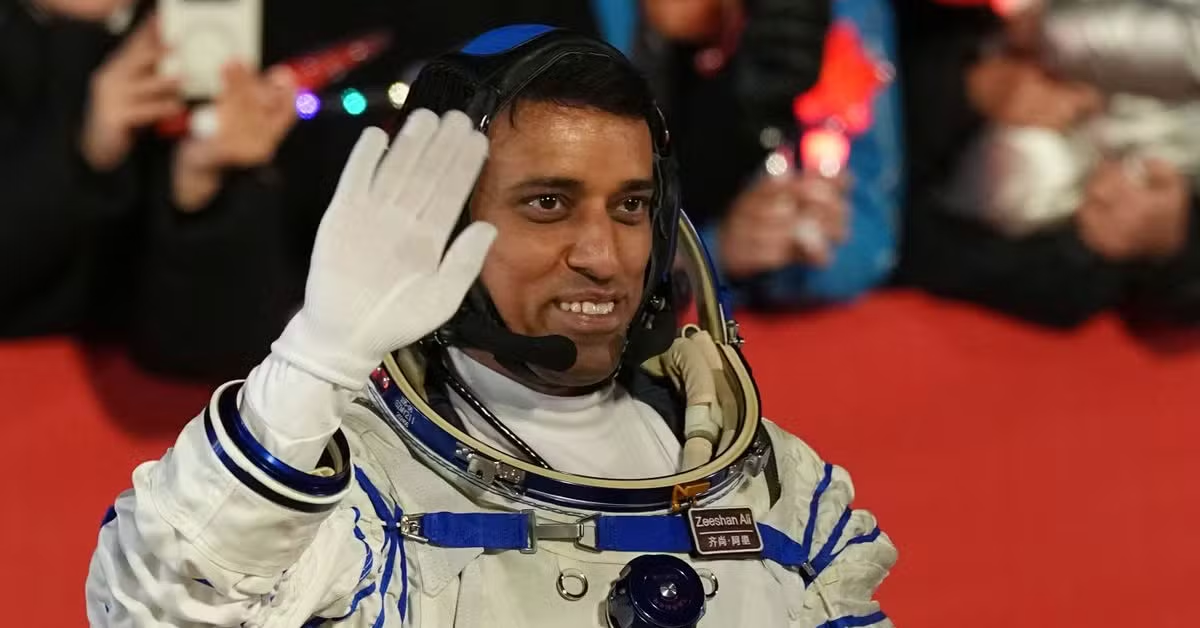
China has launched the Shenzhou-24 mission, carrying the first foreign astronaut to fly on a Chinese space mission, Pakistani pilot Muhammad Zeeshan Ali, to the Tiangong space station. State media and CCTV video show the Long March 2-F rocket lifting off from the Jiuquan launch centre at 8:18am local time on 25 November 2026, crewed alongside pilot Tang Hongbo and flight engineer Wu Yi. Pakistan's space agency says Ali, a Pakistan Air Force payload specialist, will conduct experiments in orbit, including cultivating microalgae and testing quinoa seeds. Per the report, he is expected to join a short flight of around five days before returning with the Shenzhou-23 spaceship, becoming the first non-Chinese national to board Tiangong.

China launches Shenzhou 24 spacecraft carrying 2 Chinese and a Pakistani astronaut
China launched the Shenzhou 24 spacecraft on Wednesday, 25 November 2026, carrying three astronauts to its space station, among them Pakistani astronaut Muhammad Zeeshan Ali, 40, the first foreign crew member China has sent there. He flew alongside Chinese astronauts Tang Hongbo, 51, and Wu Yi, 39, lifting off from the Jiuquan Satellite Launch Center in northwestern China. The flight is the first joint flight involving Chinese and foreign astronauts in the history of China's manned space program.
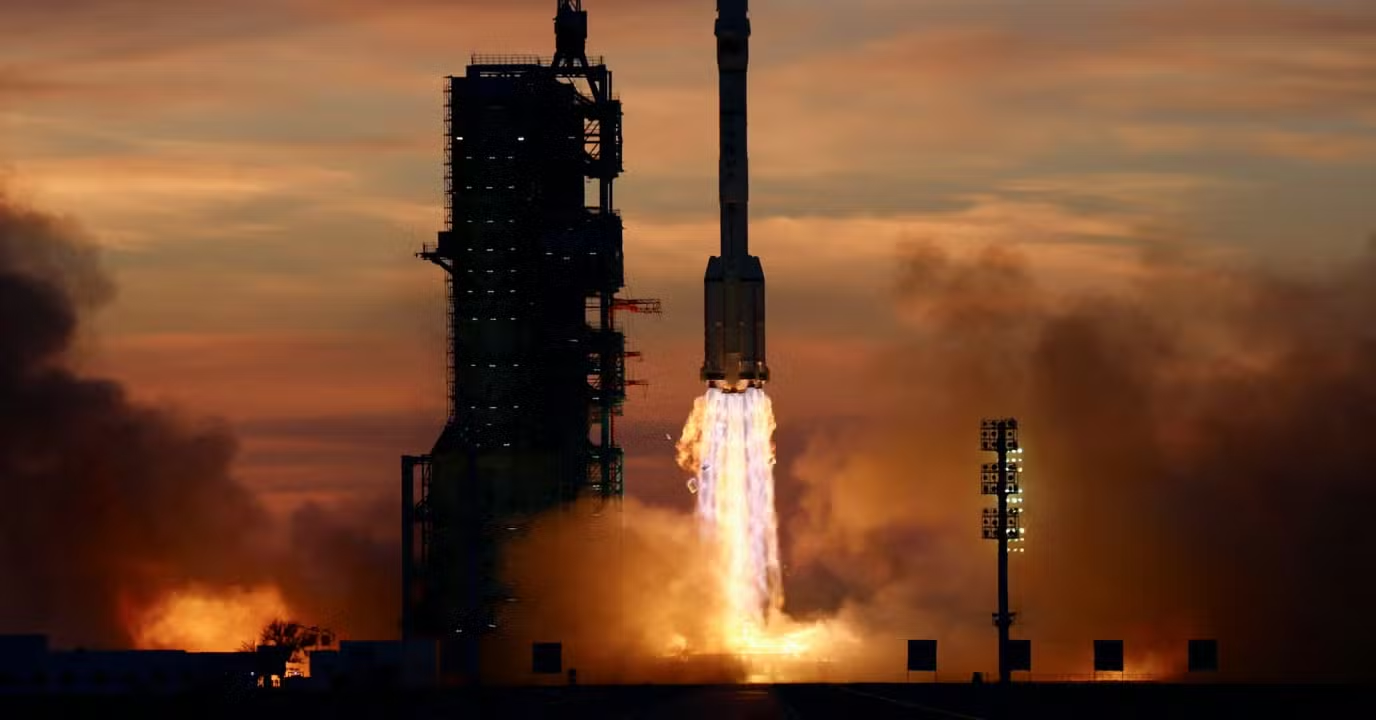
China's Shenzhou-24 space flight takes off with Pakistani national as first foreign astronaut
China's Shenzhou-24 mission lifted off from the Jiuquan Satellite Launch Centre on a Long March-2F rocket at 8:18 a.m. local time on November 25, 2026, carrying Chinese astronauts Tang Hongbo and Wu Yi along with Muhammad Zeeshan Ali, a 40-year-old pilot who has become the first Pakistani in orbit. The flight is part of broader China-Pakistan space cooperation, and state-run CCTV reported the crew were in good condition after launch. Ali, who trained for seven months in Beijing including intensive Chinese-language classes, will work as a payload specialist and stay on the Tiangong space station for 5 to 10 days, far shorter than a usual six-month Chinese rotation. The launch comes as China promotes Tiangong as a hub for international cooperation while the International Space Station faces possible retirement by 2030, and Pakistani Prime Minister Shehbaz Sharif called the flight a historic first, thanking President Xi Jinping in a post on X.
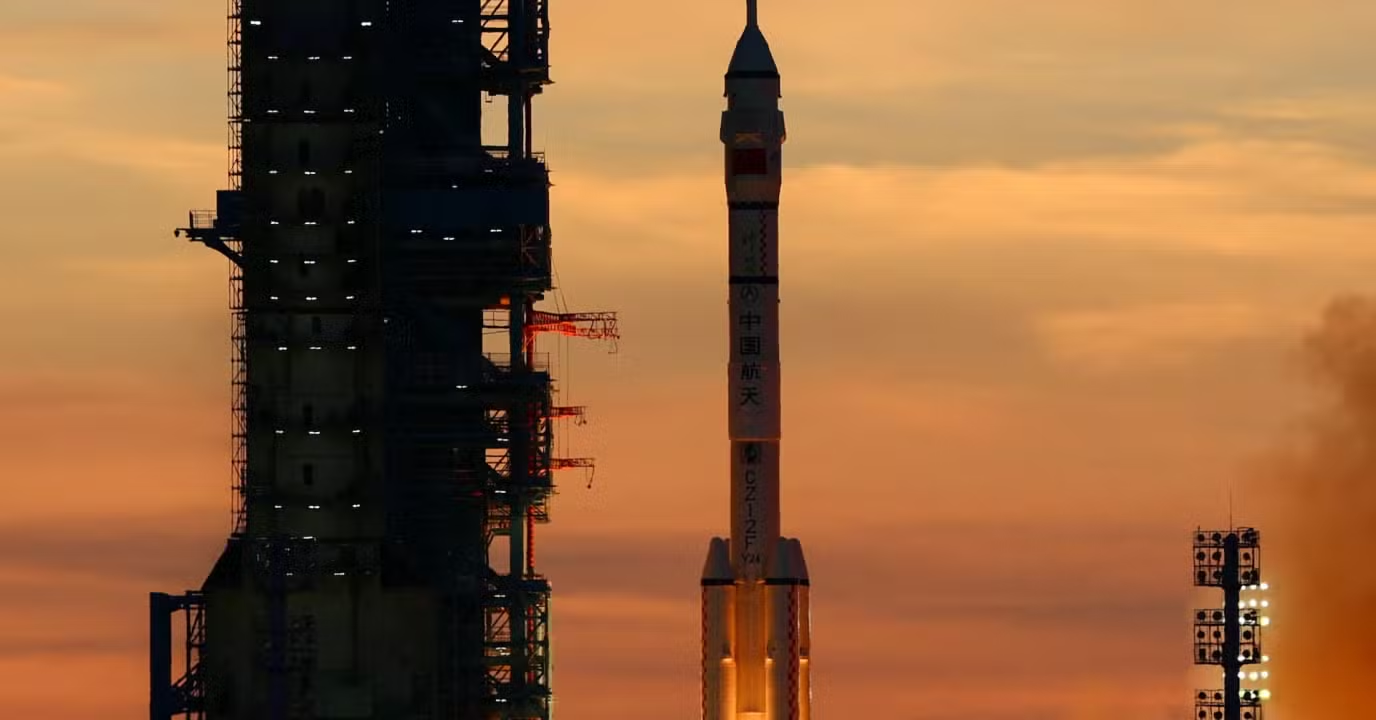
Shenzhou-24 live: China launches crew including Pakistani to its space station
China launched its Shenzhou-24 spacecraft on 25 November 2026 carrying its first foreign astronaut, Pakistani Air Force pilot Muhammad Zeeshan Ali, who is set to become the first Pakistani in orbit and the first foreign national to board the Tiangong space station. Ali, a 40-year-old payload specialist who will run experiments rather than fly the craft, trained seven months in Beijing and will spend only five to 10 days on board before returning with two Chinese astronauts from the previous mission, while commander Tang Hongbo and flight engineer Wu Yi stay six months. The flight follows a China-Pakistan space cooperation pact that has produced joint satellites and a Pakistani-built rover due to fly on a Chinese lunar mission around 2028. Reuters notes the launch comes as China and the United States race to the moon, with China targeting a crewed landing by 2030 and Zhu Yangzhu's extended year-long stay on Tiangong helping Beijing study the effects of long missions in space.

