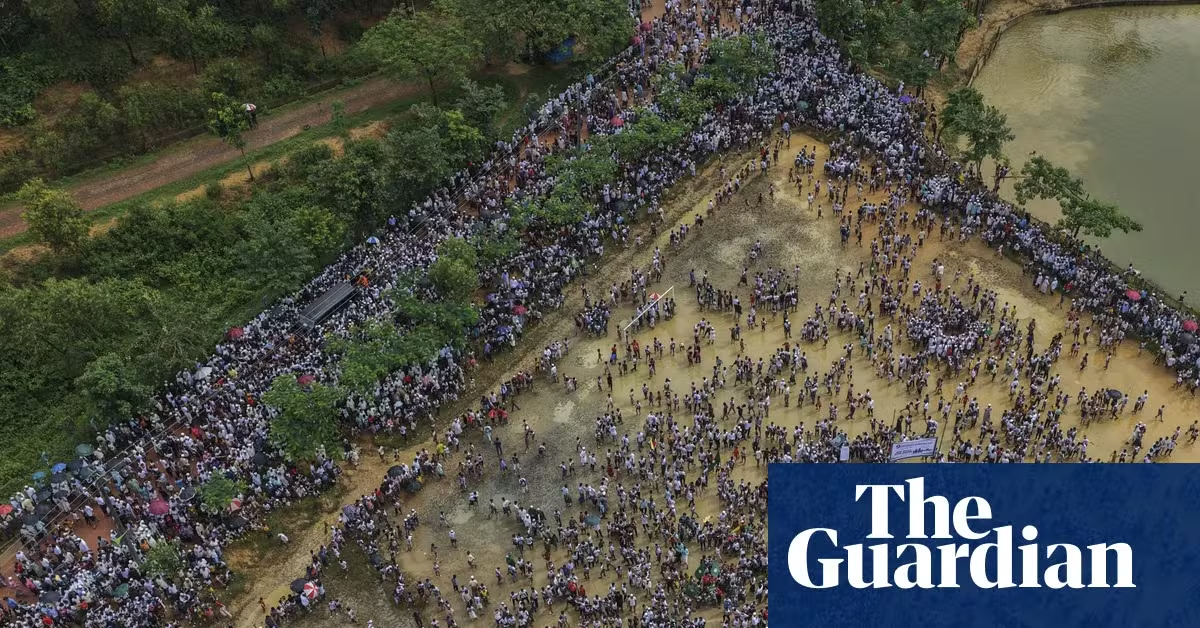
World court to rule on whether Myanmar committed genocide against Rohingya
Summary
- The Gambia's case at the International Court of Justice accusing Myanmar of genocide against its Rohingya minority concludes with a judgment on 19 November 2026.
- A 2017 Myanmar military campaign of massacres, rape, and arson in northern Rakhine State drove more than 700,000 Rohingya to flee to Bangladesh.
- More than 1 million Rohingya remain in camps in Bangladesh, the world's largest refugee settlement; fewer than 600,000 are estimated to remain in Myanmar.
- The International Court of Justice has never found a state responsible for genocide, a crime defined after the Holocaust.
- The Gambia asks the court to declare that Myanmar breached the Genocide Convention and to order reparations, including the safe return of the displaced.
- Myanmar denies genocide and says its operations targeted an insurgency by Rohingya militants.
Reactions
- Myanmar denies carrying out genocide and claims its actions targeted a military uprising by insurgents.
- Gambian justice minister Dawda Jallow told the court the case is about real people and a real group, the Rohingya of Myanmar, targeted for destruction.
- Antonia Mulvey of Legal Action Worldwide says she is cautiously optimistic the court will hold Myanmar fully accountable.
- Former UN investigator Yanghee Lee says the international community failed to prevent the atrocities and must seize the ruling's opportunity to secure justice.
- Supporters of the case say the judgment should compel states to block arms transfers and jet fuel supplies to Myanmar.
- US UN ambassador Mike Waltz warned the court must not set a genocide standard that could be used against allied soldiers.
Timeline newest first
The International Court of Justice in The Hague is to deliver its judgment on whether Myanmar committed genocide against the Rohingya on Thursday morning, nearly a decade after the exodus began.
The ICJ is scheduled to deliver its judgment in the Gambia's genocide case against Myanmar on 19 November 2026; the judgment will be final and without appeal.
Sources newest first
World’s top court to rule if Myanmar committed genocide against Rohingya
The International Court of Justice will rule on Thursday, nearly a decade after Myanmar's military campaign drove hundreds of thousands of Rohingya from the country, on whether Myanmar committed genocide — a finding no state has ever received. The Gambia brought the case, Myanmar denies genocide and blames an insurgency, and more than 1 million Rohingya remain in Bangladeshi camps; supporters say the ruling should compel states to block arms transfers.
Questions and Answers: International Court of Justice Judgment in Myanmar Genocide Case
Human Rights Watch offers a question-and-answer explainer of the International Court of Justice judgment, due November 19, 2026, in Gambia's case accusing Myanmar of genocide against the Rohingya, whose 2017 massacres, rape, and arson in northern Rakhine State forced more than 700,000 to flee to Bangladesh. Gambia, the first country with no direct connection to the crimes to invoke the Genocide Convention, asks the court to find Myanmar breached the convention and to order reparations, while Myanmar says its operations were counterterrorism against Arakan Rohingya Salvation Army attacks; the explainer also covers provisional measures, parallel ICC and universal-jurisdiction efforts, and HRW's call for a Security Council referral.
Background newest first
UN elects five judges to International Court of Justice amid record cases
aljazeera.com· 11d
The United Nations elected Dapo Akande of the UK, Francois Alabrune of France, Mahmoud Daifallah Hmoud of Jordan, Rena Lee of Singapore and Phoebe Okowa of Kenya to nine-year terms on the International Court of Justice on 3 November 2026, after further rounds of voting settled the fifth seat. The election comes as the court faces a record caseload, including South Africa's genocide case against Israel over Gaza and a ruling due 19 November in The Gambia's case against Myanmar.
