
The GOP’s unlikely new duo on Capitol Hill
Politico reports that the Republican Party's top Senate and House leaders, John Thune and Jim Jordan, barely know each other despite nearly 50 years of congressional service between them, and their first one-on-one meeting after the GOP's massive November 2026 losses was mainly a get-to-know-you session. The two must find a way to work together if Republicans want to spend the next two years fighting Democrats rather than each other, and so far they are being respectful of each other's institutional realities, with Thune calling Jordan a team player who wants to keep Republicans from fighting Republicans. The pairing is an unlikely one: Thune is a courtly practitioner of old-school GOP politics viewed with suspicion by the conservative base, while Jordan, once branded a legislative terrorist by former Speaker John Boehner, is a hard-line MAGA icon, and Jordan previously attacked GOP senators over bipartisan deals. Thune also risks four GOP senators peeling off to join Democrats in early 2027, and Politico reports signs Jordan could face pressure from the House Freedom Caucus to battle the Senate GOP, with Representative Eric Burlison saying he hopes the two leaders can ultimately be blunt and honest with each other and fight.

Capitol agenda: Freedom Caucus navigates a Jordan-led GOP
Politico's Capitol agenda newsletter leads with Jim Jordan's election as the top House Republican and the questions it raises for the House Freedom Caucus, the hard-right bloc Jordan co-founded and first chaired in 2015. Members rejected the notion that the group's influence will fade, though some acknowledge its relationship with Jordan could be complicated, and many influential caucus veterans are leaving the House after this term. The newsletter also tracks the fallout from Nvidia's espionage scandal, including Jensen Huang's resignation and subpoenas threatened for his testimony, Democrats' leadership fights including Chris Van Hollen's challenge to Chuck Schumer, chip export measures headed for the defense bill, and Democrats' plans to avoid an early funding showdown with Donald Trump.
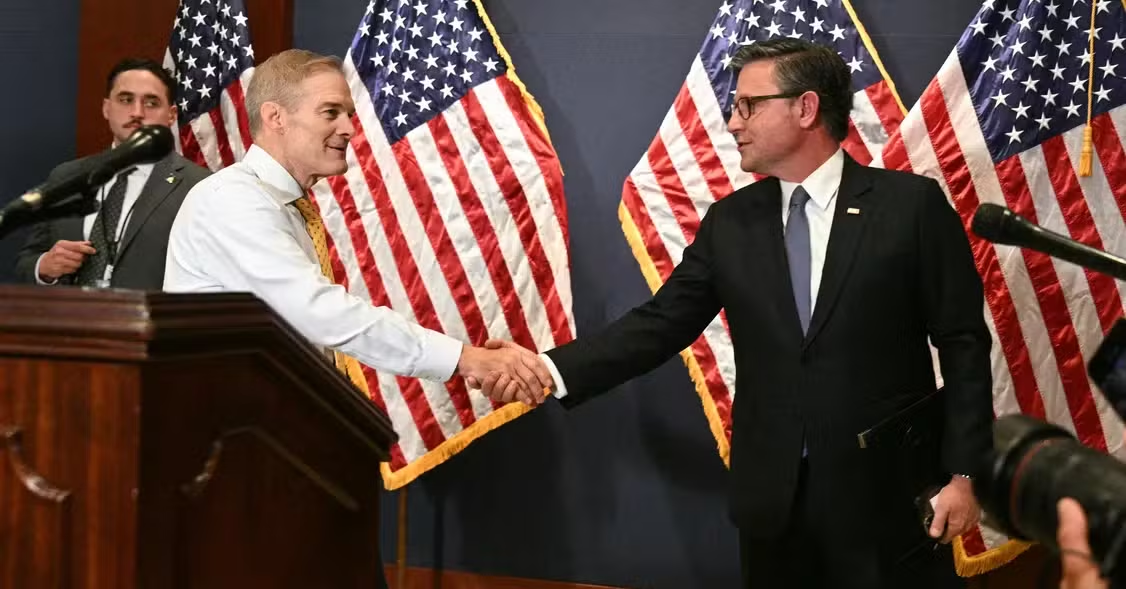
Voters Rejected Trump. Republicans Responded By Lurching To The Right.
After voters handed President Donald Trump and Republicans a major midterm defeat, the party responded by lurching further to the right rather than moderating. Trump named Stephen Miller, whom HuffPost calls arguably the furthest-right figure in his administration, as chief of staff, and House Republicans chose Rep. Jim Jordan of Ohio, whom they had rejected as too conservative three years earlier, as minority leader over Rep. Steve Scalise. HuffPost says the party's leaders seem convinced the defeat was a mere blip, and it is unclear how the rightward push will land with Americans who rejected the party over the economy and the Iran war.

Jim Jordan elected House GOP leader
Rep. Jim Jordan defeated Majority Leader Steve Scalise to become House GOP leader and will serve as minority leader next year, winning the job on his third attempt. He took the secret ballot 106 to 73, according to two people present for the tally, after Speaker Mike Johnson stood down from leadership following last week's midterm losses. Jordan, a co-founder of the House Freedom Caucus and prominent MAGA figure who chairs the Judiciary Committee, lost to Kevin McCarthy in 2018 and was blocked from the speakership in 2023 by moderates, many of whom will no longer serve in Congress. His win came as Republicans regrouped after Democrats took their largest majorities in decades, with 31 RNC members urging a 30-day delay of leadership elections that party leaders were expected to reject.
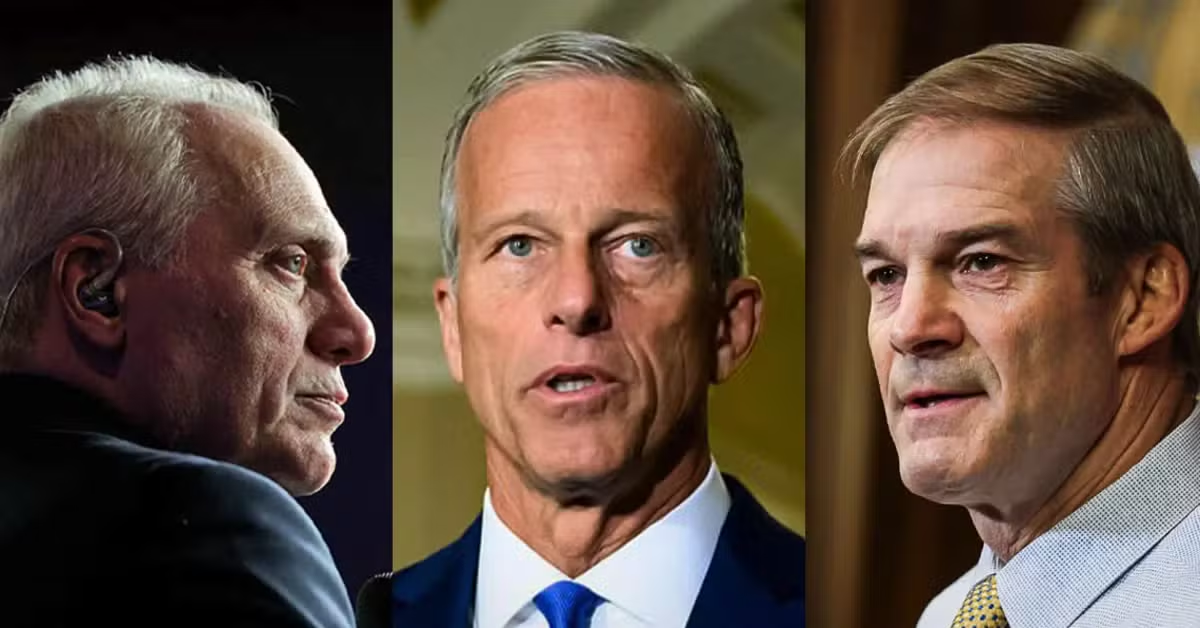
Republicans, reeling from an election drubbing, will choose their leadership in Congress
A day after Democrats swept them from power in the 2026 midterms, House and Senate Republicans meet on 10 November to choose their leadership teams for the new Congress, and House Speaker Mike Johnson says he will not seek the minority leader post and will step down from leadership. His exit sets up a two-person race between his top lieutenant, Majority Leader Steve Scalise of Louisiana, and Judiciary Chairman Jim Jordan of Ohio, both Trump allies who lost speaker bids in 2023, with a secret-ballot vote requiring a majority of the conference. Scalise pitches himself as able to unify the party against the 'socialists' coming to Washington, while Jordan tells colleagues he is 'battle-tested on the oversight front' against Democratic investigations. In the Senate, Majority Leader John Thune runs unopposed for minority leader, though some senators led by Ron Johnson want the elections delayed, with David McCormick arguing 'Tuesday is too soon' after 'the worst election result in decades.' On the winning side, NBC News projects 259 House seats for Democrats, and Hakeem Jeffries and his lieutenants run unopposed for the top Democratic posts, though some progressives stay undecided about backing Jeffries for speaker and Chris Van Hollen has opened the door to challenging Chuck Schumer for Senate majority leader.

