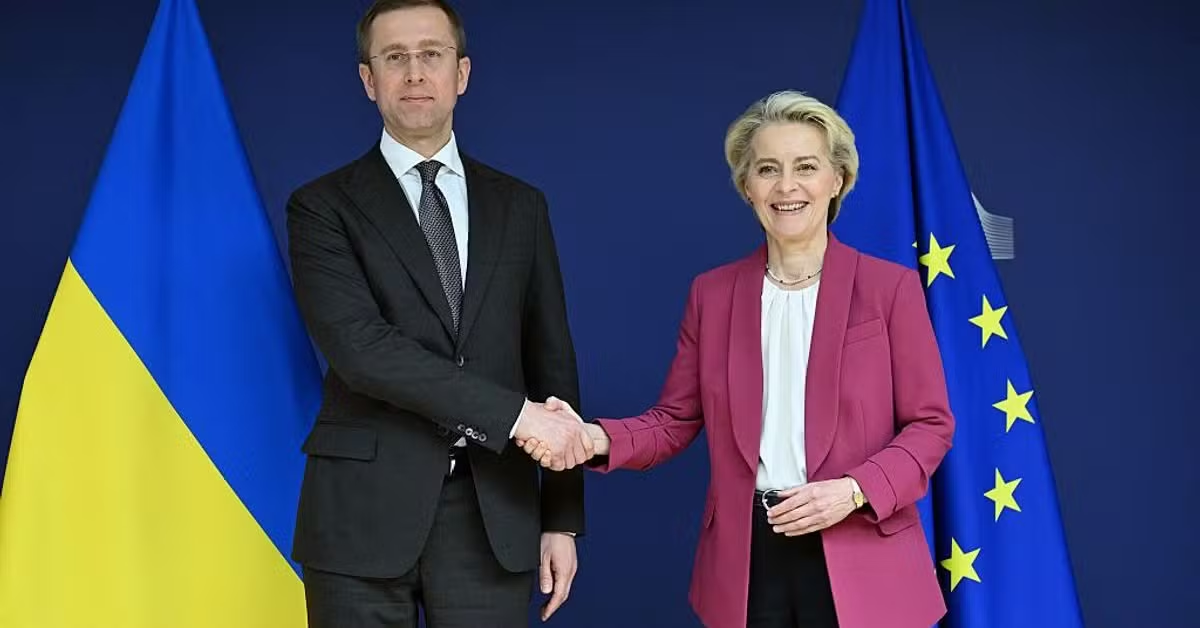
EU proposes banning Russian athletes and symbols from sports competitions on its soil
Ukraine government welcomes newly proposed EU sanctions package
kyivindependent.com· 1h
Guerre en Ukraine: l'Union européenne propose d'interdire de compétition les athlètes russes sur son territoire
rfi.fr· 2h
L’Union européenne veut « interdire l’affichage des symboles russes » dans les compétitions sportives sur son sol
lemonde.fr· 13h
European Commission President Ursula von der Leyen proposed on November 23 a 22nd package of EU sanctions against Russia that would bar Russia from participating in European sporting and cultural events. She said sports events must not serve as a platform for propaganda, and the package would also target Russia's use of sport to whitewash its public image.
Under the proposal, athletes officially representing Russia would be refused Schengen visas, and Russians would face restrictions on holding posts in the governing bodies of sports federations based in Europe. Artists taking part in cultural events with Russian state backing could be considered agents of Kremlin propaganda and face scrutiny. Russian ex-combatants would be barred from entering the European Union, with the Commission considering guidelines for member states to identify them when a Russian citizen applies for a visa, chiefly by checking documents on whether the person took part in the war in Ukraine.
The package also targets Russia's use of cryptocurrency to circumvent sanctions and visa access for Russians into the EU. Its only new energy measure bans European companies from helping Russia repair its infrastructure, including refineries, a measure of growing importance as Ukraine has increasingly attacked Russia's energy export infrastructure.
Some Ukrainian requests remain unaddressed, most notably sanctions on Russia's nuclear sector. For the package to pass, EU countries must negotiate and then unanimously approve it, and some hope approval could come before the end of 2026. EU ambassadors are set to hold a first round of discussion on November 25, while the leaders' summit on November 26-27 is expected to focus on a 45 billion euro loan proposal for Ukraine rather than the sanctions package.
European Commission President Ursula von der Leyen proposed on November 23 a 22nd package of EU sanctions against Russia that would bar Russia from participating in European sporting and cultural events.
The European Commission forecast that Russian athletes would not be allowed to compete under their national banner in competitions on EU territory while the war in Ukraine continues.
The Commission said it wants to ban the display of official Russian symbols, arguing that sporting events must not serve as a venue for Moscow's propaganda activities.
The proposal includes refusing Schengen visas to athletes officially representing Russia, with von der Leyen saying sports events must not serve as a platform for propaganda.
The proposal includes restrictions on Russians holding posts in the governing bodies of sports federations based in Europe.
The proposal includes banning Russian ex-combatants from entering the European Union.
The Commission is considering giving EU member states guidelines to identify Russian ex-combatants when a Russian citizen applies for a visa, chiefly by checking documents on whether the person took part in the war in Ukraine.
The proposal includes scrutinizing artists who take part in cultural events with Russian state backing, who could be considered agents of Kremlin propaganda.
Ursula von der Leyen said Russian ex-combatants "constitute a security risk for Europe" and must not be allowed to circulate freely in EU countries.
The 22nd sanctions package also targets Russia's use of cryptocurrency to circumvent sanctions and visa access for Russians into the EU, alongside its use of sport to whitewash its public image.
For the package to pass, EU countries must negotiate and then unanimously approve the proposal, and some hope approval could come before the end of 2026.
The package's only new energy measure bans European companies from helping Russia repair its infrastructure, including refineries, a measure of growing importance as Ukraine has increasingly attacked Russia's energy export infrastructure.
Some Ukrainian requests for new sanctions measures remain unaddressed, most notably sanctions on Russia's nuclear sector.
EU ambassadors are set to hold a first round of discussion on the proposals on November 25, 2026, while the leaders' summit on November 26-27 is expected to focus on a 45 billion euro loan proposal for Ukraine rather than the sanctions package.
Ukrainian Prime Minister Serhii Koretskyi welcomed the proposal, saying pressure on the aggressor's finances and energy sector, enforcement against evasion, and the ban on Russian ex-combatants strengthen the security of Ukraine and of Europe.
Ukrainian Foreign Minister Andrii Sybiha thanked EU top diplomat Kaja Kallas for her efforts to strengthen pressure on the aggressor, and said sanctions and further isolation must be stepped up until Russia chooses peace over war.
Ukrainian sanctions chief Vladyslav Vlasiuk said Ukraine has pushed for the energy infrastructure repair ban since 2025 and has shared its lists of critical equipment with partners.

