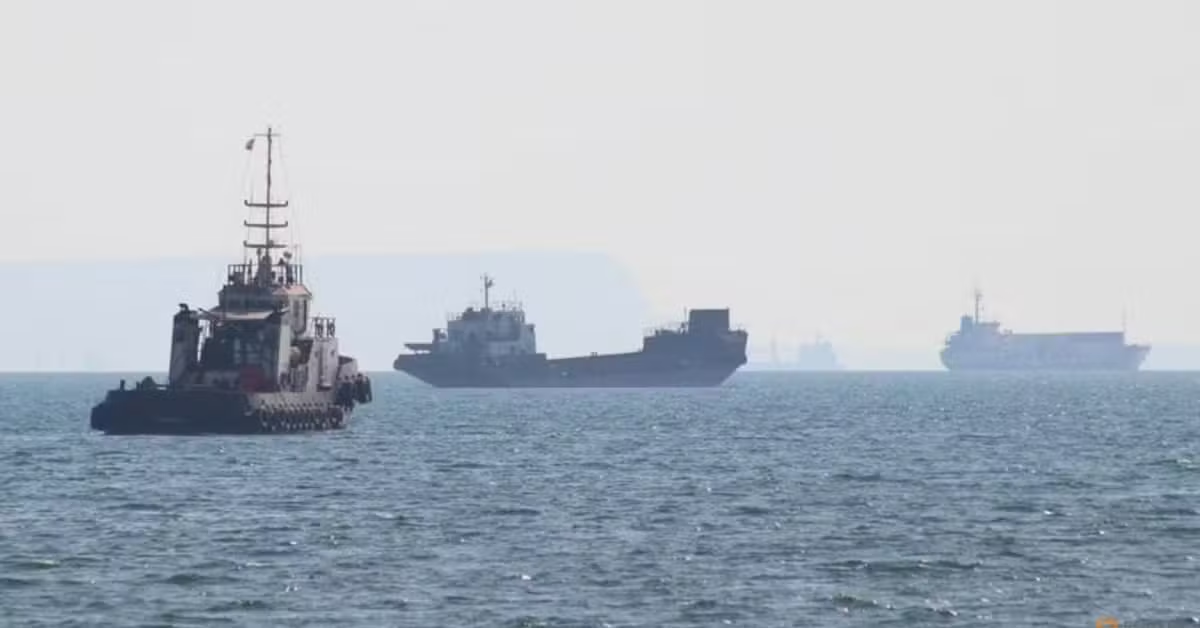
Oil prices slip amid market selloff as Gulf shipping attacks lend support
Oil prices fell on 23 November 2026 as a selloff in wider financial markets, driven by doubts over the artificial intelligence sector's ability to boost growth, spilled into commodities, with attacks on Gulf shipping limiting the losses. Brent crude futures fell 28 cents, or 0.30%, to $92.29 a barrel, while US West Texas Intermediate futures fell 15 cents, or 0.18%, to $83.26.
The drop came after a heavy week: Brent declined 4% and West Texas Intermediate 5%, extending a three-week losing streak, while the Nasdaq plunged 10% and the tech-heavy South Korean market fell 4% on 23 November, with China, Hong Kong and Australia also lower.
The attacks lent support. The Iran-aligned Houthi movement said on 22 November that it attacked a Saudi Arabian oil refinery, UK Maritime Trade Operations reported multiple attacks on shipping in the Gulf and near the Strait of Hormuz over the weekend, Bahrain said an Iranian attack hit a civilian industrial facility on 21 November, and Iran's Revolutionary Guards said they launched a missile-and-drone assault on US military positions in Bahrain.
In Asian trade on 23 November oil held a tight range, Brent rising 10 cents to $92.67 and West Texas Intermediate gaining 16 cents to $83.57 as investors priced in a risk premium from the attacks, after Brent had fallen to $91.57 and West Texas Intermediate hit a session low of $82.63 earlier in the session. Prices then slipped further, with Brent down 60 cents, or 0.65%, to $91.97 a barrel by 0844 GMT and West Texas Intermediate 49 cents, or 0.59%, lower at $82.92, as investors focused on Middle East oil flows.
Oil prices fell on 23 November 2026 as a selloff in wider financial markets over the artificial intelligence sector's ability to boost growth spilled into commodities, with attacks on Gulf shipping limiting the losses.
Brent crude futures fell 28 cents, or 0.30%, to $92.29 a barrel, while US West Texas Intermediate futures fell 15 cents, or 0.18%, to $83.26 a barrel.
Brent declined 4% and West Texas Intermediate 5% in the week before 23 November, extending a three-week losing streak.
The Nasdaq plunged 10% in the week before 23 November, and the tech-heavy South Korean market fell 4% on 23 November, with China, Hong Kong and Australia also lower.
The Iran-aligned Houthi movement said on 22 November 2026 that it attacked a Saudi Arabian oil refinery.
UK Maritime Trade Operations reported multiple attacks on shipping in the Gulf and near the Strait of Hormuz over the weekend before 23 November 2026.
Mukesh Sahdev, chief oil analyst at XAnalysts, said momentum is carrying oil prices down but that the risk to flows from the shipping attacks, with empty ballast vessels building in crude, will start to be priced in soon.
Oil held a tight range in Asian trade on 23 November 2026, with Brent rising 10 cents to $92.67 a barrel and West Texas Intermediate gaining 16 cents to $83.57 a barrel as investors priced in a risk premium from the attacks.
Brent fell to $91.57 a barrel and West Texas Intermediate hit a session low of $82.63 earlier in the session on 23 November 2026.
Bahrain said an Iranian attack hit a civilian industrial facility on 21 November 2026.
Iran's Revolutionary Guards said they launched a missile-and-drone assault on US military positions in Bahrain.
Vandana Hari, founder of Vanda Insights, said the tense US-Iran stalemate increasingly looks like the base case through year-end, though Trump can still flip-flop over the prospect of renewed military action.
Vandana Hari said the ebb and flow of threats and harsher rhetoric from Washington and Tehran will likely keep driving the marginal geopolitical risk premium, leaving prices broadly rangebound unless either side escalates further.
Oil prices slipped further on 23 November 2026, with Brent falling 60 cents, or 0.65%, to $91.97 a barrel by 0844 GMT and West Texas Intermediate down 49 cents, or 0.59%, to $82.92 a barrel, as investors focused on Middle East oil flows.
PVM analyst Tamas Varga said oil recorded its third successive weekly loss, with pressure coming primarily from the supply side of the equation.
Tamas Varga said it would be irresponsible to conclude that oil will now be supplied uninterruptedly and in vast volumes, and that Iranian attacks on ships transiting the Strait of Hormuz are taking their toll.

