
How can the EU continue to afford supporting Ukraine?
In its Verify episode, Euronews examines how the EU would pay for a proposed €45 billion loan to Ukraine, one of the issues EU leaders are butting heads over at their summit. The Commission says the loan would help plug an estimated €70 billion hole in Kyiv's 2027 budget caused by Russia's relentless attacks. The proposal is a 'limited recourse' loan, meaning Ukraine would in theory repay it only once it receives reparations from Russia, and the EU reserves the right to repay it using frozen Russian assets instead. Jacob Funk Kirkegaard of the Bruegel think tank says Russia is unlikely ever to pay reparations, so either the EU is refunded by immobilised Russian assets or European taxpayers ultimately foot the bill, but he calls the loan a drop in the bucket and says the cost of not supporting Ukraine would be far higher. The episode also breaks down Black Friday deals, finding that in a sweep of 314 online traders during the 2025 Black Friday sales around 30% displayed inaccurate price reductions, and advises shoppers to decide in advance what they need and compare offers calmly.
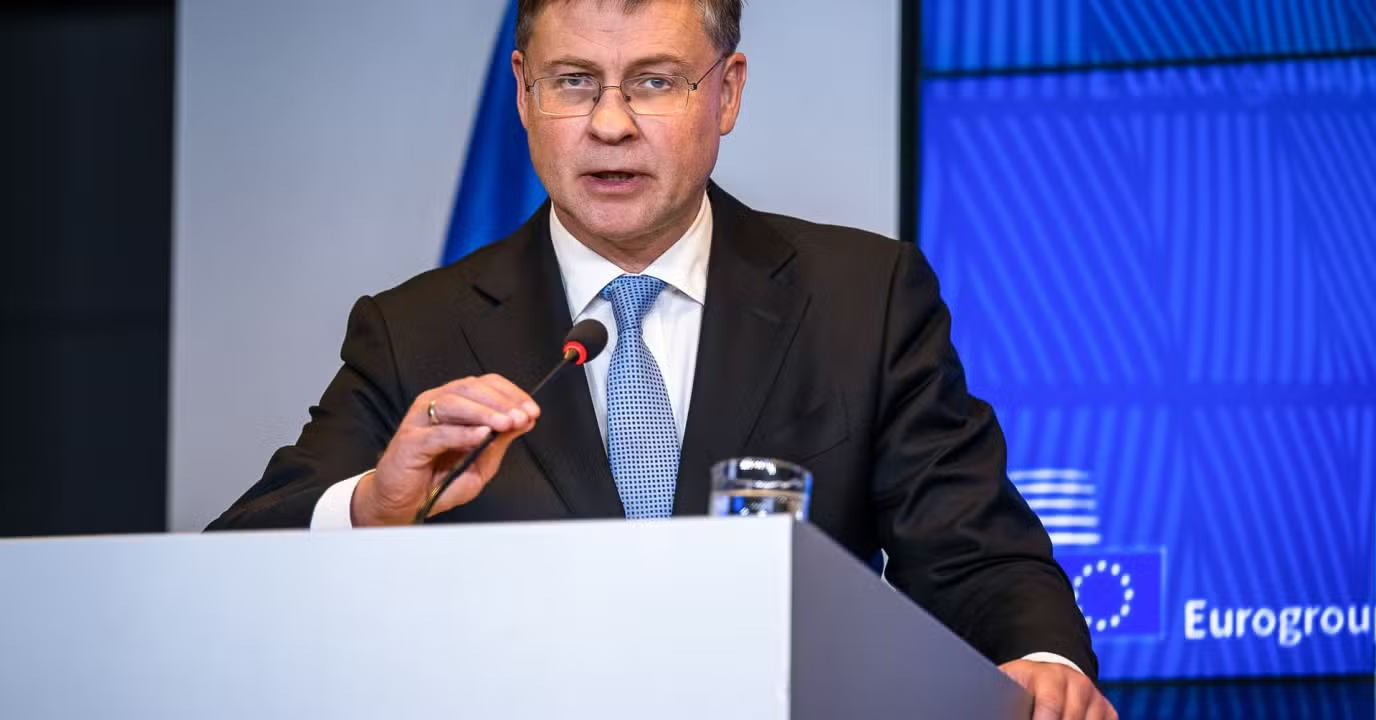
Interview: Move fast to secure Kyiv's future, Brussels economy chief tells Ukraine, EU countries
In a Kyiv Independent interview, EU Economy Commissioner Valdis Dombrovskis says Ukraine and EU countries must respond quickly and decisively to the European Commission's new proposal to give Ukraine an additional 45 billion euro ($49 billion) loan in 2027, saying "We need conceptual decisions rather soon, by December." The urgency is sharpened by the International Monetary Fund, which meets in December 2026 and cannot keep supporting Ukraine without assurances that Kyiv's 2027 budget is covered; the new proposal aims to cover two-thirds of a 70 billion euro ($77 billion) budget gap identified by President Volodymyr Zelensky. Dombrovskis says the loan, as proposed, would be covered by all 27 member states, calling that the logical way forward for both solidarity with Ukraine and the EU's own security, though Hungary, Czechia, and Slovakia opted out of the previously passed 90 billion euro loan and several countries have told the Kyiv Independent that seizing Russia's immobilized assets remains a non-starter. He emphasizes that, as with the earlier loan, the EU reserves the right to repay itself from the more than 200 billion euros in immobilized Russian assets, a discussion he says would come up only in the context of the peace process, and he recommends that interest rate subsidies be provided on top of the 100 billion euros already earmarked for Ukraine in the next multiannual budget.
Guerre en Ukraine : la Commission européenne met sur la table un nouvel emprunt européen pour financer l’aide à Kiev
The European Commission has proposed borrowing money again on the financial markets to finance 45 billion euros of the 70 billion euros that Kiev will need in 2027, a plan Ursula von der Leyen presented on Wednesday 18 November. The 27 member states have already borrowed 90 billion euros to support Ukraine in 2026 and 2027, to which the new 45 billion will be added. An official at the Berlaymont, quoted by Le Monde, admits 'it was a loan or a loan, there were not 36 options.' Von der Leyen also welcomed a new EU sanctions bureau meant to improve enforcement against Russia, and a twenty-second sanctions package is to be presented on Monday 23 November.
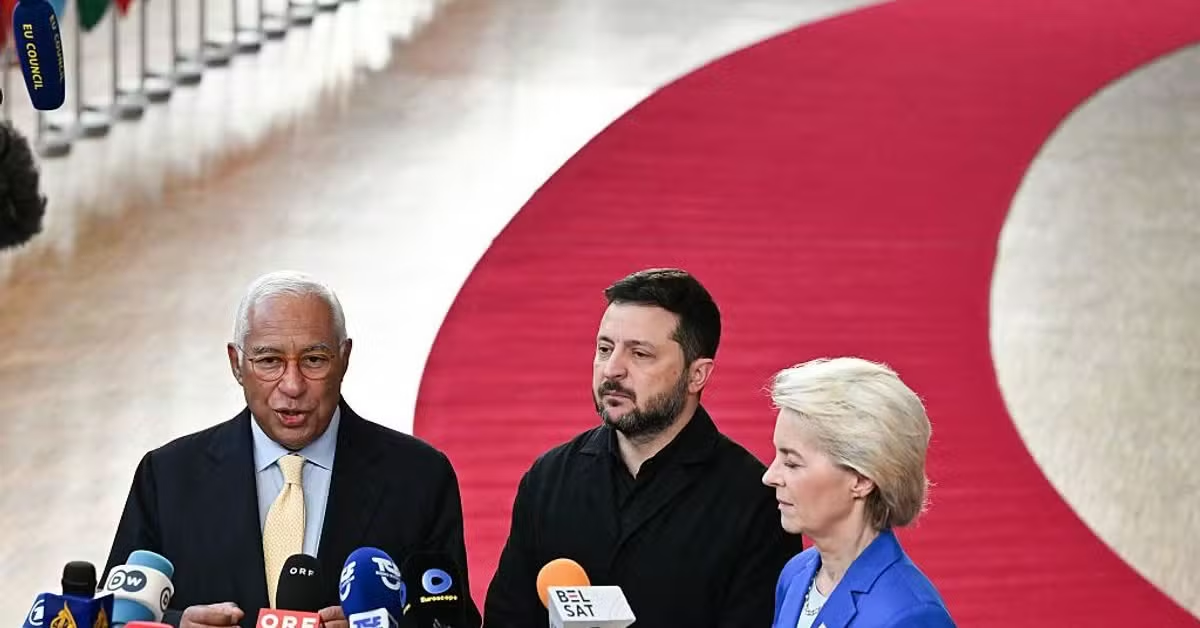
European Commission approves proposal to provide additional $49.5 billion to Ukraine
The European Commission approved legislative proposals on November 18, 2026, to provide Ukraine with up to €45 billion ($49.5 billion) in additional financial support for 2027, financed by borrowing on capital markets. The proposals still need approval by EU member states and follow the EU's €90 billion Ukraine Support Loan for 2026 and 2027. Ukraine would repay the principal only once it receives reparations from Russia. Commission President Ursula von der Leyen says the package, split between up to €25 billion in military assistance and up to €20 billion in budget support tied to reforms, would cover two thirds of Ukraine's estimated €70 billion financing gap for 2027.
La Commission européenne propose un nouveau prêt de 45 milliards d'euros à l'Ukraine
The European Commission will propose that the 27 EU member states grant Ukraine a new loan of 45 billion euros, announced by Commission President Ursula von der Leyen on 18 November 2026. The loan is meant to fill part of the 2027 budget deficit Ukraine puts at some 70 billion euros, with allied countries expected to contribute the 25 billion euros still missing. It comes on top of 45 billion euros already planned for 2027 under a 90 billion euro loan granted by EU countries at the end of 2025. Of the new loan, 20 billion euros would cover the Ukrainian state's budget needs and 25 billion its war effort, and von der Leyen says Ukraine need repay it only once Russia has paid for the destructions it caused.
Exclusive: EU proposes additional 45 billion euros for Ukraine, seeks to incentivize allies to step up
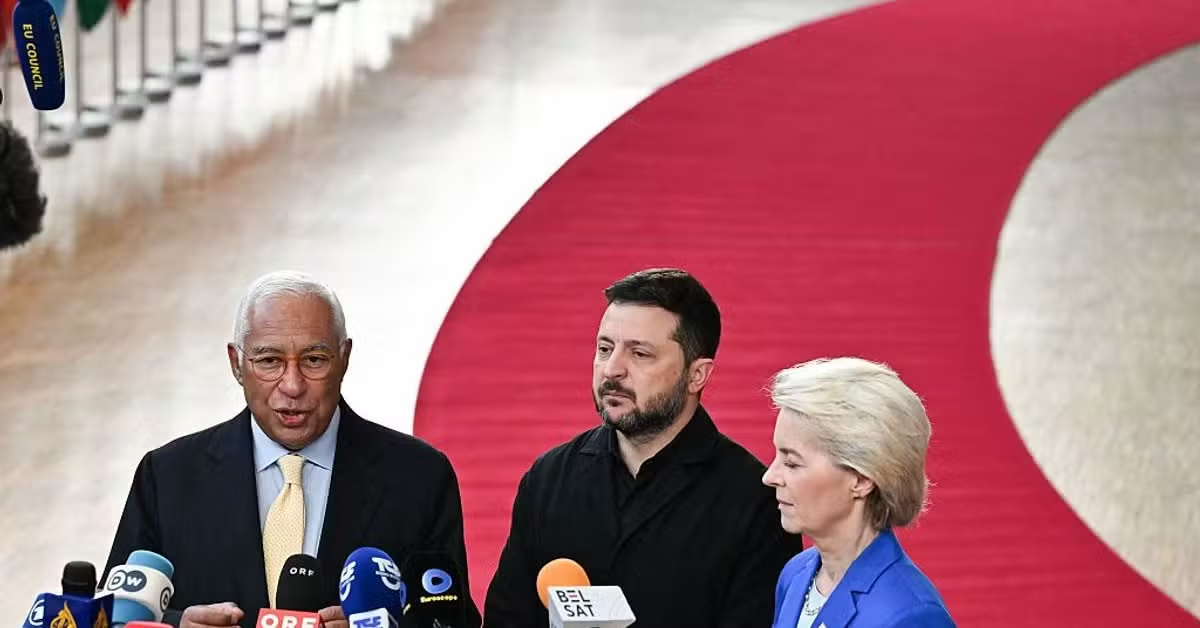
In an exclusive based on a draft document seen on 17 November 2026, the Kyiv Independent reports that the European Commission plans to propose an additional 45 billion euros ($49.5 billion) in loans to Ukraine for 2027, to be presented on 18 November. The loans, guaranteed by EU budget headroom, would be repaid only once Ukraine receives reparations from Russia, and would be split into three pipelines: 25 billion euros for defense industry capacity in exchange for Ukraine's shopping lists of what it wants to buy, and 20 billion euros split equally between Macro-Financial Assistance and the Ukraine Facility, which pay Kyiv for implementing EU and IMF reforms. To avoid repeating the failure of few third countries stepping up, the draft proposes amending two laws so allies can lend more: high-credit-quality countries would provide irrevocable guarantees to the EU under the Ukraine Facility, and G7 members could make second-generation ERA loans repaid from profits on immobilized Russian sovereign assets. Still, the proposal leaves 25 billion euros of President Zelensky's projected 70 billion-euro ($77 billion) shortfall for 2027 unaccounted for, and EU leaders first discuss it at the European Council in Brussels on 26-27 November 2026.

Press point by the President on an Instrument for Coordinated Support to Ukraine
The European Commission has proposed an Instrument for Coordinated Support to Ukraine, a €45 billion package for 2027 split between €20 billion for budget support and €25 billion for military needs. President von der Leyen says the money takes the form of a loan that Ukraine must repay only once Russia pays for the damage it has caused, and that it will cover two thirds of the €70 billion funding gap the EU sees for Ukraine in 2027, with another third to come from external partners. She calls the instrument the best way to give Ukraine a strong hand at the negotiation table and says the EU will both maximise support for Ukraine and put maximum pressure on Russia, presenting its 22nd sanctions package the following week. She says she will present the proposal at the next European Council and discuss it with partners in the Coalition of the Willing in Berlin on 18 November 2026.

Brussels to propose €45bn Ukraine loan borrowed against EU budget
The Financial Times reports that Brussels is expected to propose a €45 billion loan to Ukraine, raised by borrowing against the EU budget. The plan is presented as a coming proposal rather than an adopted measure.
EU plans to send a new 45 billion euros to Kyiv in 2027
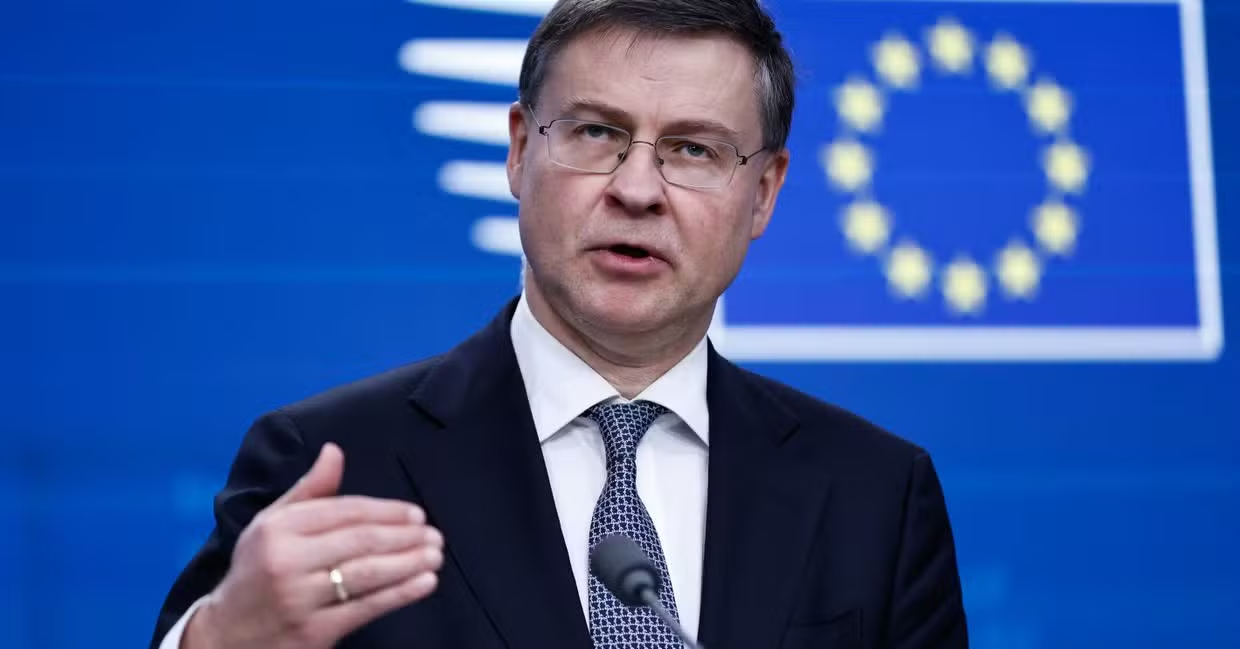
The EU plans to send Ukraine a new 45 billion euro loan in 2027, on top of the 45 billion euros it is already set to provide that year under a 90 billion euro loan put together in April 2026. EU Economy and Trade Commissioner Valdis Dombrovskis mentioned the plan on November 9, 2026 ahead of a meeting of EU economy ministers, with EU and national diplomats confirming it to the Kyiv Independent, and the money would partially bridge a projected 70 billion euro shortfall in Kyiv's 2027 budget, leaving roughly 25 billion euros that the EU expects third countries, such as Norway, the U.K., and Canada, which have already pledged, to cover. The loan still needs the European Commission to circulate the plan and member countries to agree on terms, and diplomats see two main issues: whether all countries take part, as Czechia, Hungary, and Slovakia opted out of the earlier loan and diplomats expect them to opt out again along with Bulgaria, and how to cover interest payments while EU countries raise defense spending at home.

