
Nasdaq posts best week since April as tech stocks rebound after November selloff

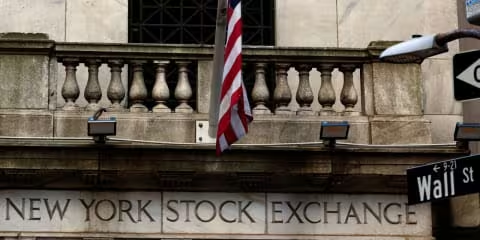
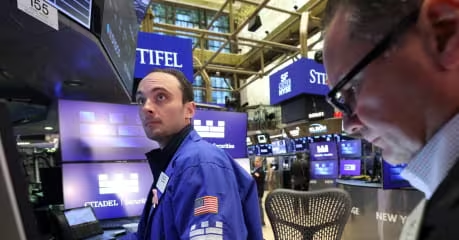
Stocks staged a rebound on Friday 27 November 2026 as investors returning from the Thanksgiving holiday bought hard-hit AI-linked shares. The Nasdaq Composite led benchmarks higher with a 2.3% gain, the Dow Jones Industrial Average added 1.2%, or 592 points, and the S&P 500 rose 1.6%. The rally handed the Nasdaq a 6.7% weekly gain, its best week since April and its best in seven months, while the S&P 500 was headed for its best week since April 2026.
The recovery ran through the market's technology-heavy corners. Chipmakers battered in November recovered, with Micron and Marvell each gaining more than 2% and the broader chip gauge climbing 1.3%. AI-linked companies including Sandisk, Lumentum and Dell also gained, and the big cloud providers Alphabet, Amazon, Microsoft, Meta Platforms and Oracle rose between 1% and 2.7%. Nvidia was the exception, falling 1.3% to leave the stock nearly 40% below its October record high.
Despite the week's gains, the S&P 500 and the Nasdaq remained on course for their worst November since 2008. The indexes had been pressured by concerns over tougher AI regulation after the Democrats' midterm election victory and by expectations that monetary policy would stay restrictive. Trading was thin in the half-day session, with advancing issues outnumbering decliners 3.47-to-1 on the New York Stock Exchange and 3.15-to-1 on the Nasdaq.
Wall Street's main indexes rose on 27 November 2026 as investors returning from the Thanksgiving holiday bought hard-hit AI-linked shares, putting the market on course for weekly gains.
The S&P 500 and the Nasdaq were headed for their best weeks since April 2026 and August 2026, and the Dow Jones Industrial Average for its strongest week since April 2025.
Chipmakers battered in November 2026 recovered, with Micron and Marvell each gaining more than 2% and the broader chip gauge climbing 1.3%.
AI-linked companies including Sandisk, Lumentum and Dell gained, and hyperscalers Alphabet, Amazon, Microsoft, Meta Platforms and Oracle rose between 1% and 2.7%.
Nvidia fell 1.3%, leaving the stock nearly 40% below its October 2026 record high.
At 9:43 a.m. ET the Dow rose 361.11 points, or 0.72%, to 50,544.06, the S&P 500 gained 0.74% to 7,235.66, and the Nasdaq Composite gained 0.87% to 23,789.86.
All but one sector of the S&P 500 traded higher, with information technology stocks providing the biggest boost.
Despite the gains, the S&P 500 and the Nasdaq were on course for their worst November since 2008.
The indexes were pressured by concerns over tougher AI regulation after the Democrats' midterm election victory and by expectations that monetary policy would remain restrictive.
Trading volumes were thin in a half-day session following the Thanksgiving holiday, with advancing issues outnumbering decliners 3.47-to-1 on the New York Stock Exchange and 3.15-to-1 on the Nasdaq.
The S&P 500 posted five new 52-week highs and no new lows, while the Nasdaq Composite recorded 22 new highs and 31 new lows.
Trade Nation senior market analyst David Morrison said investors felt "the selloff seen going into the Friday before 27 November 2026 was overdone."
David Morrison said "there would possibly be more of a steady push up from there."
Stocks staged a rebound on Friday, with the Nasdaq composite posting a 6.7% weekly gain, its best in seven months and its best week since April.
On Friday the Nasdaq led benchmarks higher with a 2.3% gain, the Dow Jones Industrial Average added 1.2% or 592 points, and the S&P 500 rose 1.6%.
Stock futures rose before Wall Street opened after a volatile week for technology stocks, with S&P 500 futures up nearly 2%, Nasdaq-100 futures up 2.3% and Dow futures about 1% higher.
The technology sector led premarket gains, with the Magnificent Seven, chip-related stocks, neoclouds and server makers all trading higher.
Nvidia rose more than 4% in premarket trading alongside Anthropic, Alphabet, Amazon and Microsoft.

