Iran attacks U.S. air base in Kuwait and sites in Bahrain after American strike on Qeshm
Iran widens Gulf attacks by targeting U.S. air base in Kuwait and sites in Bahrain
pbs.org· 3d
Kuwait says it repelled first Iranian attack in two months after US strikes island
bbc.com· 3d
Iran fires on US base in Kuwait and Bahrain after US strikes missile site
newsnationnow.com· 3d
Krieg in Nahost: Golfstaaten fangen nach US-Angriff iranische Raketen und Drohnen ab
spiegel.de· 3d
L’Iran attaque des cibles à Bahreïn et au Koweït après un bombardement américain sur l’île de Qechm
lemonde.fr· 4d
Iran says army targets U.S. drone and missile sites in Kuwait as Gulf attacks mount
cnbc.com· 4d
Iran Attacks Kuwait and Bahrain, Further Escalating Fight Over Strait
wsj.com· 4d
🚨BREAKING: DIRECT HIT ON US BASES!!!
youtube.com· 4d
Kuwait reports drone attacks as Iran, US trade attacks on Qeshm and Bahrain
aljazeera.com· 4d
Iran attacked a U.S. air base in Kuwait and sites in Bahrain on 18 November 2026, in what it called a response to American strikes.
Kuwait and Bahrain said their air defences intercepted the attacks and reported no damage; the Kuwait strike was the first in more than two months.
Iran's army said it targeted Patriot air defences and launch platforms at the Ali Al Salem Air Base, which hosts U.S. forces.
It followed an American strike on a Revolutionary Guard missile site on Qeshm island, retaliation for an Iranian attack on a U.S. radar in Bahrain.
The war began on 28 February with joint American and Israeli strikes on Iran, and its April ceasefire collapsed the following summer.
Kuwait condemned the attacks and reserved the right to self-defence under the UN Charter, while President Trump said new American strikes are highly unlikely.
Iran's Revolutionary Guard Corps said it carried out a 'precision operation' with drones on a U.S.-operated radar at Bahrain's Sheikh Isa air base, in response to repeated U.S. drone violations of Iranian airspace.
U.S. Central Command said Iranian drones aimed at the radar in Bahrain were intercepted without any damage to U.S. equipment or personnel.
U.S. aircraft struck a missile launch site on Iran's Qeshm island in the Strait of Hormuz hours after the Bahrain radar attack, and Iran's official IRNA news agency reported five to six explosions.
Ahmad Nafisi, deputy governor of Iran's Hormozgan province, said the American strike on Qeshm caused no damage to residential, commercial, or infrastructural areas.
An IRGC spokesperson said Bahrain's Al Khalifa regime had made three key mistakes, including collaborating in attacks against Iran, and warned that "a wise person needs only a hint" if Bahrain continued down that path.
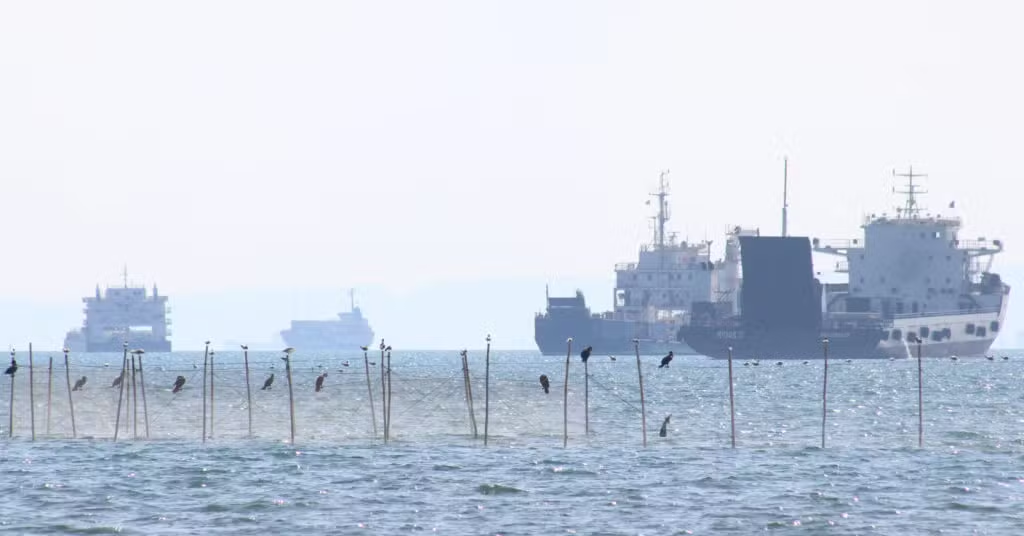
Iran set a natural gas tanker ablaze in the Strait of Hormuz before launching its strikes on Kuwait and Bahrain.
Kuwait's Foreign Ministry affirmed that Kuwait reserved the right to take "all necessary measures" to defend its territory and vital installations under Article 51 of the United Nations Charter.
An American military official, speaking anonymously, said aircraft used "precision munitions" against the Qeshm missile site and invoked "self-defense" in response to "an aggression targeting American personnel and interests".
Iran's army said its drones targeted U.S. Patriot air defence systems and drone and missile launch platforms at Kuwait's Ali Al Salem Air Base, which hosts U.S. forces.
Kuwait's military said its air defences engaged drone threats overnight, reporting no casualties or damage, in the first Iranian attack on Kuwait in more than two months.
Bahrain's military said it intercepted and destroyed several Iranian aerial attacks, the fourth attack on Bahrain in six days after a two-month lull.
Kuwait's Foreign Ministry called the Iranian attack a flagrant violation of Kuwait's sovereignty, a direct threat to its security and stability, and a grave breach of international law.
Iranian army commander Maj Gen Amir Hatami warned the United States and its allies that if the enemy repeated its mistake, Iran had "the readiness and the plans to confront it and its supporters in a stronger, more crushing way and without geographic limitations".
Qatar called the Iranian attacks on Kuwait and Bahrain a "dangerous escalation that threatens to complicate efforts aimed at containing tensions".
U.S. President Donald Trump said new American strikes are highly unlikely.

