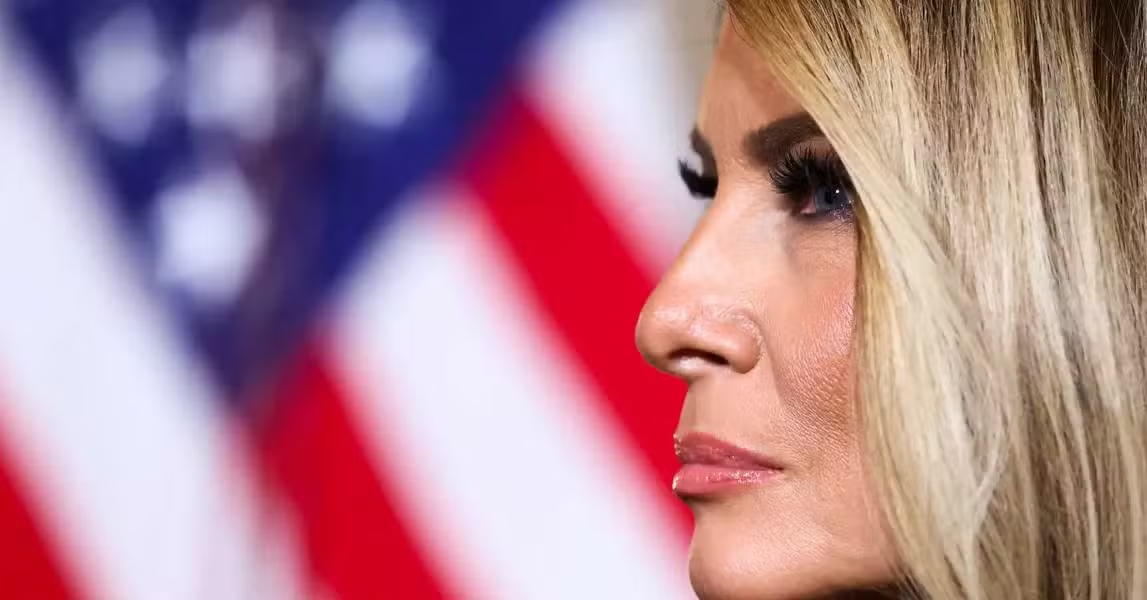
Denials soar for 'extraordinary ability' visa once used by Melania Trump
'Strange' crackdown blocking path Melania Trump took to citizenship: report
rawstory.com· 6h
Melania's 'extraordinary ability' visa now rejecting actual geniuses under Trump: report
Denials soar for ‘extraordinary ability’ visa in program once used by Melania Trump
washingtonpost.com· 21h
Denials are soaring for the United States' 'extraordinary ability' visa, the EB-1A green card program that first lady Melania Trump once used. Federal data show the approval rate fell from 75 percent late in the Biden administration to 32 percent by mid-2026, with roughly 5,200 applicants approved in the first nine months of fiscal 2026, down from close to 8,900 in the same stretch of fiscal 2024. The immigration data firm Lawfully projects the rate fell further, to about 27 percent, in the last quarter of fiscal 2026.
No evidence was found that the Trump administration ordered immigration officers to crack down on approvals, but immigration attorneys say officers are leaning on the program's subjective 'final merits determination' to deny applicants who meet the formal criteria. Memphis attorney James Hollis says a client who raised more than $60 million in venture capital, sold companies, and was featured in 20 news articles was found to meet zero EB-1A criteria.
Tech entrepreneurs have been hit especially hard, even though President Donald Trump has promised to boost the tech industry, and some immigration firms are no longer handling EB-1A petitions at all. Melania Trump herself obtained permanent residency in 2001 as a working model through the EB-1 program, a step that led to her U.S. citizenship.
Denials are soaring for the United States 'extraordinary ability' visa program, which first lady Melania Trump once used.
Federal data show the share of approved EB-1A petitions, the 'Einstein visa' green card for people of extraordinary ability, fell from 75 percent late in the Biden administration to 32 percent by mid-2026.
U.S. Citizenship and Immigration Services approved roughly 5,200 EB-1A applicants in the first nine months of fiscal 2026, down from close to 8,900 in the same stretch of fiscal 2024.
The immigration data firm Lawfully projects the EB-1A approval rate fell further, to about 27 percent, in the last quarter of fiscal 2026.
No evidence was found that the Trump administration ordered immigration officers to crack down on EB-1A approvals.
Immigration attorneys say officers are leaning on the EB-1A program's subjective 'final merits determination' to deny applicants who meet the formal criteria.
Tech entrepreneurs have been hit especially hard by EB-1A denials, even though President Donald Trump has promised to boost the tech industry.
Memphis attorney James Hollis says a client who raised more than $60 million in venture capital, sold companies, and was featured in 20 news articles was found to meet zero EB-1A criteria.
Former immigration officer Kate Angustia, now with the American Immigration Lawyers Association, said, 'It's a huge, huge drop. It's strange because the Trump administration has repeatedly said they want the best and the brightest.'
Immigration attorney Rachel Baskin said, 'It's become so much more subjective.'
James Hollis said, 'They're killing AI entrepreneurs. They're absolutely annihilating them.'
Finn Reynolds of Lawfully blamed about half of the spike in EB-1A denials on tougher scrutiny and the other half on a flood of weak, template-driven or AI-written applications, made worse by an officer corps thinned by DOGE buyouts and firings.
George Fishman of the Center for Immigration Studies said it is 'entirely conceivable' the administration decided adjudicators had gotten 'too lax.'
Some immigration firms are no longer handling EB-1A petitions at all.
Melania Trump obtained permanent residency in 2001 as a working model through the EB-1 program, a step that led to her U.S. citizenship.
The Department of Homeland Security said U.S. Citizenship and Immigration Services 'will never sacrifice quality and screening for speed.'

