Canadian Senate proposes amendments to lawful access bill criticized over encryption and privacy


Canada's proposed lawful access bill, Bill C-22, would require technology companies to retain more of their customers' metadata and make it easier for police and intelligence services to access that data, in some cases without a warrant. The Canadian House of Commons has already adopted the bill.
The encryption concerns surfaced at the Senate committee studying the bill on November 17. Rachel Curran, Meta's head of public policy for Canada, told the committee the bill leaves encrypted information vulnerable to malicious actors, and that the government's amendments do not go far enough to protect encrypted data. Asked whether the legislation could mean pulling some services from Canada, she said Meta would have to review all of its options and consider pulling services from the country.
A United Nations assessment then weighed in. The UN Office of the High Commissioner for Human Rights, in a report covered by the Canadian Civil Liberties Association, found several elements of the bill could violate human rights. It flagged the government's ability to secretly impose surveillance-by-design mechanisms on service providers without robust judicial authorization, and to obligate providers to retain metadata indiscriminately on everyone, even when it cannot be linked to a specific investigation. It also warned such obligations would break safeguards like end-to-end encryption, said search provisions need individual notice requirements, and noted the bill would let foreign law enforcement use its powers for investigations of activity not criminal under Canadian law.
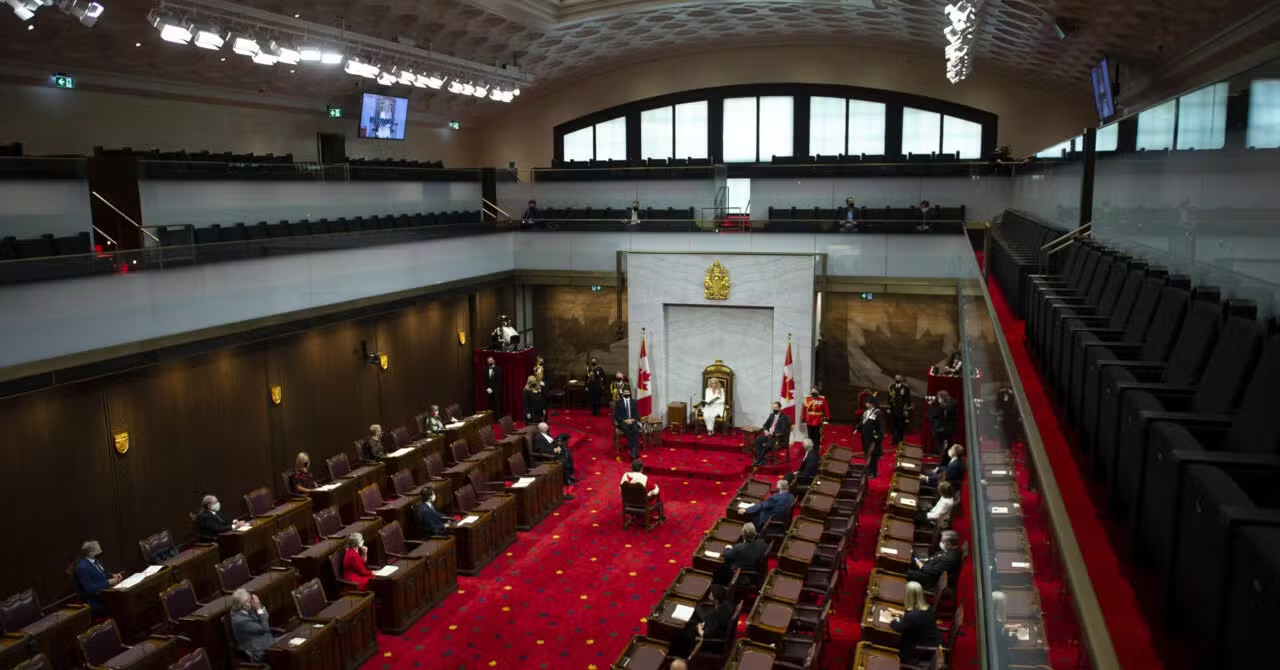
The Senate examined the bill in the week before November 26, and on the Wednesday proposed amendments meant to strengthen the law on cybersecurity concerns, including one that seeks to better define what a 'systemic vulnerability' is.
Representatives of Meta told a Senate committee studying Bill C-22 that the proposed lawful access bill leaves encrypted information vulnerable to malicious actors.
Rachel Curran, Meta's head of public policy for Canada, told the Senate committee that the government's amendments to Bill C-22 do not go far enough to protect encrypted data.
Asked whether the legislation could mean pulling some services from Canada, Curran said Meta would have to review all of its options and consider pulling services from the country.
Robyn Greene, Meta's director of privacy and public policy, told senators on the national security committee that 'the Canadian government would be enforcing and imposing a law that it is not technically feasible to comply with and still offer secure, end-to-end encrypted services to Canadians.'
Curran told the committee that the amendments 'have protected just the core and not the outside layers that are an integral part of the encryption process.'
The United Nations Office of the High Commissioner for Human Rights assessed Bill C-22 in a report covered by the Canadian Civil Liberties Association and found several elements of the bill could violate human rights.
The United Nations assessment flags the government's ability to secretly impose surveillance-by-design mechanisms on service providers without robust judicial authorization.
The assessment flags the government's ability to obligate digital service providers to retain metadata indiscriminately on everyone, including when it cannot be linked to a specific investigation or security threat.
The assessment flags surveillance-by-design obligations that would break safeguards like end-to-end encryption, and says search provisions need individual notice requirements and other safeguards.
The assessment also notes the bill would let law enforcement in other countries use its surveillance powers for investigations of activity that is not criminal under Canadian law.
The Canadian Civil Liberties Association said the United Nations assessment raises questions about the government's assertions that Bill C-22 aligns Canada with its Five Eyes intelligence partners, and wrote that the bill's excessive breadth and inconsistency with global standards could threaten Canada's attempts to integrate digitally with partners in the European Union.
The bill, officially the law concerning lawful access, would require technology companies to retain more of their customers' metadata and would make it easier for police and intelligence services to access that data, in some cases without a warrant.
The Canadian House of Commons has already adopted the bill.
The Senate examined the bill in the week before November 26 and on the Wednesday proposed amendments to strengthen the law on cybersecurity concerns, including one that seeks to better define what a 'systemic vulnerability' is.
More than 20 civil liberties organizations, including Amnesty International, called the bill an 'imminent catastrophe' and called on Prime Minister Mark Carney to intervene to have it changed.
The Canadian government says the bill has been caricatured, does not create 'systemic flaws or so-called backdoors', and is indispensable to fighting crime, notably extortion threats sent via WhatsApp.
David Taylor, a spokesman for the Ministry of Public Security, said Canada is the only country of the Five Eyes alliance and the G7 without a lawful access law, that the law will put Canada 'on an equal footing' with its partners and establish 'a fair balance between public security and the right to privacy', and that the government will 'examine in detail' the Senate's amendments.
Matt Hatfield, head of OpenMedia, said no democracy should force service providers to keep a 'file' of sensitive data on millions of citizens suspected of no crime, simply in case the police need it one day.
Natalie Campbell, senior director of government and regulatory affairs for North America at the Internet Society, said extracting data from end-to-end encrypted systems and sharing it with the authorities amounts to opening a 'Pandora's box' that would create 'backdoors' malicious actors could exploit, and that 'no backdoor is used only by good guys'.
The advisory service of the United Nations High Commissioner for Human Rights on human rights in digital technology said the bill 'raises serious concerns about lawful interference with the right to privacy'.