Cancer Institute Says Paused Pediatric Brain Tumor Trials May Reopen in Late 2026
The National Cancer Institute terminated the Pediatric Brain Tumor Consortium in August 2025 by declining to renew its $4 million annual grant.
The consortium, long a cornerstone of the government's pediatric brain cancer effort, closed eight ongoing trials, including work on D.I.P.G., a fatal childhood brain cancer.
The consortium formally ended in September 2026, and its data and samples were archived, returned, or destroyed.
The NCI says the closure was not a cost-cutting measure, that enrollment had slowed, and that the work moves to a larger government-funded childhood cancer network.
On 3 November 2026 the NCI said the paused trials are planned to reopen to enrollment in late 2026 or early 2027 and committed about $4 million to the larger network.
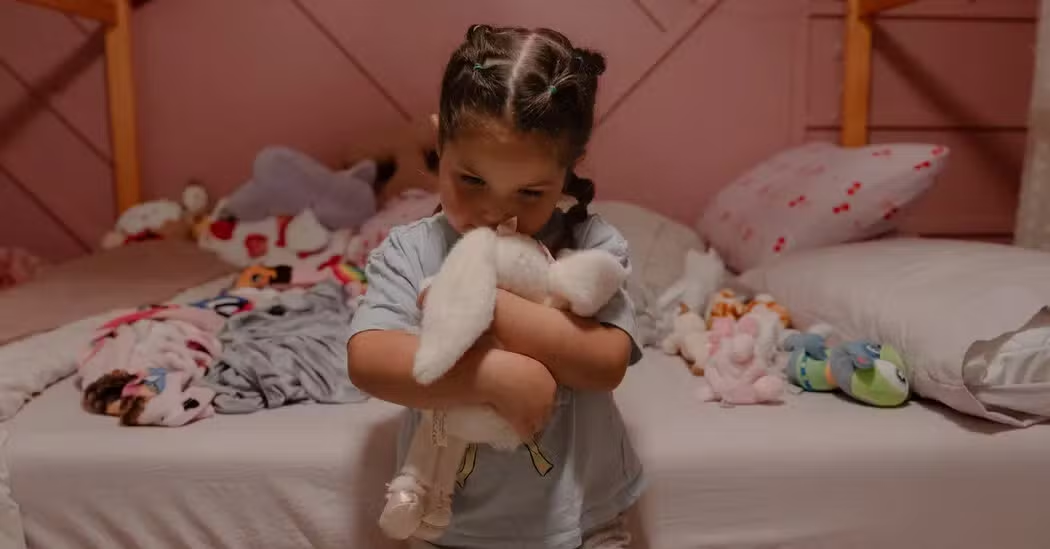
Families and researchers say the closure stalled promising research and left children without access to nearby trials.
On 3 November 2026, the National Cancer Institute updated its web page to say the consortium's paused trials are planned to reopen to enrollment in late 2026 or early 2027, and said it is committing approximately $4 million to a larger research network to build brain-tumor expertise and expedite early-phase trials.
The National Cancer Institute's updated pages describe its revamped pediatric brain cancer effort as a revitalized effort to discover novel treatments, citing administrative modernization and the application of Super Intelligence.
The Pediatric Brain Tumor Consortium formally ended in September 2026 with a final weekly video meeting that its former chair, Ira Dunkel, described as having a funereal tone.
By late 2026 the National Cancer Institute had added an FAQ to its web page saying the consortium's closure was not a cost-cutting measure, that enrollment in its studies had slowed, and that its work would be absorbed by a larger government-funded childhood cancer research network.
After the closure, 27 years of research data on more than 2,000 children with rare brain tumors were archived at St. Jude Children's Research Hospital in Memphis, and hundreds of human samples stored at Children's Hospital Los Angeles were returned to originating hospitals or destroyed.
About a month after the defunding, a bipartisan group of New York representatives, including Republican Mike Lawler, called on Health and Human Services Secretary Robert F. Kennedy Jr. to reverse the decision.
Soon after the August 2025 call, National Institutes of Health officials invited Keith Desserich and other parents to a video meeting to clarify the rationale for the termination, and a spokesman said officials had been considering the move for years.
Eight ongoing trials were closed or paused when the consortium lost its funding: PBTC-059, a Phase 1 trial at Texas Children's Hospital in Houston testing CAR-T therapy for ependymoma, was paused, while PBTC-N14, led by Matthias Karajannis, was closed entirely.
When the consortium was defunded, its researchers were testing a promising immunotherapy, were about to test a laser therapy, and for D.I.P.G. were experimenting with a skull cap that sends electricity into patients' brains and testing a vaccine.
On 14 August 2025, National Cancer Institute oncologist Malcolm Smith told consortium chair Ira Dunkel in a video call that the Pediatric Brain Tumor Consortium's $4 million annual grant would not be renewed.
In the summer of 2025, Keith Desserich of The Cure Starts Now began pressing the consortium's leaders about whether the renewal of its grant was secure.
Ira Dunkel, the consortium's chair at the time, called the news of the termination "catastrophic" and later said the shuttering was "one of the very worst professional moments of my career".
Ira Dunkel said the $4 million grant was tiny within the $732 million the National Institutes of Health spends annually on childhood cancer but "hugely important".
National Cancer Institute oncologist Malcolm Smith said the conversation announcing the termination was "difficult, personally, for me".
Amanda Schecter, whose daughter Ryleigh has no access to paused D.I.P.G. trials, said the family feels "like, up a creek without a paddle and not knowing what the next step is".
A bipartisan group of New York representatives wrote to Health and Human Services Secretary Robert F. Kennedy Jr. urging him to reverse the decision, saying "We cannot afford to take this step backward".
Matthias Karajannis, lead investigator of the closed PBTC-N14 trial, said "Everyone thought it was a good study, and tried to answer a good question" but "it did not finish answering that question".
Keith Desserich of The Cure Starts Now called the closure an "earthquake" at his foundation's 2026 annual meeting, and later said of the institute's $4 million commitment, "I don't care if we had $60 million, $100 million. You're not going to be able to duplicate" the consortium.
A National Institutes of Health spokesman said officials had been considering the move for years.
Lisa Hill, whose daughter died of D.I.P.G. in 2015, said the defunding felt "like picking off a scab".
Josh Hines, who lost his daughter Harleigh to D.I.P.G. in 2023, asked, "We close down research for things that don't have a cure?"
Baylie Barclay called the closure "devastating", saying that when a trial stops enrolling patients discovery slows down and for a child with D.I.P.G. "you don't have any time".
Amanda Schecter said the institute's revamped effort sounds slick and simple, but in her experience a clinical trial means countless blood draws and a squirming child in an MRI machine.

