Super El Niño Drives Record Marine Heat Wave and Coastal Flooding Off California
El Niño Is Driving a Record Marine Heat Wave Off the California Coast
wired.com· 38h
El Niño and King Tides will tear up California’s coast this winter
scientificamerican.com· 2d
This Western state is experiencing its most severe marine heat wave on record
washingtonpost.com· 8d
A super El Niño brings startling changes for marine life on California coast: ‘like nothing we’ve ever seen’
theguardian.com· 8d
A super El Niño is fueling the most severe marine heat wave on record off the California coast, with record warmth hundreds of feet below the surface.
Nearly 90 percent of coastal waters within 50 miles of shore are in at least a Category 3 marine heat wave, with large areas at Category 5.
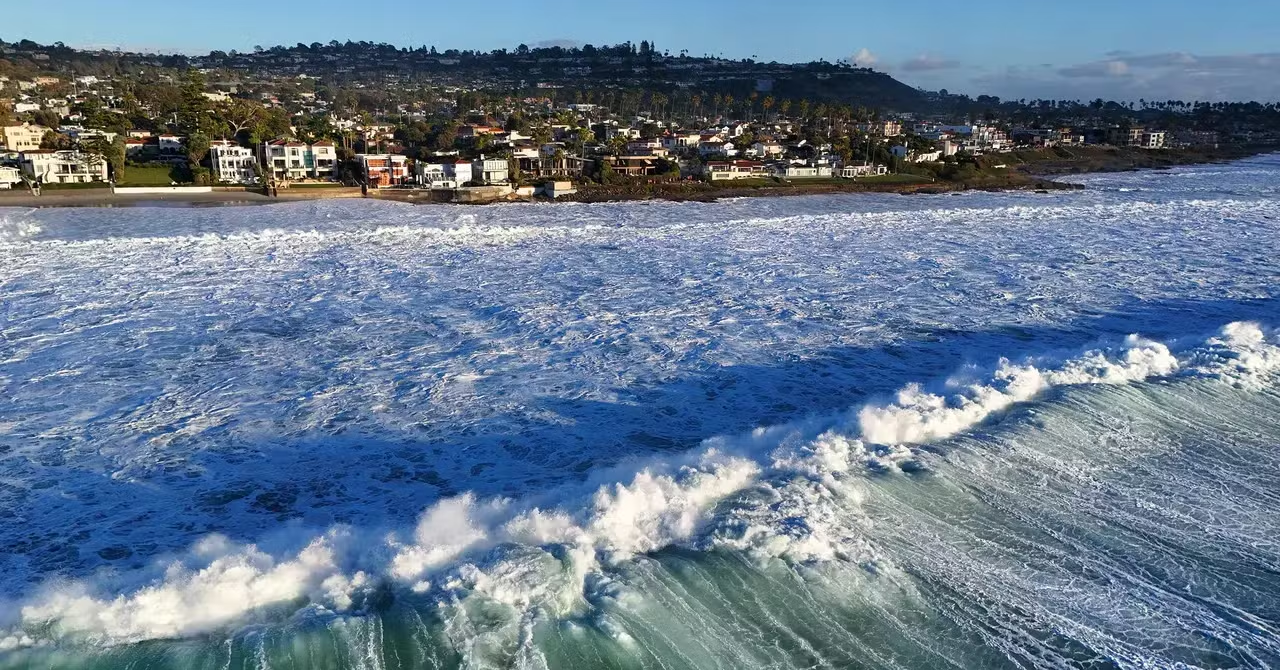
Thermal expansion has pushed coastal sea levels 6 to 12 inches above average, driving flooding, waves above 50 feet, twin waterspouts, and record hourly rainfall.
Warm, nutrient-poor water is starving kelp forests and seabirds, while tropical species such as whale sharks and Humboldt squid appear far north of their ranges.
Scientists forecast a damaging winter as El Niño heat and record sea levels combine with the annual King Tides, and another storm is set to hit the Bay Area.
Scientists say the effects of the historic El Niño have officially reached Monterey Bay, where dead sea lions and seabirds are washing ashore tangled in kelp.
Thermocline temperatures at the mouth of Monterey Bay have reached 8 degrees Celsius above average, rivaling readings at the equator where El Niño signals are strongest.
Southern species including halfmoon fish, Humboldt squid, and whale sharks off Malibu have appeared far north of their usual ranges, and juvenile garibaldi fish were seen in Monterey Bay for the first time.
Phytoplankton populations at the mouth of Monterey Bay plummeted by an order of magnitude as waters warmed, cutting the biomass available to marine food webs.
Kelp forests on the central coast began to disintegrate and die off as waters warmed, with much of the kelp melting in the week before November 13.
Hundreds of starving seabirds, including common murres, brown pelicans, and Brandt's cormorants, washed ashore between San Francisco and Los Angeles in the months before mid-November.
Dr Jono Wilson, science director of The Nature Conservancy's oceans program, said the El Niño event is like nothing he has ever seen.
Dr Francisco Chavez of the Monterey Bay Aquarium Research Institute said thermocline temperatures at the mouth of Monterey Bay have reached 8 degrees Celsius above average, rivaling what is observed at the equator.
Dr Henry Ruhl of the Monterey Bay Aquarium Research Institute said the water is almost at room temperature 200 feet below the surface and that the biomass available to marine food webs dropped by an order of magnitude.
Dr Scott Hamilton of San Jose State University said a hit to the kelp forest is like the first domino falling and can cost about 40 percent of the species living there.
Kriss Neuman, a principal ecologist at Point Blue, said she expects fewer birds, less kelp on beaches, and really narrow beaches as habitats get squeezed.
Meteorologist Ben Noll reports California is experiencing its most severe marine heat wave on record.
Nearly 90 percent of California's coastal waters within 50 miles of shore are in at least a severe Category 3 marine heat wave, with 61 percent at Category 4 and 22 percent beyond Category 5.
Thermal expansion of seawater is running California's coastal ocean levels at least 6 to 12 inches above average, contributing to several damaging flooding events.
Marine scientists spotted winged comb jellies and rose siphonophores, tropical species more typically found in Hawaii, off Central California.
Daniel Swain wrote that water temperatures within about 20 to 30 miles of shore "have reached exceptional, extraordinary, astonishing (running out of superlatives here) levels in recent days, and are now running more than 10°F warmer than average."
Daniel Swain wrote, "These are the kind of anomalies that made me do a double take, and recheck the data to make sure it's not in error."
Hurricane-force offshore winds combined with exceptionally high sea levels to send waves above 50 feet crashing into the shore of San Mateo County over the weekend before November 19.
Seawater filled shorefront yards in San Diego's Mission Beach, and a wave overtopping a berm swept families off their feet at Seal Beach in Orange County.
Daniel Swain warned in a YouTube briefing that coastal flooding is going to be a very, very big problem.
Christina Richardson, a coastal hydrologist at the University of California, Santa Cruz, said 80 percent of coastal erosion in California occurs during El Niño winters.
A super El Niño is fueling a record marine heat wave off the California coast that is affecting wildlife and helping drive record-setting storms at the start of the rainy season.
Coastal California waters have been hit by a massive marine heat wave since January 2025, with temperatures reaching 8 degrees Fahrenheit above average in August.
A Monterey Bay station recorded a temperature of 64.72 degrees Fahrenheit at a depth of 200 feet in late October, breaking previous records.
San Diego waters at a depth of 200 feet reached 77 degrees Fahrenheit, an anomaly of 21.3 degrees Fahrenheit above normal.
Waves topping 30 feet battered the California coast and even set off seismographs, and San Francisco was under a coastal flood advisory through November 20.
Two rare twin waterspouts formed over San Francisco Bay as cold storm air moved over unusually warm waters.
Locations from San Francisco to Burbank set hourly rainfall records in the days before November 20.
Daniel Rudnick of the Scripps Institution of Oceanography said he has never seen anything like what has been coming back from the ocean, rechecked the data to confirm it, and that steric height has reached the highest levels he has ever seen.
Daniel Rudnick said it is fair to say this year's El Niño is off the charts.
Daniel Swain said a bunch of things had to come together to make the conditions even physically possible, and that rather than a sudden heater in the deep ocean, the air conditioner has been turned off.
Forecasters expect this year's El Niño to shape up as the strongest on record, with equally large impacts.

