Task force keeps racial disparity language in cervical cancer recommendation after clash
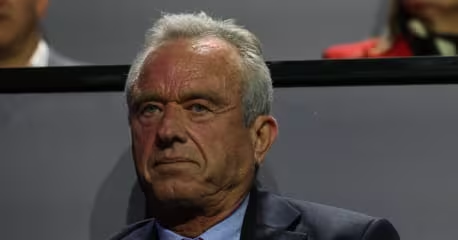
Health Secretary Robert F. Kennedy Jr. kept the 16-member United States Preventive Services Task Force from meeting for nearly a year, stalling guidelines on 18 topics.
In June 2025 the Supreme Court affirmed Kennedy could replace task force members and overrule recommendations, and a political appointee took over its parent agency.
In September 2026 Kennedy revived the panel by appointing eight new members after his appointee Dr. Roger D. Klein fired its two remaining leaders.
The full task force met on November 19 and 20 for its first meeting with the new members, its first gathering in over a year.
After Klein demanded edits, the task force approved a cervical cancer screening recommendation with its original language on racial disparities intact.
New members' conflicts of interest, unfamiliarity with procedures, and clashes over political edits marked the meeting.
In September 2026 Kennedy revived the task force by appointing eight new members after preventing it from meeting in person since March 2025.
In May 2026 Dr. Roger D. Klein, with a Health and Human Services lawyer present, fired the task force's two remaining leaders, Dr. John Wong and Dr. Esa Davis, at their first meeting.
By late March 2026 the task force had shrunk from 16 members to 10 as terms expired without replacements being named.
In early 2026 Klein suggested jettisoning the research centers that systematically review evidence and said his assistant could guide Americans' medical screenings with artificial intelligence.
In July 2025 an in-person task force meeting was canceled after reports that Kennedy might purge the panel, the first of four consecutive cancellations.
In June 2025 the Supreme Court affirmed that Kennedy could replace task force members before their terms ended and overrule recommendations.
The task force's last recommendation was published in June 2025, and guidelines on at least 18 topics, including cardiovascular disease, H.I.V. screening and food allergies, remain stalled.
Klein was appointed in June 2025 to lead the Agency for Healthcare Research and Quality, and employees were told a political appointee had to approve all public task force actions.
Former employees said Klein called a draft recommendation on preventing alcohol abuse worthless and asked for removal of mentions of race from task force documents.
The task force last met in person in March 2025 and issued five recommendations in the first half of 2025 before the paralysis set in.
Karina Davidson, a former task force chair, forecast that the effects would surface years later in later-stage diagnoses, missed interventions, and preventable deaths that did not have to happen.
Dr. Quyen Ngo-Metzger said it is hard to see how Dr. Seth J. Corey's expertise fits on the task force at all.
Dr. Michael Silverstein said Klein's comments challenging the task force's methodology showed "no understanding of how the task force assesses both the benefits and the harms of preventive services."
Seven former task force chairs urged Congress to subpoena Kennedy and Klein over the panel's dysfunction.
Dr. John Wong said that at his interview Klein pressed him to defend the concept of evidence-based medicine, describing it as "socialized medicine" to control costs.
Health and Human Services spokeswoman Courtney Spencer said Klein did not recall the alcohol conversation "as described" but had believed resources might be better spent on other topics.
Spencer said Klein had wanted "precise descriptions of patient populations and the clinical relevance of the findings" on race, and that secretarial oversight of task force recommendations predates the current administration.
Spencer said Klein does not believe evidence-based medicine is socialized medicine, saying his point concerned the rigid application of techniques biased against taking action.
Through the department's press office, Klein said the new appointees were chosen for expertise, experience and diversity of settings and geography, and defended Corey's education in evidence analysis.
The Department of Health and Human Services said it will have a process requiring task force members to recuse from individual topics.
The task force reconvened on November 19 and 20 for its first meeting with Health Secretary Robert F. Kennedy Jr.'s eight new appointees after 18 months without in-person meetings.
On the meeting's second day the task force heard presentations from outside experts with financial conflicts of interest, a departure from past practice.
Conflicts of interest required three new members to recuse themselves from discussion of a long-delayed cervical cancer screening recommendation.
Dr. Roger D. Klein, who leads the agency overseeing the task force, requested edits to the cervical cancer screening recommendation, including objections to mentioning racial disparities.
After a private session in which Klein heatedly defended removing mentions of racial disparities, the task force approved the cervical cancer screening recommendation with its original language.
Several new members showed unfamiliarity with the task force's procedures, and two suggested the alcohol screening question was whether teen drinking is healthy.
Dr. Michael Silverstein said three recusals on one topic suggest a body of members "for whom conflicts of interest are going to be a very big problem."
Dr. Sei Lee said he wanted to "call out the elephant in the room," saying, "I worry that having edits from political leadership on the top line may lead to the perception that the task force recommendations are no longer scientifically independent."
The task force's press office said vote tallies will be made public but did not say when.

