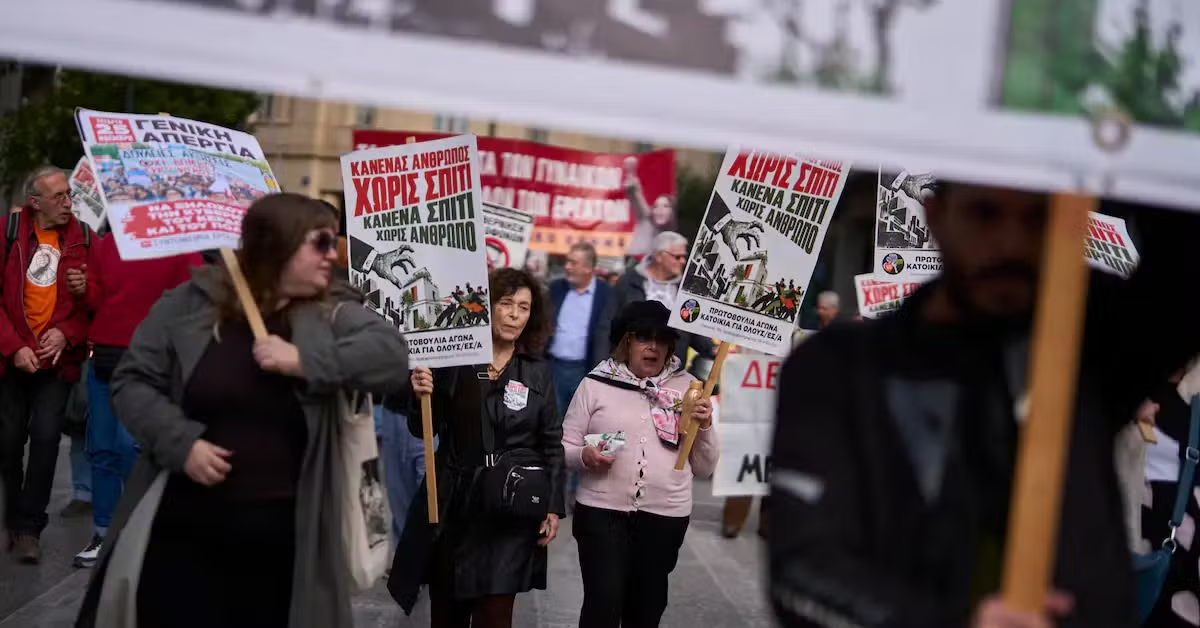
En Grèce, une troisième mobilisation contre la vie chère en un mois : «Nous ne pouvons plus vivre avec nos salaires de misère»
In a news report from Athens, Libération covers a third mobilization in one month against the cost of living: tens of thousands marched across Greece on Wednesday 25 November 2026, called by the public services union confederation Adedy and local unions. Exhausted by years of crisis and price rises outpacing inflation, protesters demand wage increases, chanting that they can no longer live on their misery wages; Greece's gross monthly minimum wage stands at 968 euros. The government says the situation has improved, with Prime Minister Kyriakos Mitsotakis boasting the public debt fell from 210% of GDP in 2020 to 145% in 2025, and he has promised a new increase in wages and pensions while aiming to lift the minimum wage to 1,000 euros by 2028 as he seeks a third term.
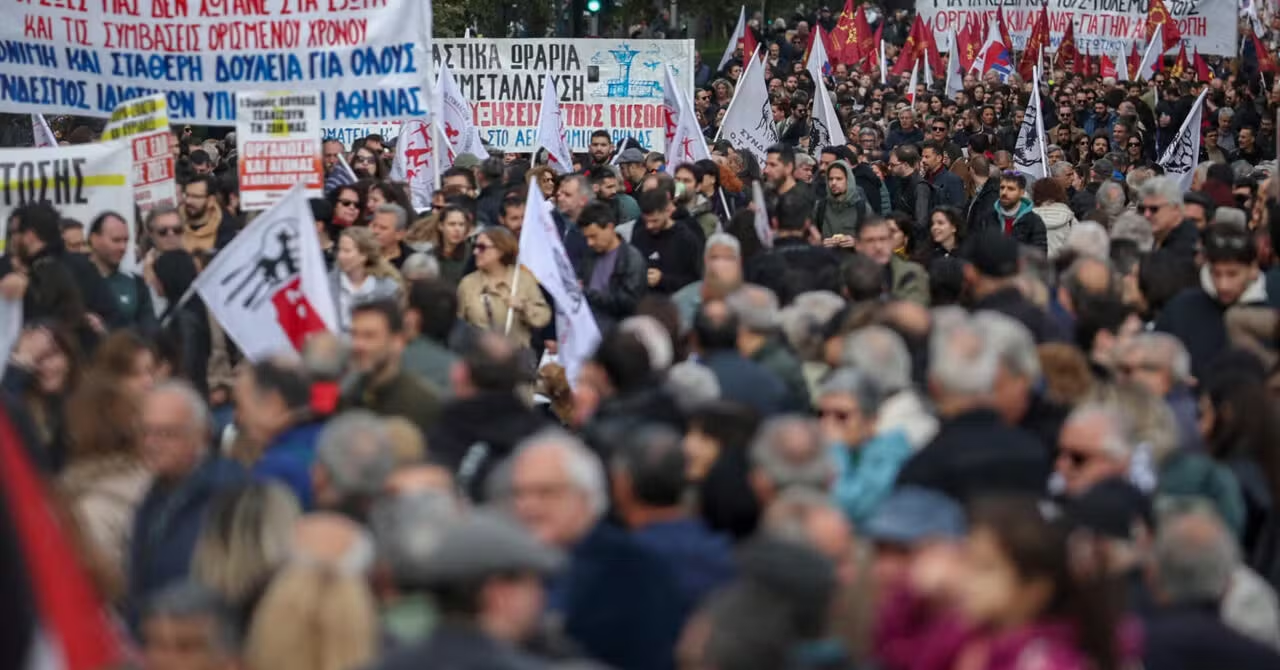
Grèce: 14 000 manifestants dans la rue contre la vie chère et les faibles salaires
A 24-hour general strike on 25 November 2026 brought about 14,000 Greek private and public sector workers, students, and civil servants into central Athens and other cities to demand wage increases and broader measures against the cost of living, in a protest organized by the civil servants' union confederation Adedy. The strike shut ferries for the day, grounded flights at 15 regional airports, and disrupted metro and suburban rail. Grievances include a gross minimum wage of 968 euros a month, inflation that reached 5.7% in October according to the statistics authority Elstat, and soaring housing prices in Athens after a post-Covid tourism boom, and protesters say more than half of Greek workers earn about 1,000 euros a month. The Greek government answered before a cabinet meeting that salaries and pensions will get a new increase and that it wants to raise the minimum wage to 1,000 euros by early 2028.

Greeks strike over wages, public services
Greek public sector workers and several private sector unions staged a nationwide strike on Nov 25 to demand higher wages and better public services, halting ferry routes to the islands, some metro services and flights at regional airports. The strike, Greece's third in weeks, was called by the largest public sector union ADEDY, which said it was fighting to restore annual bonuses scrapped during the debt crisis and for pay rises to make up for purchasing power losses. It comes despite a strong recovery from a meltdown that shrank output in return for bailouts worth about €280 billion, as many households struggle with surging rents and rising costs. Prime Minister Kyriakos Mitsotakis, who faces elections in the spring, has promised a €500 Christmas bonus for civil servants from December 2027 and an average monthly salary of €1,800 across sectors by 2030.

