DNC schedules 12 debates for 2028 presidential primary, starting June 2027
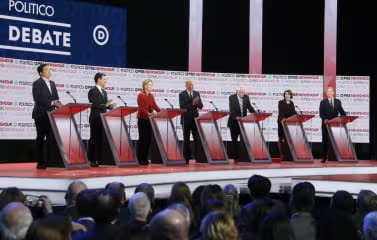
The Democratic National Committee laid out plans for a dozen presidential primary debates ahead of the 2028 election, unveiled on 23 November 2026 before any major candidate had launched a campaign. The debates would run from June 2027 through March 2028, with five in 2027 and seven in 2028, on a model similar to the party's 2020 open primary. The first two are set for June and July 2027, and each of the six early primary states would host a debate, all of them in 2028.
Participation is capped at 20 candidates in total, split across two stages, with polling and grassroots fundraising among the benchmarks for qualifying. If an expansive field emerges, early debates could be held over two consecutive nights, with candidates randomly assigned to each night.
To take part, candidates must sign a Fair Campaign Practices Pledge denouncing any super PAC or dark money spending that promotes their campaigns or attacks their opponents, and must appoint a representative who can submit complaints about outside spending to the committee. They must also agree not to enter joint fundraising agreements with Democratic Party committees or authorize coordinated party spending during the primary. The committee, however, cannot legally prevent super PACs from spending in Democratic primaries, and a candidate's denunciation would not stop an outside group from continuing.
Planning is led by executive director Roger Lau and senior adviser Minyon Moore, along with a committee that includes advisers to Bernie Sanders, Elizabeth Warren, Kamala Harris and other recent Democratic nominees. Candidates could also be barred from future debates for joining unauthorized multi-candidate events, a restriction that could prove awkward in New Hampshire, whose state law requires it to hold the nation's first primary.
The Democratic National Committee unveiled its initial plans for the 2028 presidential primary debates on 23 November 2026, before any major candidate had launched a campaign.
The committee is mapping out a dozen primary debates running from June 2027 through March 2028, with five in 2027 and seven in 2028, on a model similar to its 2020 open primary.
The schedule includes debates in each of the six early primary states, all to be held in 2028.
The committee says early debates could be held over two consecutive nights to accommodate an expansive primary field.
Participation in the debates is capped at 20 candidates in total, split across two stages.
Polling and grassroots fundraising are among the benchmarks that will determine which candidates qualify for the debates.
To qualify, candidates must sign a Fair Campaign Practices Pledge requiring them to denounce any super PAC or dark money spending that promotes their campaigns or attacks their opponents.
Debate planning is led by executive director Roger Lau and senior adviser Minyon Moore, along with a committee that includes advisers to Bernie Sanders, Elizabeth Warren, Amy Klobuchar, Kamala Harris, Hillary Clinton, Joe Biden and Barack Obama.
DNC Chair Ken Martin said in a statement, "Democrats are on offense after our historic victories in the midterms, and the DNC is keeping our foot on the gas as we head into the 2028 cycle. The fair and transparent process and experienced leadership team we're announcing today will keep our party united, strengthen our eventual nominee, and put Democrats in position to take back the White House."
The Democratic National Committee says it will release more precise criteria for the first two debates, along with their dates and locations, in January 2027.
The Democratic National Committee says its first two debates will take place in June and July 2027.
If early debates are split across two nights, candidates would be randomly assigned to each night.
Under the pledge, candidates must appoint a representative who can submit complaints about outside spending to the committee, and the committee will ask a candidate to issue a statement denouncing any spending it finds breaches the pledge.
The committee cannot legally prevent super PACs from spending in Democratic primaries, and a candidate's denunciation would not stop an outside group from continuing its activities.
Candidates must also agree not to enter joint fundraising agreements with Democratic Party committees or authorize coordinated party spending during the primary.
Candidates could be barred from future debates if they participate in unauthorized events involving multiple presidential contenders, a restriction that could cause problems in New Hampshire, which has a state law requiring it to hold the nation's first primary.
Rob Flaherty, deputy campaign manager for Kamala Harris's 2024 presidential campaign, wrote on X, "What happens when everyone denounces the spending but their aligned superpac spends anyway?"
Ammar Moussa, a spokesperson for Maryland Governor Wes Moore, wrote on X, "I love when Dems virtue signal so hard to the point they want to cost us elections."
Senator Bernie Sanders welcomed the pledge and described it as excellent, calling for similar rules to be introduced for House and Senate primaries.
The Democratic National Committee says it will publish a tracker recording complaints and denunciations under the pledge.

