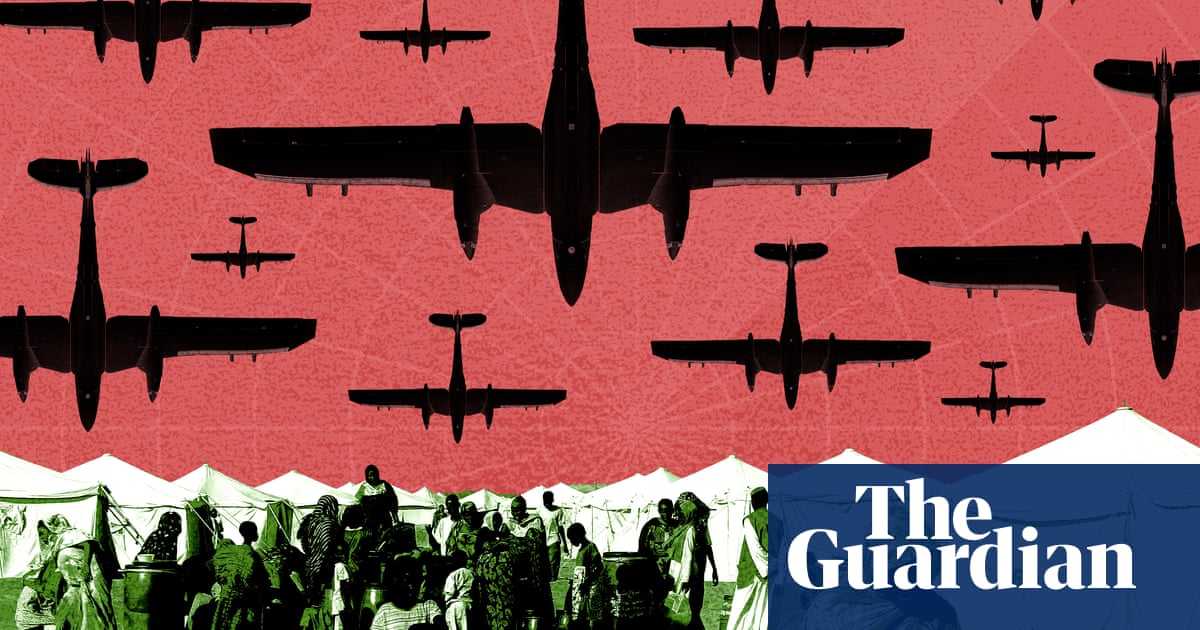
Drones become the leading killer of civilians in Sudan's civil war
Summary
- Drone strikes have become the leading cause of civilian deaths in Sudan's civil war between the armed forces and the Rapid Support Forces.
- A double-tap strike on a transport hub in Al-Dibab on 18 October killed at least 139 people; a strike days later on Nyala's market killed 103.
- The UN says drones killed at least 306 people in the first three weeks of October and 880 civilians between January and April 2026.
- Researchers have identified 21 drone models used in the war, made in countries including China, Russia, Belarus, Iran and Turkey.
- Sudan's foreign ministry says drones used by the Rapid Support Forces against electricity infrastructure were supplied by the UAE and launched from Ethiopia; both countries deny this.
- The war broke out in April 2023 between the armed forces and the paramilitary Rapid Support Forces, with estimated deaths ranging from 150,000 to more than 400,000.
Reactions
- UN humanitarian coordinator Denise Brown said intensifying drone attacks are disrupting electricity, water and fuel and hampering aid, and called for the attacks to stop.
- Unicef spokesperson James Elder said two-thirds of child injuries and deaths in Sudan this year were caused by drones.
- Nathaniel Raymond of Yale's Humanitarian Research Lab said drone tactics in Sudan could define the next decade of war absent international controls.
- Emergency Lawyers, a rights group, put the death toll from the drone strike on Nyala's market at 103.
- Acled analyst Ali Mahmoud Ali said the armed forces target Rapid Support Forces bases and supply routes while the RSF strikes infrastructure to destabilise army-held regions.
- A Centre for Information Resilience investigator said drones have muddied the water of attribution as well as reshaping the war.
Timeline newest first
In early November, UN humanitarian coordinator Denise Brown said intensifying drone attacks in Sudan were disrupting electricity, water and fuel supplies and hampering aid delivery.
Sources newest first
- Terror from the skies: drones are redefining warfare in Sudan, and massacring its civilians
A Guardian feature reports that drones have become the leading cause of civilian deaths in Sudan's civil war, opening with a "double-tap" strike on 18 October that hit a transport hub near Al-Dibab's market twice, killing at least 139 people, followed days later by a strike on Nyala's market that a rights group says killed 103. The UN says drones killed at least 306 people in the first three weeks of October, and researchers and analysts tell the paper the weapons are reshaping the war, with Raymond of Yale warning Sudan's "point-and-click warfare" may define conflicts worldwide.
Background newest first
 Lana Nusseibeh’s U.N. Bid Collides With U.A.E.’s Role in Sudan
nytimes.com· 9d
Declan Walsh reports for The New York Times that Lana Zaki Nusseibeh, a leading candidate for United Nations secretary general, has for years led Emirati efforts to deny her country's role in Sudan's civil war, where it is accused of arming the Rapid Support Forces. U.N. investigators found the Emirates hired Colombian mercenaries through an Abu Dhabi security company tied to the ruling family, and critics like Human Rights Watch say her record of "whitewashing" abuses should disqualify her; she denies the allegations and pledges ending the conflict would be her priority.
 Darfur survivors vow to tell story of those killed after Sudan camp attacks
aljazeera.com· 11d
An Al Jazeera article tells how Sudan's Zamzam displacement camp, home to hundreds of thousands since 2004, fell to the Rapid Support Forces in April 2025 after a siege and three-day assault that a UN report says killed at least 1,013 civilians, with the fall later followed by the capture of Abu Shouk camp and el-Fasher. Survivors Hassan Saber Jumaa, Mukhtar Musa, and Umm Kulthum Ali Saleh recount starvation, killings, and flight, with Musa vowing, "Whoever survives must tell the story of what happened."
