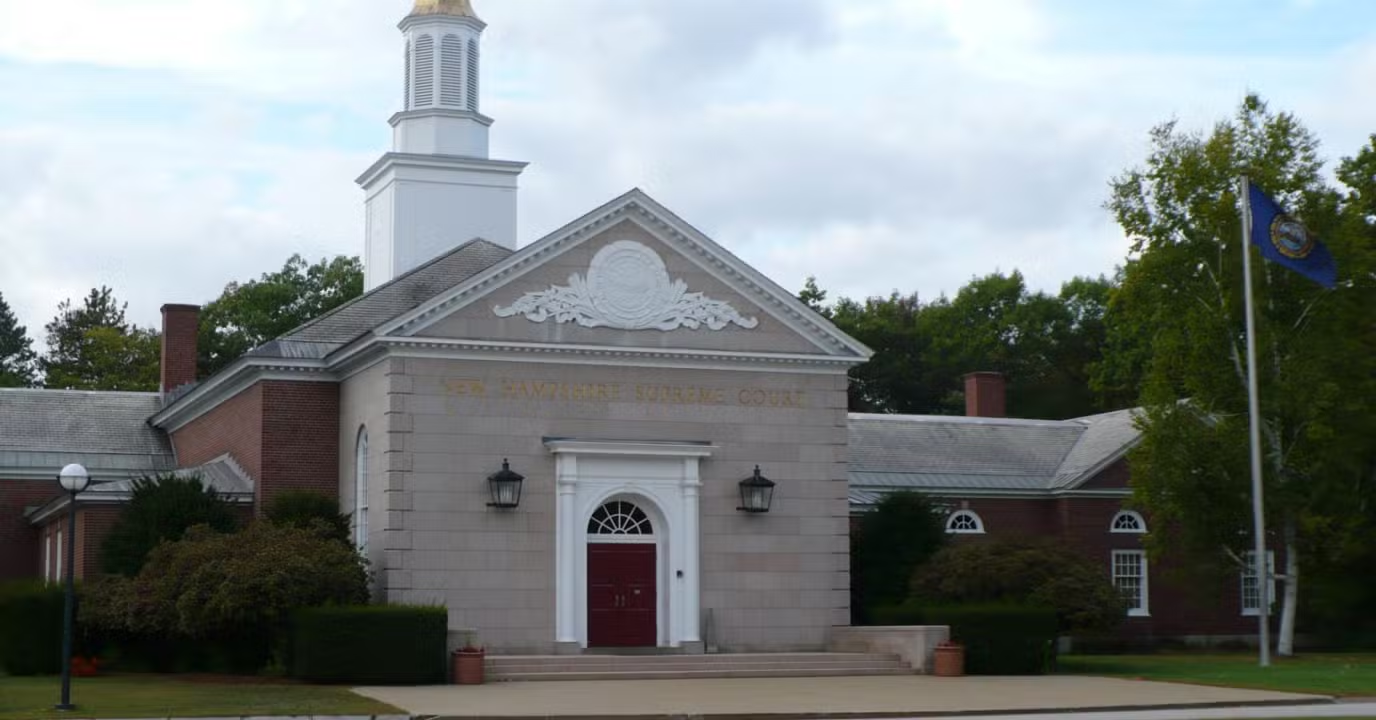
New Hampshire tells state supreme court voters lack constitutional right to mail ballots
Three visually impaired voters are asking the New Hampshire Supreme Court to strike down SB 287, a law that took effect the year before and requires voters to show photo ID in person or submit a notarized signature or ID copy with every absentee ballot application, for every local, primary and general election. The voters say those requirements burden the right to vote that the New Hampshire Constitution guarantees to disabled, elderly and low-income voters.
A trial court dismissed the suit in the December before the hearing, finding the ID requirements ordinary burdens justified by the state's interest in election security and preventing fraud. The voters appealed to the state supreme court, where all five justices recused themselves and Superior Court justices were appointed to hear the case.
At the hearing on 2026-11-23, senior assistant attorney general Mary Triick, arguing for Secretary of State David Scanlan and Attorney General John Formella, said voters, particularly those with disabilities, have no constitutional right to burden-free mail voting, leaning on the 1969 U.S. Supreme Court ruling McDonald v. Board of Election Commissioners of Chicago, which calls absentee voting a privilege. The justices appeared unconvinced: Justice Charles Temple noted the state constitution, unlike the federal one, orders the legislature to make absentee voting available to certain voters including those with physical disabilities, and asked whether absentee voting is rooted in the fundamental right to vote, a question Justice Martin Honigberg echoed in suggesting it may ensure people can exercise that right.
Mary Triick, a senior assistant attorney general, argued before the New Hampshire Supreme Court on behalf of Secretary of State David Scanlan and Attorney General John Formella that voters, particularly voters with disabilities, have no constitutional right to burden-free mail voting.
The hearing covered a lawsuit by three visually impaired voters challenging SB 287, a New Hampshire law requiring voters to show photo ID in person or submit a notarized signature or ID copy with every absentee ballot application.
SB 287, which took effect the year before the hearing, applies to every local, primary and general election in New Hampshire.
The three visually impaired voters allege the absentee ballot requirements impose undue burdens on disabled, elderly and low-income voters' right to vote guaranteed by the New Hampshire Constitution.
A trial court dismissed the voters' suit in the December before the hearing, finding the ID requirements were ordinary burdens justified by the state's interest in election security and preventing fraud.
The plaintiffs appealed to the New Hampshire Supreme Court, where all five justices recused themselves and the court appointed Superior Court justices to hear the case.
The state's defense at the hearing relied heavily on McDonald v. Board of Election Commissioners of Chicago, a 1969 U.S. Supreme Court ruling that absentee voting is a privilege rather than a constitutional right.
Justice Charles Temple noted that, unlike the U.S. Constitution, the New Hampshire Constitution orders the legislature to make absentee voting available to certain voters, including those with physical disabilities.
Justice Temple asked whether the right to vote absentee is rooted in the fundamental right to vote, and Justice Martin Honigberg added that absentee voting may ensure people can exercise that fundamental right.
Mary Triick told the New Hampshire Supreme Court, "Obviously, you have a fundamental right to vote. You do not have a fundamental right to vote absentee."
Mary Triick argued that the state constitution ordering the legislature to make absentee voting available to certain voters does not establish a fundamental right to vote absentee, saying, "Not every topic addressed in the Constitution is a fundamental right."
Mary Triick argued the lawsuit must allege a burden on the right to vote writ large rather than on the ability to get an absentee ballot.
David Fox, the voters' attorney, said in rebuttal that the state's argument was a divide-and-conquer strategy that ignores the lawsuit's central claim that SB 287 will affect certain voters' ability to vote.

