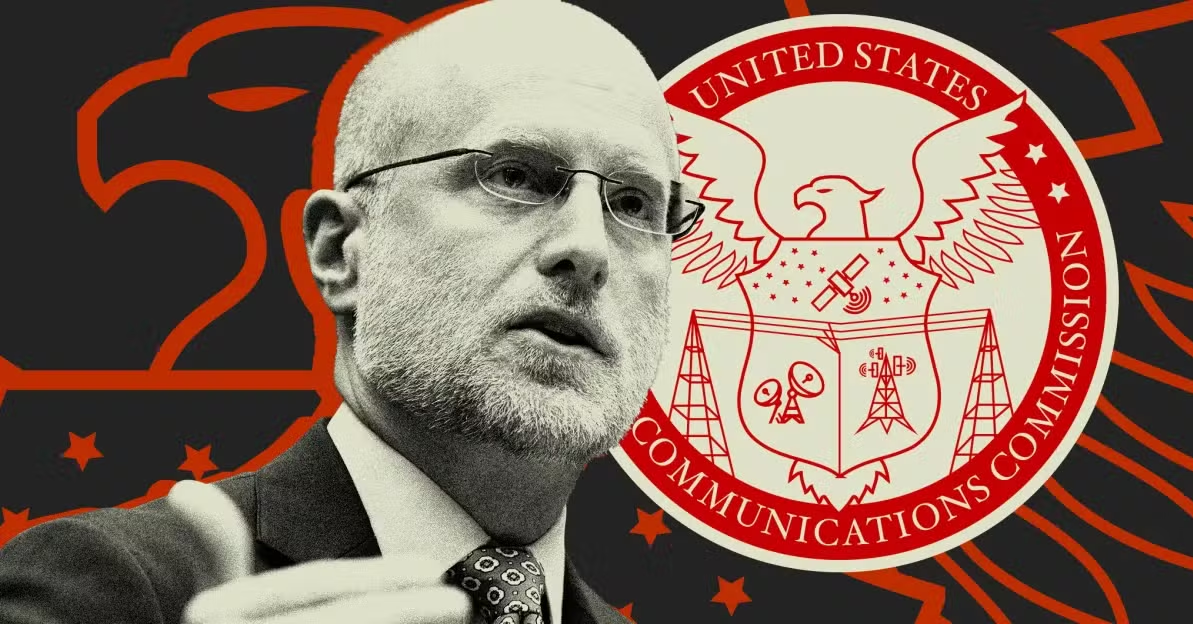
Judge blocks FCC's early ABC license review as retaliation, rejects bid to dismiss case
Federal judge blocks the FCC from reviewing ABC’s licenses early
theverge.com· 17h
US judge blocks Trump’s FCC attempt to target Disney’s ABC stations
aljazeera.com· 19h
Free Speech Advocates Say Ruling Against FCC Carries Lesson for Media Outlets: 'Don't Cave' to Trump Attacks | Common Dreams
commondreams.org· 20h
Judge blocks FCC from early renewal of ABC licenses
newsnationnow.com· 29h
U.S. Judge rules FCC violated ABC's free speech rights to please Trump
npr.org· 29h
Judge blocks FCC review of ABC licenses as commissioner praises ruling
newsweek.com· 29h
Judge blocks FCC early-renewal process for Disney-owned ABC stations, for now
cnbc.com· 30h
Judge temporarily blocks FCC from reviewing ABC's licenses after network alleged retaliation by Trump
cbsnews.com· 31h
'Not a close case': Judge finds dark motive in Trump ally's threats to ABC's license
rawstory.com· 32h
Judge blocks FCC from early license review for ABC, which network says has had a chilling effect
chicagotribune.com· 32h
Judge halts FCC review of ABC licenses, saying it probably violates First Amendment
washingtonpost.com· 32h
Federal Judge Blocks Trump FCC’s Crackdown on ABC in Major First Amendment Ruling
meidasnews.com· 32h
Federal judge blocks FCC from threatening Disney-owned ABC stations
usatoday.com· 32h
Judge blocks Trump’s FCC from targeting ABC stations: ‘This is not a close case’ | CNN Business
cnn.com· 32h
Judge blocks FCC from early license review for ABC, which network says has had a chilling effect
apnews.com· 32h
Trump, FCC illegally sought to punish ABC in free speech case, judge rules
latimes.com· 33h
‘Not a close case:’ Judge blocks review of ABC’s broadcast licenses
politico.com· 33h
Judge Blocks F.C.C. From Targeting Disney’s Local ABC Licenses
nytimes.com· 33h
- https://storage.courtlistener.com/recap/gov.uscourts.dcd.295648/gov.uscourts.dcd.295648.72.0.pdf
courtlistener.com· 33h
Judge blocks FCC review of ABC station licenses for now
nbcnews.com· 33h
US judge blocks FCC from targeting Disney-owned ABC stations
reuters.com· 33h
A federal judge on November 25, 2026, barred the Federal Communications Commission from putting the licenses of eight Walt Disney-owned ABC stations up for early review, granting Disney a preliminary injunction. The review could have ended with the licenses revoked and the stations off the air.
FCC Chair Brendan Carr ordered the early reviews in April, a day after President Trump urged ABC to fire Jimmy Kimmel, though the licenses were not due for renewal until October 2028. The agency had not ordered such an early review in more than 50 years. Disney and ABC sued in August, arguing the administration was punishing the network over broadcast content. The FCC tied the review to an ongoing investigation into Disney's employment practices, but the judge found substantial evidence it was pretextual.
In a 45-page order, Judge Loren AliKhan of the US District Court in Washington found Disney likely to succeed on its retaliation claim. She counted 11 instances in two years in which Trump called for ABC's licenses to be taken away. She also rejected the argument that Disney could not be readily intimidated because of its massive financial resources.
The record showed the threats were already shaping ABC's decisions: the network livestreamed Trump's July 2026 address, which it ordinarily would not have carried, fearing retaliation.
Judge AliKhan declined a broader ruling covering future FCC action and declined to bar the agency from threatening the network over its editorial discretion. She ordered ABC and Disney to post a nominal bond of $1, and the litigation continues.
A federal judge on Wednesday, November 25, 2026, barred the Federal Communications Commission from putting the licenses of eight Walt Disney-owned ABC television stations up for early review, granting Disney a preliminary injunction.
The injunction barred the FCC from holding a hearing on the eight licenses, a step that could have led to their revocation and forced the stations off the air.
Disney and ABC sued the FCC in August to block the early review of stations in Los Angeles, Chicago, New York and other cities, arguing the Trump administration was punishing the network over broadcast content in violation of the Constitution.
FCC Chair Brendan Carr ordered the early license reviews in April, a day after President Trump urged ABC to fire Jimmy Kimmel, though the licenses were not due for renewal until October 2028 at the earliest.
The FCC had not ordered such an early license review in more than 50 years.
In her decision, Judge Loren AliKhan wrote that 'This is not a close case' and that the FCC appeared to be carrying out a retaliatory campaign driven by Trump that threatened ABC's free-speech rights.
Judge AliKhan wrote that ABC has a weighty interest in vindicating its right to be free of retaliation for protected speech.
Judge AliKhan wrote that FCC Chair Brendan Carr has taken President Trump's rhetoric as his marching orders.
An FCC spokesperson said granting the injunction was wrong on the facts and wrong on the law, as controlling Supreme Court precedent makes clear.
An FCC spokesperson said the FCC will continue to use its lawful authority to hold broadcasters accountable to their public interest obligations.
An ABC News spokesperson called the decision 'an important victory for the First Amendment'.
Democratic FCC Commissioner Anna Gomez said the ruling brings 'badly needed accountability' to a commission and an administration that have politicized the machinery of government in a sustained campaign of censorship and control.
Judge Loren AliKhan concluded Disney was likely to succeed on its retaliation claim against the FCC and cast the early license renewal proceedings as a retaliatory act.
Disney has called the early license review an attack on free speech by the Trump administration.
Judge Loren AliKhan of the US District Court in Washington denied the FCC's motions to dismiss the lawsuit.
Judge AliKhan wrote that, given the extreme, indeed existential, nature of the possible penalty of losing their broadcast licenses, the court concluded that early license renewal proceedings create a risk sufficient to chill a broadcaster of ordinary firmness.
Judge AliKhan rejected the administration's argument that Disney could not be readily intimidated because of its massive financial resources.
Judge AliKhan wrote that ABC had already shown the threats had affected its editorial decisions about carrying Trump's speeches and the booking of political guests on shows like The View.
Judge AliKhan wrote that 'Any broadcaster of ordinary firmness, wealthy or not, would not hesitate to think twice if faced with such an existential threat to its business.'
Judge AliKhan wrote that the FCC may enforce the law as it sees fit but 'may not retaliate against or punish Plaintiffs and other broadcast license holders for disfavored speech.'
In a 45-page order, Judge AliKhan found that Trump's posts and Carr's statements provided robust circumstantial evidence strongly supporting Disney's argument that ABC was the target of a retaliation campaign by the president and the FCC.
The court declined to issue a broader ruling that would cover future FCC regulatory action against ABC.
Judge AliKhan denied ABC's request to block the FCC from taking actions to coerce or threaten the network in an effort to alter its exercise of editorial discretion.
Disney representatives testified that ABC had made programming decisions based on fears that Trump and Carr might retaliate further.
Judge AliKhan wrote that 'it is no coincidence that President Trump criticized Mr. Kimmel's skit on social media and the very next day Defendants initiated the early license renewal proceedings.'
Judge AliKhan wrote that what started in 2020 as questions about how ABC 'can keep getting a license' has crescendoed into repeated calls for the FCC to strip ABC's broadcast licenses over its editorial decisions.
Judge AliKhan wrote that ABC 'could very well have to cower under the cloud of the existential threat of non-renewal.'
An FCC spokesperson said the commission looks forward to prevailing in full on the matter.
An FCC spokesperson said the FCC appreciated the district court denying part of Disney's request for preliminary injunctive relief.
FCC Commissioner Anna Gomez said the decision shows 'this FCC is a paper tiger whose threats crumble when challenged by those willing to defend their rights.'
Gomez said that for nearly two years the FCC has weaponized its licensing authority to retaliate against broadcasters for exercising their right to free expression, and that a federal court has now stepped in to put a check on that conduct.
Government attorneys urged the court to dismiss ABC's lawsuit, accusing the network of trying to prematurely ward off scrutiny by federal regulators.
Justice Department lawyers wrote in a court filing that foreclosing the FCC from using all the tools at its disposal to investigate whether the plaintiffs are meeting their statutory and regulatory duties would seriously harm both the government and the public.
Judge AliKhan wrote that ABC had detailed 'a campaign of retaliation against them in response to their exercise of their First Amendment rights,' which on its own is an irreparable injury.
Judge AliKhan heard arguments from both sides in October.
Judge AliKhan rejected the FCC's argument that the district court lacked jurisdiction, writing that Disney had established jurisdiction.
Judge AliKhan wrote that Disney's lawyers 'sufficiently cast the early license renewal proceedings as a retaliatory act.'
The judge's 45-page memorandum opinion identified 11 instances in the two years before the ruling in which Trump called for ABC's broadcast licenses to be taken away or targeted over its coverage.
The incidents cited included Trump's attacks on ABC after the 2024 presidential debate and his threats against broadcasters that declined to televise his July 2026 primetime address.
No ABC-owned station had ever had a license renewal application denied.
Evidence presented by ABC and Disney showed the network changed its process for booking political guests, declined to air certain clips on The View, and moved a Senate candidate's Jimmy Kimmel Live appearance to YouTube.
ABC livestreamed Trump's July 2026 presidential address on ABC News LIVE, which it ordinarily would not have done, out of concern that the administration might retaliate if it declined to carry the speech.
The FCC maintained that its decision to initiate early license renewal proceedings was connected to an ongoing investigation into Disney's employment practices and possible violations of federal anti-discrimination laws.
Judge AliKhan found substantial evidence that the FCC's stated rationale was pretextual, citing the timing of the actions, the repeated public threats by Trump and Carr, and the agency's demands for information directly related to ABC's editorial decision-making.
The FCC's demands included internal communications among producers and co-hosts of The View, information about employees' political donations, and internal journalistic standards for programs including Good Morning America.
The preliminary injunction applies to the early renewal proceedings for ABC's eight stations in New York, Los Angeles, Chicago, Philadelphia, Houston, San Francisco, Durham, and Fresno.
Judge AliKhan ordered ABC and Disney to post a nominal bond of $1.
The underlying litigation between ABC, Disney and the FCC will continue.
In a September 2025 warning about Jimmy Kimmel, Brendan Carr said, 'We can do this the easy way or the hard way. These companies can find ways to take action on Kimmel, or there is going to be additional work for the FCC ahead.'
Brendan Carr said of the early renewal order, 'If you didn't take us seriously, now you should.'
Brendan Carr acknowledged the early license renewal order was extraordinary, saying it had likely been 50 or 60 years or longer since the FCC had used such a regulatory tool.
Judge AliKhan wrote that she did not find the FCC's explanation, that early renewal aided a Disney employment investigation, credible on the record before the court.
The FCC's early renewal order did not explain Disney's alleged deficiencies, and the agency's explanation came weeks later.
The judge's ruling said the early license renewal proceedings could last two to five years.
Judge AliKhan cited months in which no candidates appeared on The View as further evidence of a chilling effect.
Trump has argued that stripping ABC's licenses is necessary because the network's news coverage and late-night shows are unfair to him.
FCC Commissioner Anna Gomez said in posts on X, 'Every broadcaster facing this pressure should take note and choose courage over capitulation because, as I've said from the beginning, the First Amendment is on their side.'
Seth Stern, the Freedom of the Press Foundation's chief of advocacy, said the judge saw the FCC's attempts to punish ABC for what they are: 'a campaign of intimidation and retaliation against speech that displeases Donald Trump.'
Stern said the First Amendment does not allow government officials to appoint themselves the journalism or comedy police.
Stern said even good-faith government actors cannot adjudicate journalistic merits without letting political agendas cloud their judgment, and that Brendan Carr is far from a good-faith actor.
Stern said ABC is not alone in what he called the FCC's censorship spree and that outlets Carr has intimidated can breathe a little easier.
Stern said the lesson from the ruling is 'don't cave to Carr or any other anti-speech bullies in this administration' but to take them to court, because 'the judiciary is on to them, and they lose regularly.'
Judge AliKhan rejected the FCC's argument that the court could not act because it had not yet rejected the license renewals, writing that the act of premature review for retaliatory reasons is unconstitutional, unlawful, and hard to reverse.
Judge AliKhan wrote that Disney had been responsive to every query the FCC made in the diversity investigation.
At the October hearing, Justice Department attorney Dimitar Georgiev-Remmel initially said he was not sure what other tools the FCC had, then said the agency could have subpoenaed the information, fined Disney, or set the reviews aside.
Disney attorney Beth Wilkinson noted the FCC told Disney it was dissatisfied with the company's diversity information only 17 days after the reviews were announced, giving Disney little time to stave off the process by fulfilling the requests.
At the October hearing, Disney lead attorney Beth Wilkinson compared the license reviews to a 'guillotine blade' hanging above the company, ready to fall at any moment.
Dimitar Georgiev-Remmel contended that the license review was a useful tool the FCC was deploying to secure more complete information for the diversity investigation, saying the agency was having trouble eliciting necessary information from Disney.
ABC's suit followed calls by FCC Chairman Brendan Carr for Jimmy Kimmel to be fired over jokes about Trump and Charlie Kirk.
Judge AliKhan wrote that Carr's actions amounted to repeated threats against ABC sufficient to deter speech protected under the First Amendment, particularly considering their magnitude.
ABC argued in court that the threat to its ability to continue broadcasting was already chilling speech, causing its executives to question how they should cover the recent midterm elections and who could appear on The View without angering Trump.

