Poland says three Russian Kh-101 missiles violated its airspace during attack on Ukraine
Three Russian missiles flew into Poland Friday, prosecutors say
reuters.com· 4d
NATO to hold meeting following Russia’s violation of Polish airspace
newsnationnow.com· 5d
NATO Will Defend ‘Every Inch’ of Polish Territory, Mark Rutte Says Ahead of Monday NAC Meeting
kyivpost.com· 5d
Swedish Gripen pilot unable to shoot down suspected Russian missile over Poland due to poor weather, commander says
kyivindependent.com· 5d
EN DIRECT, guerre en Ukraine : Emmanuel Macron dénonce un « agenda agressif » de la Russie sur le « territoire européen »
lemonde.fr· 6d
Poland condemns Russian ‘provocation’ after airspace violations
aljazeera.com· 6d
Poland Condemns Russian 'Provocation' After 3 Airspace Violations - The Moscow Times
themoscowtimes.com· 7d
Poland reports airspace violation during Russian attack on Ukraine, investigates debris crash
Three Russian missiles entered Polish airspace in the early hours of November 20, 2026, during a Russian attack on Ukraine, and Polish air defense systems were activated at around 3:30 a.m. Air raid alerts were issued in the Lublin and Subcarpathian regions bordering Ukraine, and one object fell near Rudnik nad Sanem, where another landed in a field in Nowy Lipowiec and caught fire, harming no one.
Prime Minister Donald Tusk convened ministers, military officials and security chiefs, and Defence Minister Wladyslaw Kosiniak-Kamysz said the three objects were probably two missiles and a drone, with investigations under way at three sites. Polish forces tracked 11 potentially threatening aerial objects that night, three of which crossed into Polish airspace, supported by Swedish Gripens, Polish F-16s, allied aircraft and ground-based air defense, with tracking information supplied by Ukraine.
Lt. Gen. Ireneusz Nowak said a Swedish pilot flying under NATO command was authorized to shoot down one suspected Kh-101 cruise missile but did not fire because severe weather prevented him from identifying the target. Tusk said NATO Secretary-General Mark Rutte would visit Warsaw the next day, and Rutte later said he had consulted directly with Tusk and President Karol Nawrocki.
On November 22, Polish prosecutors said all three objects were Russian Kh-101 missiles, revising earlier statements that one was likely a drone, and preliminary examination indicates they were manufactured in the fourth quarter of 2026 in Dubna, Russia. NATO's North Atlantic Council will hold a session in Brussels on November 23 dedicated to the violation.
Poland's Armed Forces Operational Command said its air defense systems were activated at around 3:30 a.m. local time on November 20, 2026 in response to a Russian attack on Ukraine, after an unidentified flying object entered Polish airspace.
Air raid alerts were issued in Poland's Lublin and Subcarpathian regions, which border Ukraine's Volyn and Lviv regions.
Lt. Col. Jacek Goryszewski, a spokesperson for Poland's Armed Forces Operational Command, said Polish and allied aircraft operated in Polish airspace, systems remained on alert through the night, and authorities were investigating a suspected airspace violation.
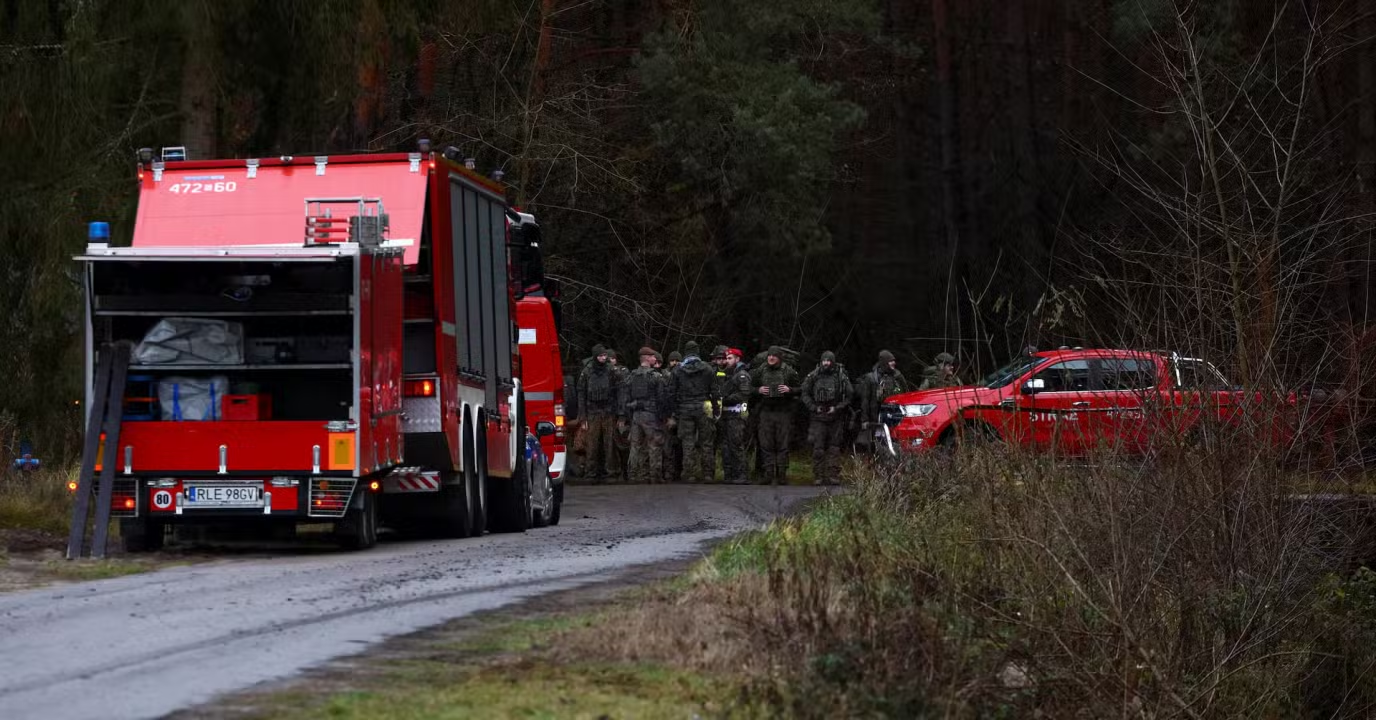
One object fell near Rudnik nad Sanem in the Subcarpathian region, where firefighters were dispatched, and another unidentified object was reported near the town of Chmielek in the Lublin region.
Dariusz Dzialo of the Lublin Department of Security and Crisis Management said police and firefighters located an object in Nowy Lipowiec, in the Ksiezpol municipality of Bilgoraj County, that fell in fields near a forest and caught fire, posing no threat to nearby farms or the forest.
The object in Nowy Lipowiec fell in a field several hundred meters from buildings and no one was injured, and a source in Poland's central administration said it was likely a drone.
Prime Minister Donald Tusk convened a meeting with ministers, military officials and security service chiefs in response to the airspace violation.
Poland said Russia violated its airspace three times during the night before November 20, 2026.
Defence Minister Wladyslaw Kosiniak-Kamysz said the three objects that entered Polish airspace were probably two missiles and a drone, with investigations under way at Nowy Lipowiec, Molodycz and Rudnik nad Sanem.
Prime Minister Donald Tusk said NATO Secretary-General Mark Rutte would visit Warsaw on November 21, 2026.
Donald Tusk said the airspace violations were a provocation by Moscow, saying, "it seems we are dealing with an intentional provocation."
Tusk said there was no doubt the objects that landed in Poland were Russian, and that "it is clearer than ever before that Poland must participate in decisions and discussions regarding the future of Ukraine and security in Europe."
Wladyslaw Kosiniak-Kamysz said "the convergence of these events is no accident," noting defence ministers from France, the United Kingdom and the Baltic states along with eight chiefs of staff were present for exercises, and said Poland would ask NATO for more support securing the alliance's eastern flank.
NATO Secretary-General Mark Rutte called the airspace incident "clearly dangerous" and said NATO stands in solidarity with Poland.
British Prime Minister Andy Burnham condemned Russia's violation of Polish airspace as "utterly unacceptable," saying "Europe will not be deterred from our support for Ukraine," "we will not allow Putin to divide our continent," and "we recognise that the front line in Ukraine is the front line for freedom and democracy everywhere."
French President Emmanuel Macron expressed solidarity with Poland, writing that "by intensifying its war of aggression against Ukraine and also pursuing an aggressive agenda on European territory, Russia is making an irresponsible bet that can only isolate it further and strengthen the determination and unity of the Europeans."
Polish Armed Forces operational commander Lt. Gen. Ireneusz Nowak said a Swedish Air Force pilot flying a JAS 39 Gripen under NATO command was authorized to shoot down a suspected Russian Kh-101 cruise missile over Poland on November 20, 2026, but did not fire because severe weather prevented him from identifying the target.
NATO's Combined Air Operations Centre in Uedem, Germany, had issued conditional authorization to engage targets once identification requirements were met.
Polish forces tracked 11 potentially threatening aerial objects during the Russian attack on November 20, three of which crossed into Polish airspace.
Two Swedish Gripens and two Polish F-16 fighter jets were deployed during the attack, supported by a Saab 340 airborne early warning aircraft, a Dutch aerial refueling aircraft and ground-based air defense systems.
Polish forces received tracking information from Ukraine through its Virazh air surveillance system.
NATO's North Atlantic Council was scheduled to meet in Brussels on November 23, 2026, to discuss the Polish airspace violations.
NATO Secretary-General Mark Rutte, during a visit to Warsaw on November 21, said, "I can guarantee that NATO will defend every inch of Polish territory."
Rutte said NATO's Supreme Allied Commander Europe, Gen. Alexus Grynkewich, would assess potential threats to the alliance's defense and deterrence capabilities and make adjustments if necessary.
Rutte called the incident dangerous and said its circumstances remained under investigation.
Ukrainian Foreign Minister Andrii Sybiha condemned the airspace violations, saying, "While Moscow tries to initiate discussions about the 'new security architecture of Europe,' Russian missiles and drones directly undermine the existing security order in Europe."
Sybiha said Ukraine was working closely with Poland to investigate the incursions and prevent similar incidents, and called for increased pressure on Russia and stronger Ukrainian air defenses, arguing that supporting Ukraine also helps protect NATO members.
NATO Secretary-General Mark Rutte said he had consulted directly with Polish Prime Minister Donald Tusk and Polish President Karol Nawrocki about the airspace breach.
Poland's Permanent Representation to NATO said the North Atlantic Council would hold a session in Brussels on November 23, 2026, dedicated to the Russian missile violation of Polish airspace, with Deputy Defence Minister Paweł Zalewski representing Poland.
Polish defense officials said a Russian Kh-101 cruise missile fell in the village of Nowy Lipowiec, a second suspected cruise missile came down in Rudnik nad Sanem in the Subcarpathian Voivodeship, and a jet-powered drone crashed in Młodochów in the Lublin Voivodeship, with no casualties.
All three crash sites are located near the Nowa Dęba training grounds, where forces from 11 countries are taking part in the multinational Koalicja 26.2 military exercises.
Mark Rutte called the breach of Polish airspace by two Russian cruise missiles and a drone a "dangerous incident," said NATO must find out exactly what happened, and said he could not rule out a similar breach happening again.
Rutte said Supreme Allied Commander Europe Gen. Alexus Grynkewich will do everything possible to identify any potential vulnerabilities in NATO's deterrence and defense posture so appropriate adjustments can be made if necessary.
Defence Minister Władysław Kosiniak-Kamysz announced on the evening of November 21 that Warsaw expects strong support from NATO allies at the November 23 session to bolster protection of Poland's eastern frontier.
Deputy Prime Minister and Defence Minister Wladyslaw Kosiniak Kamysz wrote on X that Poland will present proposals and identify new options for action in response to Russian aggression, saying, "In the near future, we will have strong support from our NATO allies to strengthen the protection of our eastern border."
Polish prosecutors said all three objects that flew into Polish airspace on November 20, 2026, were Russian Kh-101 missiles, revising earlier statements that one of them was likely a drone.
District prosecutors in Lublin said preliminary examination of the debris indicates the missiles were manufactured in the fourth quarter of 2026 at facilities in Dubna, Moscow district, in Russia, after the Polish government asked prosecutors to look into the matter.

