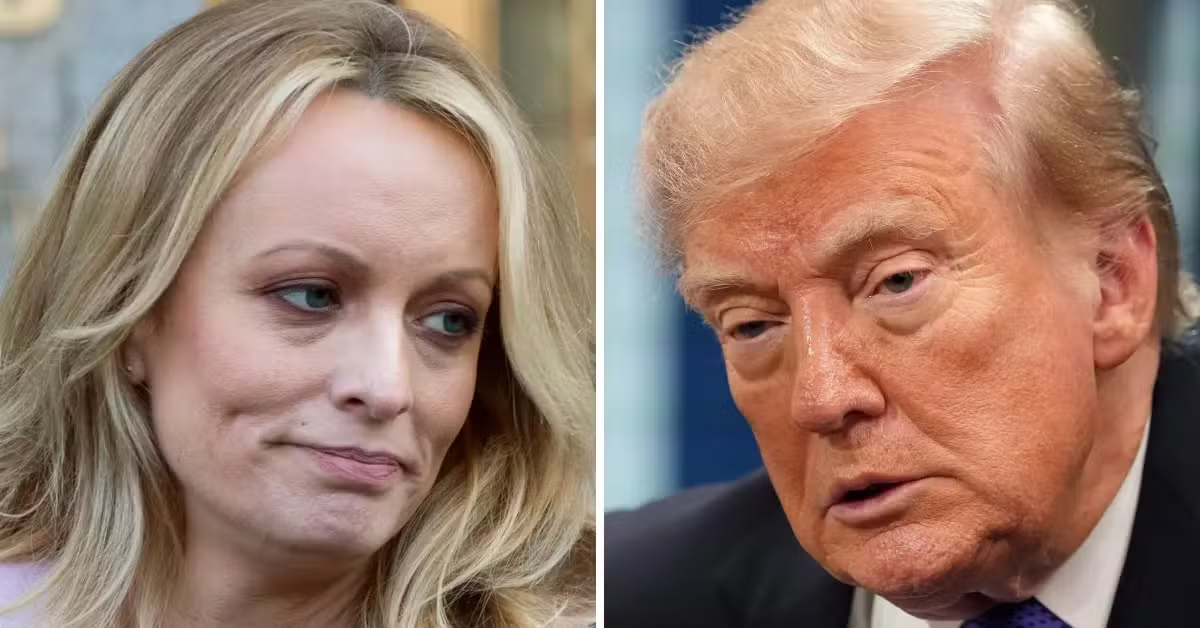
Appeals court opens path for Trump to erase hush money conviction
Trump Gains Ground In Bid To Quash Stormy Daniels Hush Money Conviction - Newsweek
newsweek.com· 2d
Appeals court renews Trump bid for federal jurisdiction in hush-money case
aljazeera.com· 3d
Judges Open Door for Trump to Win Appeal in Stormy Daniels Case
nytimes.com· 3d
Appeals court overturns deceased judge's ruling in Trump hush money case
rawstory.com· 3d
Trump Wins New Chance to Ask US Judge to Toss Hush Money Verdict
bloomberg.com· 3d
Federal appeals court gives President Donald Trump a path to erasing hush money conviction
pbs.org· 3d
Appeals court opens door to moving Trump’s criminal case to federal court
politico.com· 3d
Federal appeals court gives President Donald Trump a path to erasing hush money conviction
apnews.com· 3d
President Donald Trump's hush money case may be heading to federal court. On 23 November 2026, a three-judge panel of the 2nd U.S. Circuit Court of Appeals reversed a lower court decision that had kept the case in New York state court, and ordered the lower court to promptly decide whether it should be removed to federal jurisdiction.
Trump was convicted in May 2024 on 34 felony counts of falsifying business records to obscure a $130,000 payment to adult film performer Stormy Daniels, and was sentenced to an unconditional discharge with no jail time. If the case moves to federal court, he could seek to have the verdict discarded on presidential immunity grounds, and New York's two appeals courts would be taken out of his path to the Supreme Court.
The panel ruled that U.S. District Judge Alvin Hellerstein, who died on 28 October 2026 at age 92, erred when he held that removal was categorically unavailable after a federal officer defendant has been convicted, and again in denying that Trump had good cause to make two removal attempts. Hellerstein had rejected Trump's bids three times.
The ruling, issued by Judges Raymond Lohier, John Walker Jr. and José Cabranes a week after they heard more than an hour of arguments, halted proceedings in Trump's simultaneous state court appeal, which New York's Appellate Division heard arguments on in November 2026 but has yet to rule on.
The judge who inherits the case must still decide whether the prosecution relates to Trump's official acts as president, a question the appeals order did not address. A federal judge in Manhattan has been directed to rule promptly once Trump files a new removal request, but no deadline has been set, and the panel's full opinion explaining its reasoning is yet to come.
A three-judge panel of the 2nd U.S. Circuit Court of Appeals on 23 November 2026 reversed a lower court decision that had kept President Donald Trump's hush money case in New York state court.
The appeals panel ordered the lower court to promptly decide whether Trump's case should remain in federal court.
If the case moves to federal court, Trump could seek to have his verdict discarded on presidential immunity grounds.
Trump was convicted in May 2024 on 34 felony counts of falsifying business records to obscure a $130,000 payment to adult film performer Stormy Daniels, and was sentenced to an unconditional discharge with no jail time.
The 2nd Circuit panel ruled that U.S. District Judge Alvin Hellerstein erred when he held that removal of a state criminal case to federal court was categorically unavailable after a federal officer defendant has been convicted.
The panel sent the matter back to district court and asked that state court proceedings halt while the federal court considers Trump's effort to move the case.
The panel consisted of Judge Raymond Lohier, an Obama appointee, Judge John Walker Jr., a George H.W. Bush appointee, and Judge José Cabranes, a Clinton appointee.
The 2nd Circuit's decision set in motion a halt to proceedings in Trump's simultaneous state court appeal.
In a two-page order, the panel also ruled that Hellerstein erred in denying that Trump had good cause to make two attempts at removing the case, once after his indictment and again after his trial.
The ruling came a week after Judges Lohier, Walker and Cabranes spent more than an hour questioning Trump's lawyer and a state prosecutor.
New York's Appellate Division has yet to rule on Trump's state appeal and could be prevented from doing so indefinitely under the 2nd Circuit's ruling.
Trump's lawyer, Robert Giuffra Jr., urged the judges to rule swiftly, arguing that without federal intervention the president would likely have to wait years for state appellate courts to rule before reaching the U.S. Supreme Court.
Steven Wu, chief of the appeals division at the Manhattan District Attorney's Office, urged the panel to uphold Hellerstein's ruling and leave the case in state court.
A spokesperson for Trump's legal team said Trump appreciates the 2nd Circuit's prompt and correct ruling as he continues to win against 'Democrat weaponization of our Justice System'.
The Manhattan District Attorney's Office, which prosecuted the case, declined comment.
The late U.S. District Judge Alvin Hellerstein, who died on 28 October 2026 at age 92, had rejected Trump's removal bids three times, including an August ruling that a convicted federal officer can never move a state criminal case to federal court.
The appeals order directs the district court to rule promptly once Trump files a new removal request, and to adopt the state court judgment if removal is allowed.
A move to federal court would change which court hears Trump's appeal, not the verdict itself, and would take New York's two appeals courts out of his path to the Supreme Court.
The judge who inherits the case must still decide whether the prosecution relates to Trump's official acts as president, a question the appeals order did not address.
The panel said a full opinion explaining its reasoning will follow, and the deadline for either side to ask the court to reconsider will not start until that opinion is issued.
In a 12 November letter to the appeals court, Steven Wu wrote that 'Federal removal at such a late stage would needlessly waste judicial resources,' arguing that state appeals judges had already spent substantial time on the case.
In a court filing, Trump's lawyer Robert J. Giuffra Jr. wrote, 'President Trump has done all he reasonably could to expedite judicial resolution of this issue.'
A federal judge in Manhattan has been directed to rule promptly on whether the case transfers to federal jurisdiction, but no deadline has been set.
New York's Appellate Division heard arguments in Trump's state appeal in November 2026 but has yet to rule.
At the hearing on 23 November, Trump's lawyer Robert Giuffra Jr. urged the judges to issue an order before writing their full decision, to take control of the case and stop the Appellate Division's deliberations.

