WHO warns lab shortages hinder Gaza meningitis response as cases surge
Gaza meningitis cases surge as collapsing infrastructure fuels health fears
aljazeera.com· 28h
Gaza Health Officials Say Meningitis Outbreak Is Due to Infrastructure Attacks
truthout.org· 2d
Gaza Officials Say New Meningitis Outbreak Is 'Inevitable Result' of Israel's Attacks and Blocking of Aid | Common Dreams
commondreams.org· 2d
Gaza is facing a sharp surge in meningitis infections. On 24 November 2026 the Gaza Health Ministry issued an epidemiological alert reporting 272 cases in October, eight times the usual monthly average, including 108 bacterial cases against a usual 10 to 20 a month, plus 100 bacterial cases in November. Fifteen people died of meningitis in Gaza in 2026, five of them between August and October, and the UN Office for the Coordination of Humanitarian Affairs reported that 77 percent of cases were in babies under one year of age.
Lab tests suggested the cases were linked to enteroviruses, which can spread through the water supply. November rains flooded Gaza, destroying tens of thousands of tents and mixing rainwater with sewage in makeshift encampments, and a UN report dated 18 November said 45 percent of surveyed households were living less than 10 meters from sewage and sludge. Oxfam International warned that the destruction of Gaza's wastewater treatment plants raises the risk of contact with contaminated water. Gaza health officials said Israel's destruction of infrastructure, crowding into makeshift shelters, and blocking of spare parts, sterilization materials, and fuel made the outbreak more likely and harder to stop, although the ceasefire deal of the previous year requires Israel to allow humanitarian aid in.
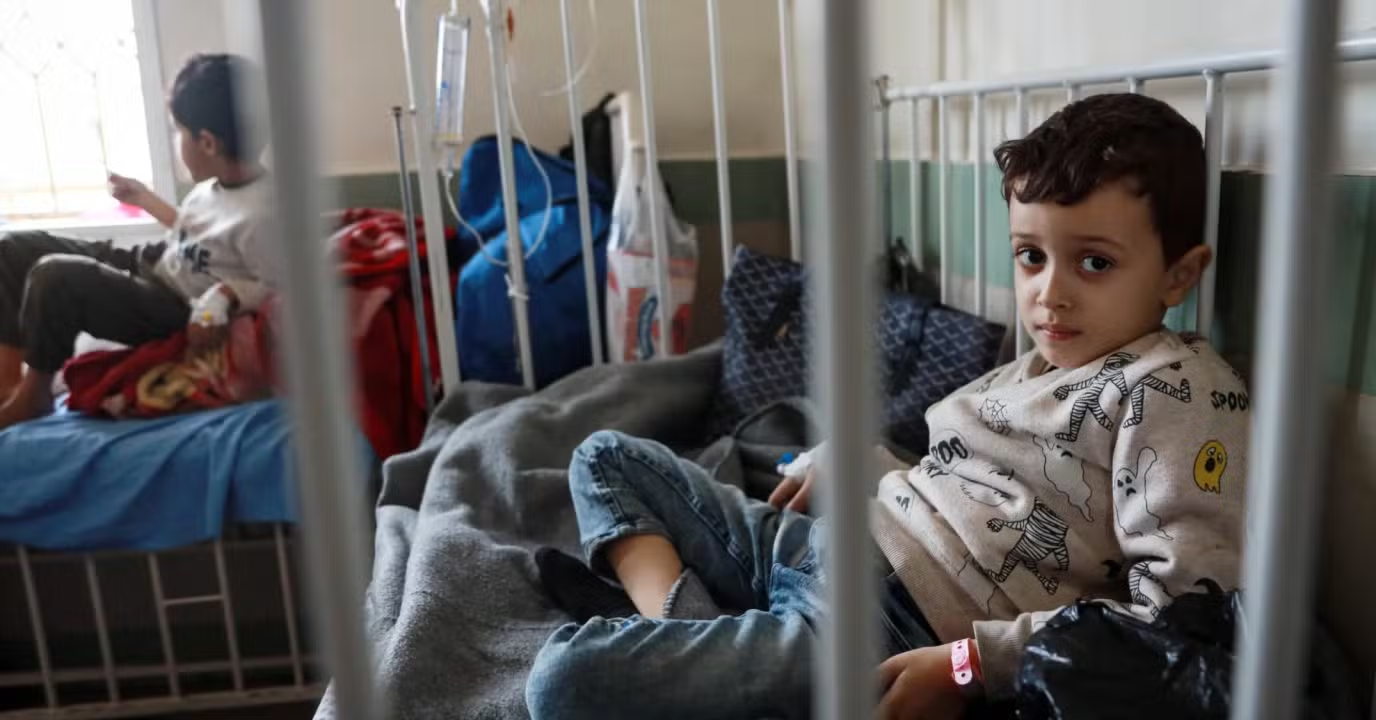
At Al-Aqsa Martyrs Hospital families reported newborn twins and a six-year-old among those treated, with some medications bought from private pharmacies. On 26 November the World Health Organization warned that limited laboratory capacity in Gaza is making it hard to distinguish viral from bacterial meningitis, and the United Nations reported shortages of lab supplies and essential medicines, with about 42 percent of essential medicines at zero-stock levels in October. At Rantisi Children's Hospital in Gaza City, five-year-old Omar Abu Fayed was admitted three times in less than a month after his symptoms returned following each discharge, and six-month-old twins Yaman and Yumna Salem were diagnosed within days of each other.
The Gaza Health Ministry issued an epidemiological alert on 24 November 2026 warning of a shocking rise in meningitis infections and urging the WHO and UNICEF to send lab supplies, antibiotics, and isolation wards.
The ministry reported 272 meningitis cases in October, eight times the usual monthly average, including 108 bacterial cases against a usual 10 to 20 a month, plus 100 bacterial cases in November.
The ministry reported 15 deaths from meningitis in 2026, including five between August and October.
The UN Office for the Coordination of Humanitarian Affairs reported that 77 percent of Gaza's meningitis cases were in babies under one year of age.
Lab tests suggested the Gaza meningitis cases were linked to enteroviruses, which can spread through the water supply.
Gaza health officials said Israel's destruction of infrastructure, crowding of Palestinians into makeshift shelters, and blocking of spare parts, sterilization materials, and fuel made the outbreak more likely and harder to stop.
Families at Al-Aqsa Martyrs Hospital reported newborn twins and a six-year-old among those treated for meningitis, with some medications bought from private pharmacies.
The Gaza Health Ministry called the outbreak the inevitable result of the destruction of infrastructure, overcrowded shelters, drinking water mixed with sewage, and flooding, saying it holds the Israeli occupation fully and directly responsible for the epidemic outbreak.
Dr. Iyad Abu Mu'ailaq, a pediatrician at Al-Aqsa Martyrs Hospital, said severe overcrowding in displacement camps greatly increases transmission and that untreated meningitis can leave permanent effects such as loss of hearing or sight.
A woman named Iman, whose six-year-old daughter was treated at Al-Aqsa Martyrs Hospital, said the water in Gaza is not clean like before the war and that even the air has been polluted by bombing and destruction.
Bahaa al-Sous, father of newborn twin girls treated for meningitis, described finding his daughter Ilat burning with fever after returning to their tent from work.
Oxfam International released a report warning that the destruction of Gaza's wastewater treatment plants makes it more likely Palestinians will contact water contaminated with pathogens.
A UN report dated 18 November 2026 said 45 percent of households surveyed in Gaza were living less than 10 meters from sewage and sludge after the flooding.
November 2026 rains caused flooding in Gaza that destroyed tens of thousands of tents and mixed rainwater with sewage in makeshift encampments.
Despite the ceasefire deal of the previous year requiring Israel to allow humanitarian aid in, Israel has continued to block tents, shelter materials, and other supplies from entering Gaza.
Ahmed Abu Rukba, a representative for al-Iyadat camp in central Gaza, said the camp needs new tents and sand to raise its low-lying ground, warning that without them it will definitely flood again and the children's tragedy will be repeated.
Ahmed Abu Rukba forecast that more storms are expected.
The World Health Organization warned that limited laboratory capacity in Gaza is making it difficult to distinguish between viral and bacterial meningitis infections.
The United Nations reported shortages of laboratory supplies and essential medicines in Gaza, with about 42 percent of essential medicines at zero-stock levels in October.
Five-year-old Omar Abu Fayed was admitted three times in less than a month to the isolation ward at Rantisi Children's Hospital in Gaza City after his meningitis symptoms returned following each discharge.
Six-month-old twins Yaman and Yumna Salem were diagnosed with meningitis at Rantisi Children's Hospital within days of each other, and Yumna was treated with intravenous fluids, medication, and zinc supplements.
Zakia Abu Fayed, mother of a repeatedly readmitted meningitis patient, said Rantisi Children's Hospital is crowded with children suffering from meningitis, including newborns, and that the admissions left her worried about her three other children.
Pediatrician Sharif Matar said Rantisi Children's Hospital at one stage received more than 10 meningitis cases a day and now receives three to four daily, a decline he said does not mean the wave has ended.
Sharif Matar said some children in the current wave developed serious complications including hearing loss and hydrocephalus requiring surgery, and that Rantisi has recorded no deaths directly attributed to meningitis to his knowledge.
Sharif Matar linked the spread of infections to overcrowding in displacement camps with limited access to water and hygiene facilities, saying some medicines are occasionally unavailable but the hospital has obtained treatments through the Health Ministry's warehouses.
Aya Salem, mother of the infected twins, said there is no reliable access to clean water or adequate sanitary conditions where her family is staying, and that a doctor told her her daughter was among the most difficult cases.

